
Table of Contents
** Minutes
Key Takeaways
1
There are dozens of terms, abbreviations, and acronyms to know in ecommerce logistics. Use this article as a cheat sheet to help you remember the most important ones.
2
Key abbreviations include “3PL,” “DIM weight,” and “Incoterms®.”
3
Key acronyms include “BOL,” “BOS,” “DDP,” and “DDU.”
It’s no secret that ecommerce has a learning curve. As a result, it can take a while to familiarize yourself with the industry’s terminology, and fully understand what key terms mean.
This is especially true when it comes to shipping and logistics. With so many processes and details involved in picking, packing, and shipping orders, it’s little wonder that shipping vocabulary can be similarly complicated — but if you take the time to learn the language of shipping, you’ll unlock new insights and opportunities for your ecommerce business.
In this glossary, we’ll break down common shipping terms and their definitions to help ecommerce businesses achieve fluency in the shipping space.
List of common shipping terms
Terms are listed in alphabetical order. Further information is provided for some terms, to provide context and additional resources for more information.
If you’re looking for a particular term, click on the term below to jump to it:
Self-fulfillment/In-house fulfillment
3PL
3PL is an abbreviation for “third-party logistics”, and refers to logistics companies such as ShipBob that allow ecommerce businesses to outsource operations such as warehousing, picking, packing, and shipping.
Further reading on 3PLs
When an ecommerce merchant partners with a 3PL, that 3PL agrees to handle some or all of the ecommerce business’s logistics processes for a certain fee. The 3PL’s services may include:
- Receiving & distribution
- Inventory storage & labeling
- Picking
- Packing
- Kitting and assembly (when necessary)
- Arranging shipping and/or last-mile delivery
- Reverse logistics and returns
By outsourcing these functions to a 3PL, ecommerce merchants are able to focus on other business activities. Outsourcing to a 3PL can also be an extremely cost-effective logistics solution, as 3PLs provide tools and infrastructure to execute and improve order fulfillment without requiring their customers to invest in a warehousing space or staff of their own.
Additional Resources:
Air freight (Air cargo)
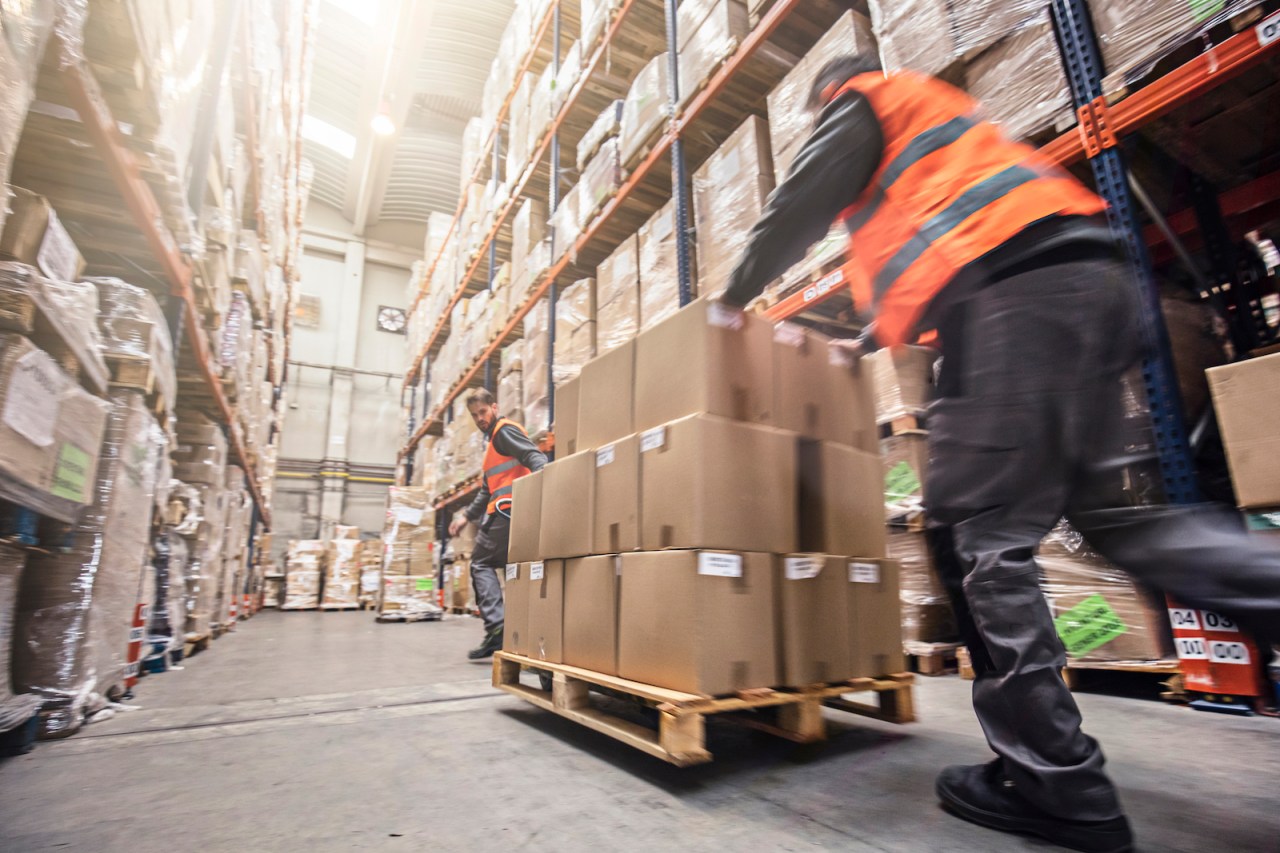
Air freight is the process of transporting freight shipments using aircraft. Air cargo refers to any cargo (freight or parcel) transported via aircraft.
Further reading on air freight and air cargo
Air freight is just one of the many modes of freight shipping that ecommerce businesses use to procure inventory from distant suppliers, or ship packages to distant destinations. Aircraft can also be used in intermodal or multimodal freight transportation.
Typically, air transportation is best for expedited shipments that are on a strict timeline, and that must be delivered quickly. However, air transportation is usually quite expensive, and is thus not a viable shipping solution for most ecommerce business’s parcel shipments.
Additional Resources:

Backorder
A backorder is an order that contains an out-of-stock item, and that therefore cannot be fulfilled until the item in question is back in stock.
Further reading on backorders
For a variety of reasons, a business may sometimes run out of a particular inventory item. When this happens, the business usually places an order for more inventory from their supplier or manufacturer.
In the meantime, the product listing stays on the business’s website. A shopper can buy the product, but will receive it at a future date when it is back in stock and available.
If there are other items in the same order that are in stock, the order may be split and shipped at different times, with the backordered items being shipped at a later date.
Additional Resources:
Batch fulfillment
Batch fulfillment (also called batch picking) is an approach to fulfillment that involves fulfilling a large number of orders all at once. In batch fulfillment, a picker picks enough inventory to fulfill multiple similar orders on one trip through a warehouse (rather than making a trip to the inventory storage location and back for every order).
Bill of lading
A bill of lading (or BOL) a document issued by a carrier that acknowledges receipt of cargo for shipping. It was once only related to shipping by sea, but a bill of lading may also be used for other freight shipping methods as well.
Blind shipping
Blind shipping is a type of dropshipping method that ships orders directly from the manufacturer to the customer, while keeping the name and identity of your supplier anonymous. This way, the customer assumes that it came directly from the merchant.
Further reading on blind shipping
Blind shipping is a common supply chain management technique used to protect a business (and potential profits or recurring revenue) by keeping its supplier anonymous.
This helps encourage your customers to order from the business again, and not directly from the supplier or manufacturer, which lets the merchant maintain the role as the middleman (rather than losing customers to your supplier). Blind shipping also reduces the chance of competitors finding out what supplier you work with.
Additional Resources:
Dimensional weight
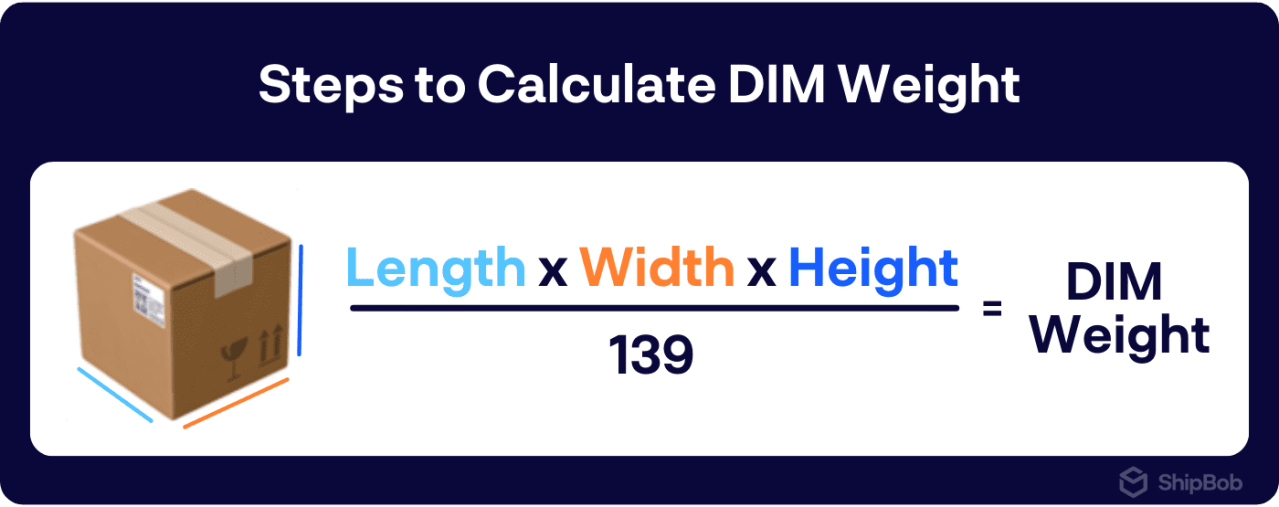
Dimensional weight is an estimated weight calculated from the length, width, and height of a package, using the longest point on each side. This weight can be used to calculate shipping costs for a package.
Further reading on dimensional weight
Dimensional weight is commonly used as a pricing technique for commercial freight transfer, including courier and postal services. Freight carriers like USPS, Fedex, or UPS calculate shipping charges based on whichever number is greater: the actual weight of the package, or its calculated dimensional weight. Whichever is higher becomes your billable weight.
Additional Resources:
DDP shipping
DDP shipping stands for “Delivery Duty Paid” shipping. It is a delivery agreement between buyers and sellers that places all risks, costs, and responsibilities associated with the transportation of goods on the seller until the buyer receives them.
Further reading on dimensional weight
Though DDP can be used with any order, it is most commonly applied to international orders.
Because international orders travel farther distances, they incur higher shipping costs and more fees (including custom import and export duties), and face more opportunities for damage. But with DDP, buyers aren’t liable for the actual shipping costs, so they are more likely to purchase products without fear of being scammed or having to pay high taxes, duties, or for damages.
Additional Resources:
DDU shipping
DDU shipping stands for “Delivery Duty Unpaid” shipping. This means that it is the customer’s responsibility to pay for any of the customs charges, surcharges, duties, tariffs, or taxes that the destination country demands for international shipments.
Ex-works
Ex-works (or EXW) is a delivery agreement in which the seller and buyer (also referred to as the “consignor” and “consignee”) arrange for purchased items to be dropped off at a particular location, upon which the buyer assumes responsibility and liability for the goods. The seller is not responsible for loading goods onto the buyer’s method of transportation (usually an ocean vessel), nor for the transportation costs.
Free carrier
Free carrier (FCA) is a delivery agreement in which the seller is responsible for transporting and delivering purchased goods to a carrier location of the buyer’s choosing, and for the costs associated with transportation and delivery to that destination.
Further reading on free carriers
Free carrier agreements are great for ecommerce merchants, as under such an agreement, merchants are not responsible for any shipping damages, export fees, or licensing fees involved in procuring inventory from manufacturers. They are also not responsible for paying for packaging or other transportation supplies.
Additional Information:
Free on board
Free on board (or FOB) is a delivery agreement applying to sea shipments in which the seller must transport items to a buyer-chosen location (usually a port or dock), and assume the cost of doing so, as well as responsibility for the goods and liability for damages.
The seller is also responsible for loading the goods onto the vessel. Once the goods are on board the vessel, the buyer becomes responsible for them and liable for any damages that incur during transport to the goods’ final destination(s).
Further reading on FOB
Free on board agreements are crucial for determining which party is liable in the case of shipping damages or transit issues. FOB agreements typically favor the buyer, as the buyer must only pay for last-mile transportation from the designated dropoff location, and the window of time in which they are liable for any damages that occur is usually much smaller than the seller’s.
Additional Resources:
Freight forwarder
A freight forwarder is an intermediary service or freight broker that goes between a freight shipping company and a merchant to arrange different aspects of the freight shipping process, such as mode of transportation, freight rate negotiation, shipment tracking, and more.
Further reading on freight forwarding
For merchants unsure of how to begin freight shipping, freight forwarders provide an easy way to arrange for freight and secure a decent price.
In addition to the standard services listed above, freight forwarders may also help their clients get cargo insurance, achieve customs compliance, advise on freight packing and labeling, and optimize their overall strategy for freight costs and speed.
Additional Information:
Freight shipment
Freight shipping is the transportation of large shipments of goods domestically or across the globe via air, land, or sea. Goods are loaded onto pallets or into large, sturdy containers and transported using one or more modes of transportation.
Further reading on freight shipment
Ecommerce merchants will typically use freight to obtain raw materials, supplies, or finished inventory from their supplier or manufacturer.
Freight can be transported through a variety of different modes, including ocean, air, rail, and ground (including flatbed trucks, reefers, and , or a combination of any of the above. Any shipment that is larger than 30 inches by 30 inches by 30 inches, or that weighs over 150 pounds, is considered freight. Shipments under these dimensions would typically be more cost-effective to ship via parcel.
Additional Information:
Incoterms®
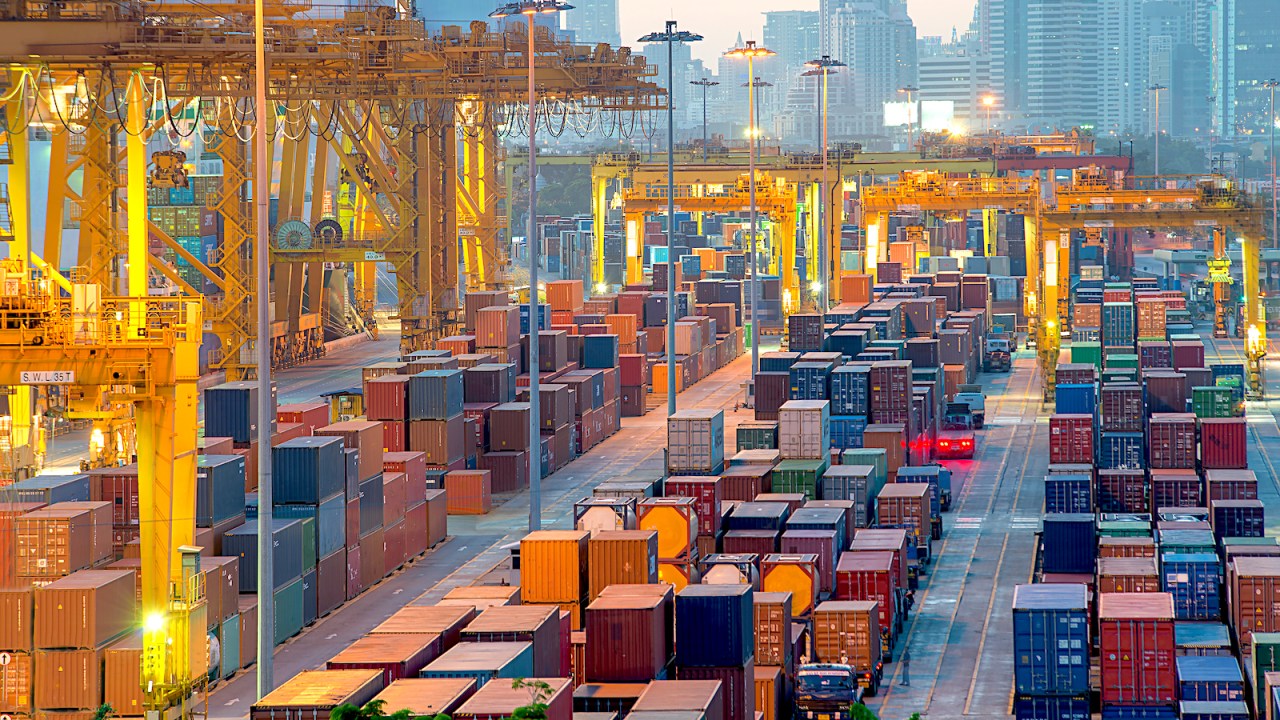
Incoterms® (short for “international commercial terms”) are standardized terms or shorthand abbreviations designed to prevent confusion in international business, transportation, and trade agreements. Examples include Carriage Paid To (CPT), Delivery Duty Paid (DDP), Free on Board (FOB), and Ex-Works (EXW).
Last-mile delivery
Last-mile delivery is a logistics term used to describe the transportation of a package from a fulfillment center to the package’s final destination.
Further reading on last-mile delivery
The goal of last-mile delivery is to deliver a package to its final destination as quickly and cost-effectively as possible. Most last-mile carriers have a fleet of vehicles that actually deliver the product(s) to the customer.
An example of a last-mile carrier is Amazon, which has increased its last-mile delivery network to reduce delivery speed and, in turn, increase customer satisfaction. With 2-day delivery as the expectation for ecommerce businesses today, efficient last-mile delivery and quality last-mile carrier partnerships are absolutely critical for merchants.
Additional Information:

Net weight
Net weight is a product’s weight without factoring in packaging.
Further reason on net weight
Net weight is crucial to understand when shipping products — especially when shipping freight or shipping internationally. Weight plays a critical role in a carrier’s pricing, and different carriers may rely on different measurement methods (including net weight, gross weight, and tare weight) to calculate how much it costs to ship a package.
Additional Information:
Order fulfillment
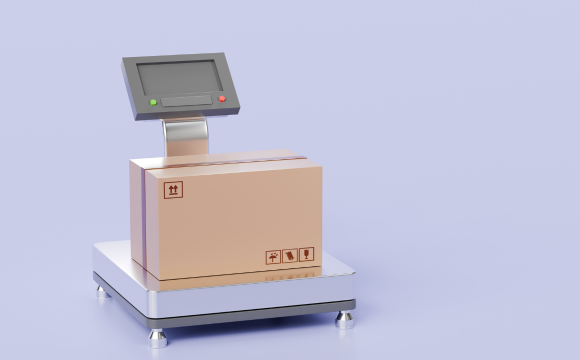
Order fulfillment refers to the complete process of getting an order to a customer, from the moment a sale takes place all the way to the moment that order is placed on the customer’s doorstep.
Further reading on order fulfillment
The order fulfillment process begins when a business confirms a customer’s order and processes it, sending it to a warehouse or fulfillment center. From there, warehouse workers pick the items in the order, pack them in a box or poly mailer, and ship them out through a last-mile carrier to the end customer.
Because order fulfillment involves so many complicated logistics processes, merchants usually benefit from outsourcing to a third party that takes over receiving, processing, packing, picking, and shipping online orders to customers.
Additional Information:
- What is Order Fulfillment?
- Order Fulfillment Software
- Guide to Retail Order Fulfillment
- Ecommerce Fulfillment 101
Packing slip
A packing slip is a document that includes the complete list of items included in a package, and include SKU numbers, weights, dimensions, and the number of units in the order.
Further reading on packing slips
Shipping departments use packing slips to determine what inventory must be included in each order and shipment, so that they can accurately fulfill and ship each order. When a buyer receives a package, they should always check the received items against the packing slip to ensure all the ordered items arrived.
Additional Information:
Self-fulfillment/in-house fulfillment
Self-fulfillment refers to when an ecommerce business chooses to store inventory in their own facility (such as a personal garage or rented warehouse space) and pick, pack, and ship orders themselves.
Further reading on self-fulfillment and in-house fulfillment
Self-fulfillment is feasible when a merchant is starting out in ecommerce and will fulfill orders from home, or when an ecommerce business is so big that it can invest in their own world-class warehouse and fulfillment operation.
However, if your ecommerce business is between these stages, you may need to outsource fulfillment operations to maintain quality and free up time to attend to other, more important functions.
Additional Information:

Shipping carrier
A shipping carrier is a company that’s responsible for getting packages from Point A (the shipper) to Point B (the end customers).
Further reading on shipping carriers
Common carriers that cover the US and international regions include USPS, UPS, FedEx, and DHL, among others. Depending on your shipping requirements, need for speed, and budget, you should perform a cost-benefit analysis for each carrier to determine the best shipping carrier partnerships for your business.
Additional Information:
Shipper owned containers
A shipper-owned container (SOC) is a freight shipping container owned by an independent individual or business.
Further reading on shipper owned carriers
While carrier-owned containers (COCs) are the property of a carrier and are rented out to the carrier’s consignees, SOCs are the property of the shipper (usually a merchant or retailer), who then pays the carrier to ship the cargo container for them by purchasing a slot on their truck or ship.
Shipper-owned containers allow shippers a certain degree of freedom and control, and enable them to bypass high container rental fees in times of supply chain crises. However, a business should seriously consider how much freight it is shipping to what locations before purchasing a container, as it is not always worth it.
Additional Information:
Shipping zones
Shipping zones are geographical areas that carriers ship to, spanning from Zone 1 to Zone 8. Zone 1 is the closest area to the fulfillment center from which the order is shipped, while Zone 8 is the furthest.
Further reading on shipping zones
Shipping zones are important because they affect both shipping times and shipping costs. Transit times and shipping prices increase as the zone number increases, meaning that it is both quicker and cheaper to ship a package to a destination in Zone 2 than it would be to ship that same package to a destination in Zone 6.
Distributing inventory across various fulfillment centers located at different strategic locations all over the US can help prevent a merchant from having to ship to the most expensive shipping zones, and reduce transit times and costs.
Additional Information:
Split shipment
A split shipment refers to when a single order containing multiple products is sent in separate shipments. This means the customer receives more than one package, even though they ordered everything together.
Further reading on split shipments
Split shipments are often used as a partial solution to backorders. Rather than forcing a customer to wait until all of their ordered items are back in stock, a business can split the shipment and send any items that are in stock in one shipment, and send another shipment containing the backordered items later on.
While this can sometimes improve customer satisfaction, it can also be expensive if employed continuously. Merchants should seek to minimize splitting shipments wherever possible to save on shipping costs and lessen their environmental impact.
Additional Resources:
White-glove delivery
White glove delivery refers to delivery service that goes above and beyond typical expectations, often by including unpackaging and placement services.
For example, a white-glove delivery service for a furniture store might not only deliver the furniture to the customer’s doorstep, but also involve the workers making the delivery moving the furniture into the customer’s home, unwrapping it from any packaging, and arranging it in the space.
White-label shipping
White label shipping is a form of shipping in which there is no branding or labeling on packages or shipments to identify the supplier from which the goods originated.
The intent behind white-label shipping is to make your packages and goods appear as though they came from a merchant’s business, as opposed to the merchant’s supplier or manufacturer.
ShipBob’s got the definitions and the solutions
ShipBob is a global omnifulfillment platform that supports ecommerce businesses shipping DTC, retail dropshipping, retail distribution, and more.
Whether you sell through your ecommerce website, social media, retail stores, or ecommerce marketplaces like Amazon and Walmart Marketplace, ShipBob’s software integrates with your tech stack to provide seamless order fulfillment.
Our network of dozens of domestic and international fulfillment centers process, pick, pack, and ship your orders out through major carriers, so that your customers receive accurate orders quickly. With experts at the helm of your shipping logistics, you can focus on other important business functions while we optimize your operations for efficiency, cost, and quality.
To learn more about how ShipBob can help you improve your shipping strategy, click the button below.
Common shipping terms FAQs
Understanding shipping terms is crucial for smooth international trade. Here’s a concise FAQ addressing common queries:
What are the 11 shipping terms defined under the Incoterms?

The Incoterms® 2020 define 11 terms that specify the responsibilities of buyers and sellers in international transactions:
1. EXW (Ex Works)
2. FCA (Free Carrier)
3. CPT (Carriage Paid To)
4. CIP (Carriage and Insurance Paid To)
5. DAP (Delivered at Place)
6. DPU (Delivered at Place Unloaded)
7. DDP (Delivered Duty Paid)
8. FAS (Free Alongside Ship)
9. FOB (Free on Board)
10. CFR (Cost and Freight)
11. CIF (Cost, Insurance, and Freight)
These terms are categorized based on the mode of transport and outline the allocation of costs and risks between parties.
What are FOB terms in shipping?
Free on Board (FOB) is an Incoterm where the seller fulfills their obligation once goods are loaded onto the shipping vessel. From that point, the buyer assumes responsibility for all costs and risks associated with the shipment.
What is the Destination Control Statement and why should it be on my commercial invoice?
The Destination Control Statement (DCS) is a legal declaration required on export documents, indicating that the goods are authorized by the U.S. government for export only to the specified destination and end-user. It ensures compliance with export regulations and prevents unauthorized diversion of controlled items.
What is the difference between CIF and FOB shipping terms?
The primary difference between Cost, Insurance, and Freight (CIF) and Free on Board (FOB) lies in the allocation of costs and risks:
- CIF: The seller covers the cost of goods, insurance, and freight to the destination port. Risk transfers to the buyer once the goods are loaded onto the vessel.
- FOB: The seller’s responsibility ends once the goods are loaded onto the shipping vessel, with the buyer assuming all subsequent costs and risks.
This distinction affects pricing and liability during transit.
How do shipping terms affect the cost of international trade?
Shipping terms define the division of costs, risks, and responsibilities between buyers and sellers. They influence expenses related to transportation, insurance, duties, and taxes, thereby impacting the total landed cost of goods and the profitability of international transactions.
Selecting appropriate terms is vital for cost control and risk management in global trade.
What key shipping terms does ShipBob emphasize in its fulfillment analytics dashboard?
ShipBob’s fulfillment analytics dashboard provides various key shipping terms and metrics to offer visibility into your operations. These include:
- Average fulfillment cost: This metric shows the average cost incurred to fulfill an order, as calculated from the order invoice.
- Average days to fulfill: This measures the average number of days between when an order is imported into ShipBob’s system and when it is labeled and ready for carrier pickup.
- Average days in transit: This measures the average number of days from when the shipping label is purchased until the order is delivered to the customer.
- Fulfillment cost and speed: These reports track on-time performance against Service Level Agreements (SLAs) and identify orders in the out-of-stock exception status.
Additionally, within the dashboard, you can view the current order status (such as “Processing,” “On-Hold,” “Exception,” and “Completed”). Reports also detail the shipping zone used for invoicing, dimensional weight calculations, and inventory replenishment recommendations like rebalance points and recommended replenishment amounts, which influence shipping efficiency and costs.
How does ShipBob manage Incoterms such as FOB, DDP, and DDU within its fulfillment processes?
ShipBob offers both DDP (Delivered Duty Paid) and DDU (Delivered Duty Unpaid) solutions for international shipments. For outbound international orders, shipments are typically sent DDU, meaning the recipient (the customer) is responsible for paying all duties and fees upon arrival. ShipBob does not cover these costs for merchants or the sold-to party; however, there is an option to enable DDP for cross-border settings.
What does ShipBob’s tracking status terminology (e.g., “in transit,” “out for delivery”) mean for brands and end customers?
ShipBob’s dashboard primarily displays internal order statuses that indicate where an order is within their fulfillment process.
- Processing: The order is actively being prepared for fulfillment.
- On-Hold: The order is paused, typically awaiting action or clarification.
- Exception: The order cannot be fulfilled due to issues like out-of-stock items or missing information.
- Completed: The order has been labeled and is ready for carrier pickup.
For inbound inventory, statuses include “Awaiting,” “Hub” (indicating arrival at a hub location), “Internal Transfer,” and “Receiving Completed.”
Once an order is fulfilled and labeled by ShipBob’s operations team, a unique tracking number is uploaded to the order details page in the dashboard. This tracking number links directly to the carrier’s website, where detailed, carrier-specific statuses like “in transit,” “out for delivery,” and “delivered” are provided.
What is dimensional weight, and why is it significant in shipping cost calculations?
Shipping costs aren’t based solely on how much a package weighs; its physical space matters, too. Carriers use dimensional weight (DIM weight), which is calculated from height × width × length divided by a standard divisor, to assess charges based on package volume.
Generally, carriers bill whichever is greater: actual weight or dimensional weight. This means lightweight but roomy cartons can cost significantly more than expected, which is why brands should always compare both metrics before estimating shipping expenses and packing decisions.
What does last-mile delivery entail, and how can brands optimize it?
Last-mile delivery is the final leg of shipping, and involves getting goods from a vehicle to the customer’s doorstep or the destination point. It’s the most visible touchpoint and often the most expensive part of the journey.
Brands can optimize this stage by:
- Using a network of fulfillment centers located closer to end customers to reduce transit and delivery zones.
- Bundling shipments or working with regional carriers to leverage lower ground shipping rates.
- Delivering accurate ETAs, proactive communication, and flexible options like pick-up or alternative drop-off to improve customer satisfaction and minimize failed deliveries.
Why is an advance shipping notice (ASN) important in warehouse operations?
An advance shipping notice is a digital alert sent ahead of a shipment’s arrival, providing details like contents, quantity, and packing info.
ASNs matter because they:
- Allow warehouses to prepare for incoming inventory by allocating space and resources in advance.
- Speed up receiving workflows since staff know what’s arriving and can perform faster audits and put-away.
- Reduce errors, improve inbound accuracy, and help maintain a smooth replenishment process.
A timely, accurate ASN streamlines receiving and ensures operations stay efficient from the moment inventory is inbound.
What are the most common shipping terms?
Some of the most common shipping terms include:
- 3PL
- Air freight
- Backorder
- Batch fulfillment
- Bill of landing
- Blind shipping
- Dimensional weight
- DDP shipping
- Last-mile delivery
- Net weight
- Order fulfillment
- Packing slip
- Self-fulfillment/In-house fulfillment
- Shipping carrier
- Shipper owned containers
- Shipping zones
- Split shipment
- White-glove delivery
- White-label shipping
What are the best places to learn more about shipping?
An expert logistics partner like ShipBob can answer your questions about ecommerce shipping, as well as offer expertise on your brand’s fulfillment, inventory management, warehouse operations, and more.
You can learn more about shipping through ShipBob’s blog, resource library, or by reaching out to one of our fulfillment experts.


