

Table of Contents
** Minutes
What is DIFOT (delivery in full, on time)?
DIFOT vs. OTIF and other logistics metrics
How to calculate DIFOT: Step-by-step formula
7 proven ways to boost your DIFOT supply chain performance
Advanced strategies to drive DIFOT success
Late or incomplete ecommerce orders aren’t just minor inconveniences—they’re relationship killers.
DIFOT (delivery in full, on time) measures the percentage of orders that arrive both complete and on schedule, a metric that reveals your entire operation’s health.
Transforming your DIFOT performance doesn’t require logistics magic, just strategic improvements to your existing operation. By implementing the right technology, positioning inventory strategically, and making data-driven decisions, even struggling brands can achieve industry-leading delivery performance.
This comprehensive guide walks you through calculating your current metrics, identifying your biggest opportunities, and implementing the proven strategies that keep top brands delivering at 95%+ DIFOT even during their busiest seasons.
What is DIFOT (delivery in full, on time)?
DIFOT stands for “delivery in full, on time” and is a key supply chain metric that measures whether orders arrive complete and when promised. It’s essentially your fulfillment report card, scoring how well you keep promises made at checkout.
DIFOT metric combines two essential elements: accuracy (in full) and timeliness (on time). For an order to count toward your DIFOT percentage, both conditions must be met. If you promise three items by Thursday, delivering only two items on Thursday or all three on Friday, both count as failures.
DIFOT is expressed as a percentage, with industry leaders achieving 95%+ rates. In today’s competitive ecommerce landscape where two-day shipping is expected, DIFOT has become a critical performance indicator directly affecting your ability to compete and grow.
How DIFOT works
DIFOT has two straightforward components:
- “Delivery in full” means customers receive exactly what they ordered (correct items, quantities, and specifications). Any variation (missing items, wrong sizes, different colors) counts as a failure.
- “On time” means delivery within the promised timeframe. If you promise two-day shipping, the package must arrive within two days.
The critical point: both conditions must be met for success. Complete but late? Failure. On time but incomplete? Also failure. Only orders that are both complete and on time count positively.
This all-or-nothing approach reflects the actual customer experience. DIFOT failures significantly damage loyalty, as 74% of shoppers reported that their view of a company worsens if their deliveries don’t arrive when expected.
Every successful delivery builds trust, while each failure erodes it. Consistently high DIFOT creates the reliability that turns one-time shoppers into loyal customers who choose your brand over competitors.
DIFOT vs. OTIF and other logistics metrics
While popular in ecommerce, DIFOT is just one of several fulfillment metrics. Understanding all of them gives you a comprehensive view of your supply chain health.
DIFOT and OTIF (on time in full) are often used interchangeably but differ slightly. OTIF originated in B2B retail for measuring distribution center deliveries, while DIFOT has become standard in direct-to-consumer ecommerce. Both track complete, on-schedule orders, but OTIF may include additional requirements like proper documentation.
Perfect order rate goes beyond DIFOT by including damage-free delivery, accurate documentation, proper labeling, and correct invoicing, especially valuable for B2B relationships with strict requirements.
Fill rate focuses exclusively on the “in full” component. It measures what percentage of ordered items you can actually ship. This helps identify inventory issues before they impact DIFOT. If your fill rate is 98% but DIFOT is only 85%, you know delivery timing (not inventory) is your main challenge.
| Metric | What It Measures | Best Used For | Typical Target |
| DIFOT | Orders delivered complete + on time | DTC ecommerce, customer satisfaction | 95%+ |
| OTIF | Orders delivered on time + in full (may include additional criteria) | B2B, retail compliance | 95%+ |
| Perfect Order Rate | Complete + on time + undamaged + accurate documentation | Premium brands, B2B relationships | 90%+ |
| Fill Rate | Percentage of items available to ship | Inventory planning, supplier management | 98%+ |
For DTC and omnichannel brands, DIFOT remains most valuable because it directly reflects customer experience. Shoppers care that all items arrive by the promised date, not about your internal documentation.
These metrics work best when viewed together. Track DIFOT as your primary customer-facing metric while monitoring fill rate for inventory issues and perfect order rate for B2B channels. This approach helps pinpoint specific problems in inventory planning, warehouse operations, or carrier performance.
Consider different calculations across channels. DTC orders might focus on complete and on-time delivery, while wholesale orders might need to meet additional criteria like appointment times. Choose metrics that align with what matters most to each customer segment.
How to calculate DIFOT: Step-by-step formula
(Orders delivered in full AND on time ÷ Total orders) × 100 = DIFOT
While the formula is simple, accurate measurement requires precision. For an order to count positively, it must meet both conditions: complete delivery with all correct items and arrival by the promised date.
Most brands calculate DIFOT monthly for meaningful trend analysis while monitoring daily for immediate issues. Industry leaders maintain 95%+ DIFOT rates.
Step 1: Count total orders shipped
Define your measurement period (monthly, quarterly) and pull data from all sales channels:
- Include all orders from your website, marketplaces, and B2B channels
- Create standardized definitions for what constitutes an “order”
- Document how you’ll handle multi-shipment orders and cancellations
- Avoid common pitfalls: excluding certain order types or double-counting orders in multiple systems
Step 2: Track orders delivered in full
“In full” means customers received exactly what they ordered (correct items, quantities, and specifications):
- Monitor at the SKU level (a customer receiving two blue shirts and one red instead of three blue fails this criterion)
- Use returns data to identify “in full” failures (e.g., wrong items, sizes, colors)
- Establish clear rules for partial shipments. Most brands count these as failures unless explicitly communicated.
Step 3: Verify on-time deliveries
“On time” means delivery by the date promised to customers at checkout:
- Base calculations on customer-facing promises, not internal targets
- Use carrier tracking data to confirm actual delivery dates
- Develop processes for tracking gaps (e.g., rural deliveries, international shipments)
- Count weather delays and carrier exceptions as failures from the customer perspective
Step 4: Calculate your DIFOT percentage
Example calculation:
- Total orders shipped in October: 1,000
- Orders delivered with all items correct: 970
- Orders delivered by promised date: 980
- Orders meeting BOTH criteria: 950
DIFOT = (950 ÷ 1,000) × 100 = 95%
For actionable insights:
- Segment DIFOT by product line, fulfillment center, shipping method, and region
- Track trends using 12-week rolling averages to identify true improvements
- Set up alerts for when DIFOT drops below acceptable thresholds
- Combine with leading indicators (inventory accuracy, pick accuracy) to prevent future failures

7 proven ways to boost your DIFOT supply chain performance
Achieving consistently high DIFOT performance doesn’t happen by accident. It requires deliberate strategies across your fulfillment operation. Even modest improvements yield significant results: moving from 85% to 90% DIFOT can mean thousands fewer customer complaints and a measurable increase in repeat purchases.
While implementing just one strategy might show immediate gains, true transformation happens when these tactics work together throughout your supply chain.
1. Improve demand forecasting
Accurate forecasting ensures you have the right inventory in the right places when customers order. Analyze historical sales data across multiple time horizons to understand seasonal patterns and marketing impacts. Modern AI-powered tools process these complex patterns far more effectively than spreadsheets, factoring in variables like social media trends and economic indicators.
The connection to DIFOT is clear: better forecasting means fewer stockouts—the primary cause of incomplete orders. When you can confidently predict demand 30-90 days out, you maintain the buffer stock necessary to fulfill every order completely.
2. Strengthen supplier management
Your DIFOT performance is only as strong as your weakest supplier link. Establish specific SLAs with each supplier that include quality standards, packaging requirements, and communication protocols for delays. For critical SKUs, maintain relationships with backup suppliers who can step in during disruptions.
Track metrics like on-time delivery percentage and quality rejection rates to make informed decisions about which relationships to strengthen. A supplier struggling with on-time performance might benefit from adjusted order schedules or consolidated shipments.
3. Choose reliable carrier partnerships
Your choice of shipping carriers directly impacts the “on time” portion of DIFOT. Evaluate carriers using comprehensive performance data rather than just published transit times or lowest rates. Track actual performance by lane, service level, and package characteristics.
Build redundancy into your carrier network to prevent single points of failure. Using multiple carriers allows you to route orders based on performance history and specific delivery requirements. During negotiations, use your DIFOT requirements to secure service commitments like guaranteed capacity during peak periods.
4. Implement real-time inventory visibility
Real-time inventory visibility prevents the overselling and stockouts that lead to incomplete orders. Centralized inventory management becomes essential as you sell across multiple channels—your website, marketplaces, and B2B portals all need to pull from a single source of truth.
Set proactive replenishment triggers based on real-time data that factor in current velocity, lead times, and safety stock requirements. This shifts inventory management from reactive to predictive, dramatically reducing the risk of incomplete orders.
5. Automate address validation
Address errors are a silent DIFOT killer that cause delivery failures and returns to sender. Automated validation at checkout catches errors before they enter your fulfillment system—standardizing formatting, appending missing information, and flagging problematic addresses.
For maximum effectiveness, implement validation at multiple points: during checkout for new orders and during fulfillment for manually entered orders or addresses that have changed. Advanced systems can even identify addresses prone to delivery issues and suggest carrier-specific delivery instructions.
6. Leverage distributed fulfillment
Distributed fulfillment transforms DIFOT performance by placing inventory closer to customers. Shipping from a facility 200 miles away (versus 2,000 miles) means orders travel by ground rather than air, facing fewer disruption points and arriving more reliably.
Strategic inventory placement requires intelligent allocation based on demand patterns and service requirements. This approach also creates redundancy—when severe weather affects your East Coast facility, West Coast operations continue unaffected, maintaining service levels during regional disruptions.
7. Prepare for peak seasons and demand fluctuations
The brands that sail through Black Friday or viral moments plan for success rather than hoping standard operations can handle 10x volume. Start months before peak season by analyzing previous years’ performance to identify specific DIFOT failure points.
Secure additional capacity in advance, whether through guaranteed carrier allocations, overflow warehouse space, or seasonal staffing. Adjust customer expectations appropriately—during peak periods, slightly extending delivery promises can improve satisfaction compared to maintaining aggressive timelines you can’t reliably meet.
Advanced strategies to drive DIFOT success
Ready to take your DIFOT performance from good to industry-leading? These advanced strategies help brands with solid fundamentals push their metrics to the next level, creating competitive advantages that justify the investment in more sophisticated operations.
Harness end-to-end visibility with integrated technology
Connect your entire fulfillment ecosystem—from order placement through delivery confirmation—into a unified visibility platform that enables proactive DIFOT management. This integration links your order management system, WMS, inventory platforms, and carrier networks into a single data stream that reveals potential issues before they affect customers.
With real-time dashboards, you’ll spot developing problems as they happen instead of discovering failures in monthly reports. Color-coded alerts instantly show orders at risk, inventory approaching stockout thresholds, or declining carrier performance on specific routes.
Leverage predictive analytics to identify patterns that precede DIFOT failures. Machine learning can detect subtle signals like increasing pick times or gradual carrier degradation, transforming your operation from reactive firefighting to proactive optimization.
Use DIFOT data for courier optimization and cost reduction
Your delivery performance data contains valuable insights for optimizing carrier selection while reducing costs. Benchmark carrier performance across every shipping lane to discover their true strengths and weaknesses—you might find Carrier A excels with West Coast deliveries but struggles in the Midwest, while Carrier B shows the opposite pattern.
Challenge assumptions about service levels through data analysis. Premium shipping services don’t always deliver better DIFOT performance—sometimes ground shipping proves more reliable than air due to fewer handling points and weather vulnerabilities. Match service selection to actual performance rather than perceived speed to reduce costs while maintaining or improving DIFOT.
Transform carrier negotiations with performance data. Showing a carrier their 87% on-time rate for specific routes gives you leverage for improvements or rate concessions. Implement automated carrier selection that routes each order based on historical performance, current capacity, and delivery requirements rather than default rules.
Scale globally with strategic inventory placement
When expanding internationally, position inventory within target countries to eliminate customs delays and transit uncertainty. A UK customer ordering from UK-based inventory receives their order in days with predictable delivery, while the same order shipping from the US faces customs processing, carrier handoffs, and extended transit times.
Adapt your DIFOT strategy to local market expectations. Japanese customers might expect next-day delivery as standard, while Australian customers understand the distances involved in their market. For testing new regions, consider free trade zones and bonded warehouses as intermediate solutions that balance performance with investment risk.
Implement service level agreements with automatic upgrades
Establish internal SLAs for each fulfillment stage—order processing within 2 hours, picking completion within 24 hours, carrier pickup the same day—to create accountability and pinpoint exactly where delays occur.
Build automatic triggers that activate when SLAs are at risk. If an order hasn’t been picked within 18 hours, it automatically escalates to priority status. If processing delays mean standard shipping can’t meet delivery promises, your system upgrades to express shipping without manual intervention.
Set up proactive customer communication based on SLA performance. Instead of waiting for complaints about late deliveries, send automated updates with revised delivery estimates when delays occur. This transparency often preserves customer satisfaction even when DIFOT technically fails.
How ShipBob helps optimize delivery in full, on time
ShipBob’s technology-first fulfillment solution is built to help brands achieve industry-leading DIFOT performance. Here’s how we deliver complete, on-time orders at scale:
Accuracy-driven fulfillment technology
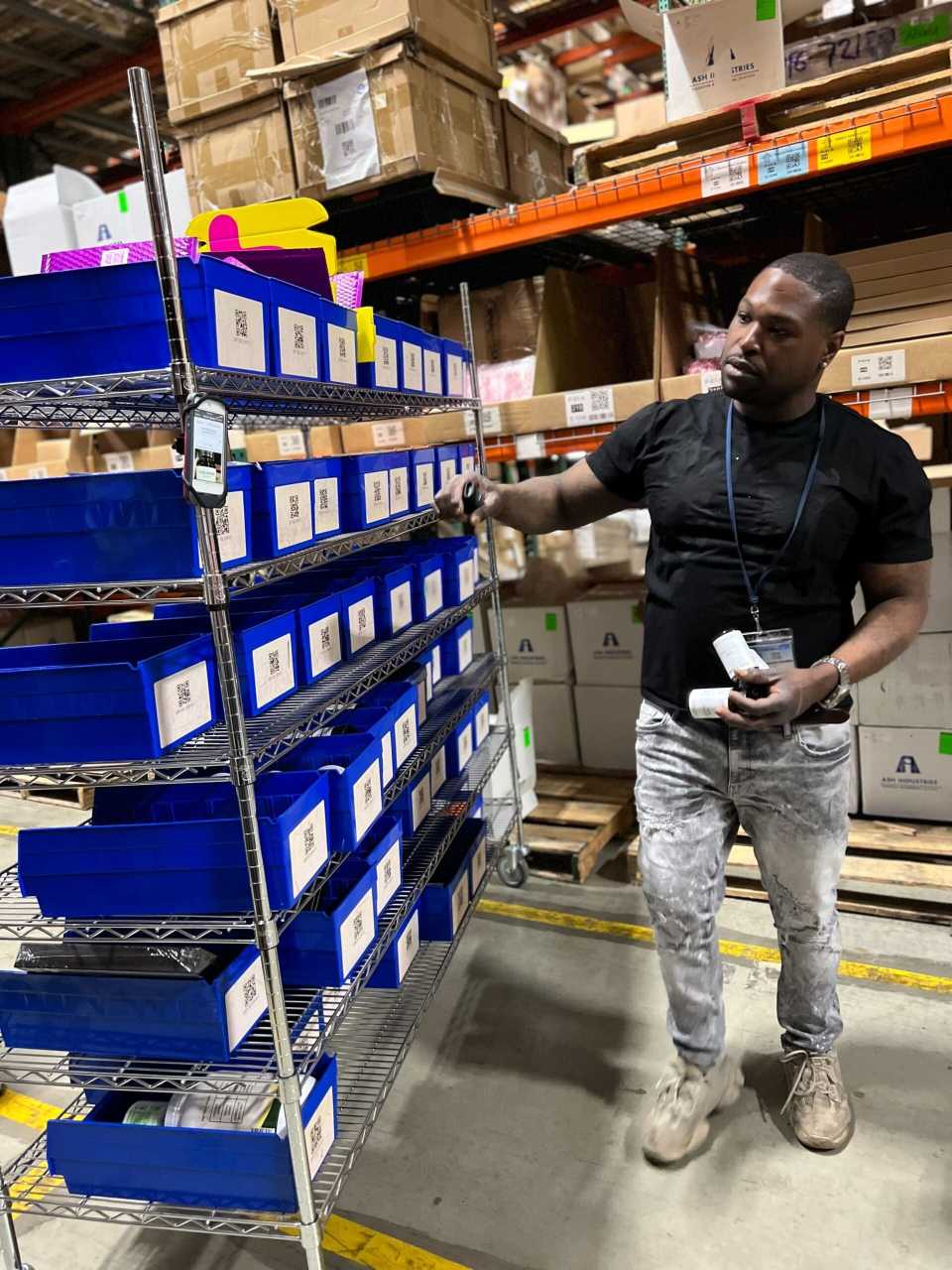
Our proprietary warehouse management system (WMS) uses barcode scanning at every step and advanced picking algorithms to achieve 99.7%+ order accuracy, eliminating “in full” failures that damage customer loyalty.
Strategic distributed fulfillment
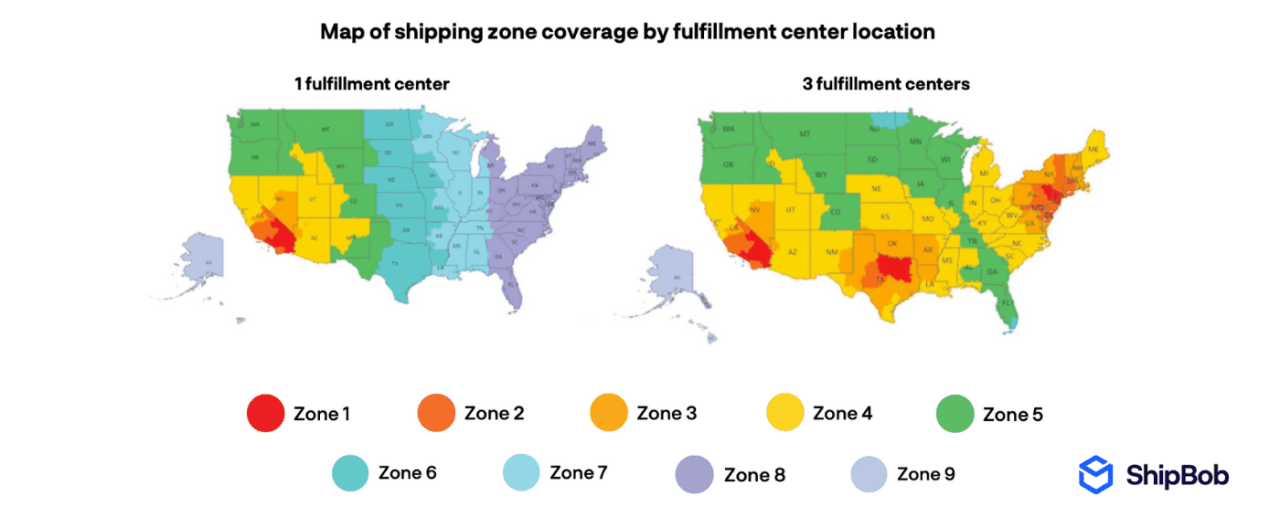
With 60+ fulfillment centers globally, ShipBob has fulfillment centers located near customers around the world. In the US, we position your inventory within 2 days of 99% of the population, drastically reducing transit times and delivery risks while providing built-in redundancy during regional disruptions. Using our Inventory Placement Program (IPP), brands can automate inventory distribution throughout the US to place products close to end customers.
Real-time inventory intelligence
Our platform provides complete visibility across all locations and sales channels, preventing stockouts and overselling with automated reorder notifications and predictive analytics that identify potential DIFOT risks before they impact customers.
Data-driven carrier optimization
We continuously monitor performance across all major carriers, automatically routing each order to the most reliable option based on historical performance data, current capacity, and specific delivery requirements.
Additionally, ShipBob Logistics is an end-to-end transportation and logistics service, built to streamline the movement of your inventory and orders without adding overhead. Our hub-and-spoke network, regional sort centers, and other logistics solutions reduce complexity across your supply chain and ensure fast, reliable delivery on time, in full.
ShipBob isn’t locked to a specific carrier for 2-day service, and instead partners with a bunch of different carriers to find the best rate and most optimal route. I think that’s very beneficial, because if one carrier has a problem, ShipBob can use a different one to get our orders to customers on time. Overall, our customers seem much happier since we switched to ShipBob, and we’re not getting negative reviews on our 2-day shipping anymore.”
– Mithu Kuna, Founder and CEO of Baby Doppler
Proactive SLA management
Our system monitors fulfillment at every stage and can automatically upgrade shipping methods when delays threaten delivery promises, maintaining customer satisfaction without requiring your involvement.
ShipBob maintains a 99% SLA achievement.
“ShipBob’s ability to meet SLAs, whether it’s receiving our inventory or getting a B2B order out, is incredible. At the end of every week, I look at the report of how many orders ShipBob sends, and we’re always amazed.”
– Courtney Trevino, VP of Finance & Ops at BRUCE BOLT
Global fulfillment capabilities
With international facilities across North America, Europe, and Australia, we help you maintain consistent DIFOT performance worldwide while navigating the complexities of cross-border shipping.
“Having a partner like ShipBob that allows us to tap into all of the various UK carriers has been unmatched. And the flexibility of being able to send orders abroad is really nice. A lot of competitors in the UK only let you fulfill orders domestically within the UK, and if you want to ship orders to Europe, you have to find warehouse space on the mainland and ship from there. That’s not economically friendly for a growing company like ours. ShipBob’s adaptability and support for scaling orders to customers regardless of location has been great for ARTAH.”
– Connor Stewart, Head of Operations + Impact at ARTAH
ShipBob’s combination of strategic infrastructure, advanced technology, and operational expertise helps brands deliver on their promises while building the customer loyalty that drives sustainable growth.
Ready to transform your DIFOT performance? Connect with our fulfillment experts to learn how ShipBob can help you achieve industry-leading delivery metrics while scaling efficiently.
FAQs about delivery in full, on time
Below are answers to common questions about DIFOT and how to improve your delivery performance metrics.
What is a good DIFOT percentage?

Industry leaders maintain 95%+ DIFOT rates, though 90-95% is considered strong performance. Most ecommerce brands should target 93-95% for a realistic yet ambitious goal. Performance expectations vary by industry (e.g., fashion brands often target 92-94% due to complex SKU variations, while electronics businesses typically achieve 96-98%).
If you’re just beginning to track DIFOT, establish your baseline over 2-3 months, then set incremental improvement goals of 2-3% quarterly rather than attempting dramatic overnight improvements.
How do you handle late or partial deliveries due to supply chain disruptions?
Transparency is your best strategy when disruptions occur. Immediately contact affected customers with honest communication about delays and revised delivery expectations. Offer expedited shipping once items are available or provide store credit to maintain goodwill.
For partial orders, give customers clear options: ship available items immediately with remainder to follow at no extra cost, or hold the entire order until complete. During major disruptions, prioritize orders based on customer value, urgency, and proximity to available inventory.
Incorporate these contingency protocols into your standard procedures to ensure consistent, rapid responses that protect both metrics and customer relationships.
How do you handle late or partial deliveries due to supply chain disruptions?
Transparency is your best strategy when disruptions occur. Immediately contact affected customers with honest communication about delays and revised delivery expectations. Offer expedited shipping once items are available or provide store credit to maintain goodwill.
For partial orders, give customers clear options: ship available items immediately with remainder to follow at no extra cost, or hold the entire order until complete. During major disruptions, prioritize orders based on customer value, urgency, and proximity to available inventory.
Incorporate these contingency protocols into your standard procedures to ensure consistent, rapid responses that protect both metrics and customer relationships.
How can distributed warehousing improve DIFOT metrics?
Distributed warehousing boosts DIFOT by positioning inventory closer to customers, significantly reducing transit times and delivery risks. Shipping from facilities just 1-2 zones away means packages spend less time in transit with fewer opportunities for delays or damage.
A distributed inventory strategy also creates built-in redundancy. For example, if one facility faces stockouts or operational issues, nearby locations can fulfill orders without missing delivery promises. This geographic diversification protects performance during regional disruptions like severe weather.
Brands expanding from single to distributed warehousing typically see 10-15% improvement in on-time delivery while reducing shipping costs 25-30% through shorter delivery distances.
What technologies are most effective for tracking and improving DIFOT?
An integrated tech stack connecting inventory management, order processing, and shipping forms the foundation of strong DIFOT performance. A robust WMS ensures accurate picking and real-time inventory visibility, while an effective OMS intelligently routes orders to optimal fulfillment locations.
Real-time analytics dashboards that highlight patterns in late or incomplete deliveries allow for proactive intervention. Look for platforms offering predictive capabilities that flag at-risk orders early in the fulfillment process.
Start with core systems that integrate seamlessly with your ecommerce platform and carriers, then add advanced features like automated exception handling as your operation matures.
How does ShipBob’s fulfillment network support high DIFOT performance?
ShipBob’s network of 60+ global fulfillment centers positions your inventory close to end customers, naturally improving on-time delivery rates. Our proprietary WMS maintains 99.7%+ order accuracy through optimized picking workflows and rigorous quality controls.
Our platform continuously analyzes carrier performance across millions of shipments, automatically selecting the most reliable option for each order. When delays are detected, our system can automatically upgrade shipping methods to maintain delivery promises.
Real-time inventory synchronization prevents overselling, while predictive analytics help identify restock needs before shortages impact fulfillment. Most merchants see DIFOT improvements within 90 days of partnership, with many achieving sustained performance above 97%.
How can I maintain high DIFOT during peak seasons?
Start preparing months before peak season by analyzing previous years’ patterns to forecast demand spikes. Build in 15-20% buffer stock for fast-moving SKUs, as extra inventory costs far less than peak-season stockouts.
Adjust delivery promises proactively. If standard shipping typically takes 3-5 days, consider extending to 5-7 days during peak weeks. Customers prefer realistic expectations over optimistic promises. Clearly communicate order cutoff dates across all customer touchpoints.
Partner closely with your fulfillment provider to secure appropriate staffing and capacity. Many fulfillment providers offer guaranteed capacity allocations during peak seasons. These investments pay for themselves through maintained DIFOT performance during your highest-revenue periods.


