

Scaling ecommerce operations often experience a core set of problems: disconnected systems, manual workarounds, and a lack of real-time visibility into inventory and order status across channels and locations.
A 3PL warehouse management system (WMS) is the solution. It acts as the operational backbone that keeps inventory, orders, and billing in sync across one or many warehouses.
In this guide, you’ll find a practical definition, a non-negotiable feature checklist, a buyer-oriented set of questions for evaluating any 3PL’s WMS, and a path forward for growing with a hybrid fulfillment solution.
What a 3PL warehouse management system is (and when it’s the right fit)
A 3PL warehouse management system is software built to run the day-to-day operations of a third-party logistics provider’s warehouse.
A 3PL WMS provides real-time visibility and control to the brands that outsource fulfillment. Unlike a brand-only warehouse management system, a 3PL WMS must handle multiple clients, diverse workflows, and complex billing events, serving as the connective tissue between inventory, orders, and shipping across many channels.
Who uses a 3PL WMS?
1. Brands fully outsourcing fulfillment.
2. Brands running hybrid operations (some in-house, some outsourced).
3. 3PLs themselves.
The main problems all these entities are solving are inventory visibility, order accuracy, fulfillment speed, and operational control as they scale.
To understand where a 3PL WMS fits in your tech stack, here’s how these systems compare:
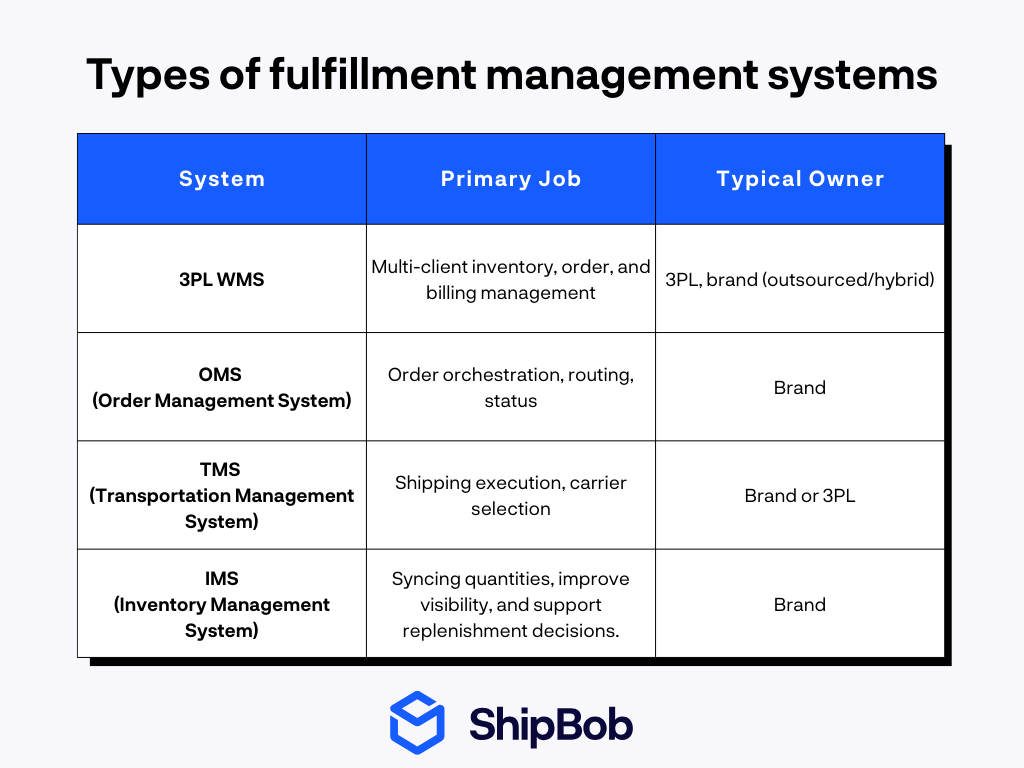
Consider an omnichannel brand selling on Shopify, Amazon, and to wholesale partners. The 3PL WMS becomes the source of truth for inventory. The OMS handles order routing and status, while the TMS manages shipping labels and carrier selection. Meanwhile, billing and storage events are tracked in the 3PL WMS, ensuring invoices match operational reality.
Features to look for in a 3PL warehouse management system
A 3PL warehouse management system must do more than run the warehouse—it needs to keep client-facing data accurate and actionable, so brands can make decisions with confidence. The features below are essential for modern, high-volume ecommerce brands. Each one addresses a specific operational challenge that scaling brands face daily.
📦 Inventory control and inventory integrity
Inventory control and integrity means knowing exactly what you have, where it is, and how much is available to sell across every location and channel.
A strong 3PL WMS provides real-time inventory visibility, showing “available,” “allocated,” and “on hand” quantities for each SKU. This helps brands avoid overselling and keeps inventory counts accurate, even as orders flow in from multiple channels.
For products like supplements or skincare, lot tracking and expiration date management enable FIFO (first in, first out) and FEFO (first expiring, first out) workflows. They also reduce waste and support specialty requirements.
But visibility alone isn’t enough. Cycle counting and audit trails must be built in, allowing brands to track every inventory adjustment and understand why changes occurred, without relying on manual spreadsheets.
💡
Inventory control is especially important for brands with high SKU counts or those selling in regulated categories.
Inventory questions to ask a 3PL

- Can I see real-time receiving status and inventory by location?
- How are inventory adjustments tracked and approved?
- What happens if there’s an inventory exception or discrepancy?
Why does this matter?
Inventory control and integrity features are non-negotiable for scaling brands; without them, it’s impossible to maintain trust in your numbers or make informed decisions about reordering and allocation.
🛒 Order workflows from inbound to outbound
Order workflows cover every step from receiving inventory to shipping orders out the door. Each step must connect seamlessly to the next.
A strong 3PL WMS should support:
- Inbound appointment coordination: Schedule and track inbound shipments to avoid bottlenecks.
- Advanced shipping notices (ASNs): Receive electronic notifications of incoming goods for faster processing.
- Receiving and putaway: Scan and store products in the right locations for efficient picking.
- Slotting: Assign SKUs to optimal storage locations based on velocity and size.
- Pick, pack, and ship confirmation: Guide warehouse staff through picking and packing, then confirm shipment.
- Exception handling: Flag and resolve issues like short shipments or address errors.
Beyond these basics, configurable rules are essential. For instance:
- Pick logic varies between single and multi-SKU orders.
- Packing rules differ for fragile items versus standard products.
- Order holds and address validation also require flexible configuration.
- A box selection algorithm should automatically choose the most cost-effective packaging for each order, reducing dimensional weight costs.
Product protection matters too. Standard dunnage options like kraft or Geami paper protect products during shipping, while “fragile” flags trigger extra care during packing, ensuring items arrive intact.
Returns support typically includes RMA intake, with brands choosing to restock, quarantine, or dispose of returned items. Data then flows back to the OMS or returns portal, keeping inventory accurate.
These workflows must be flexible enough to handle both routine and exception scenarios, ensuring smooth operations from inbound to outbound.
🛍️ DTC and B2B in one inventory pool
Supporting DTC and B2B fulfillment from a shared inventory pool is critical for omnichannel brands, yet these two channels operate very differently.
DTC and B2B order differ in structure, packing, and documentation requirements. B2B often requires EDI workflows, with core documents like the 850 (purchase order), 856 (advance ship notice), and 810 (invoice), but retailers vary widely in requirements, so flexibility is key.
The complexity continues with order types:
- Standard wholesale orders are shipped in bulk.
- EDI retail dropshipping sends individual orders to consumers on behalf of retailers.
- EDI retail distribution sends bulk shipments to retailer distribution centers or brick-and-mortar stores, but each requires different workflows and documentation.
Without unified inventory, brands face a major problem: they must split stock by channel and duplicate SKUs. This creates inconsistent availability across marketplaces and wholesale.
For example, a beauty brand selling on Shopify and shipping wholesale replenishment orders from the same SKU-level inventory count avoids tying up capital in separate pools. Unified inventory management streamlines operations and reduces the risk of overselling or stockouts.
💸 Billing automation and billing visibility
Billing automation and visibility ensure brands are only charged for what actually happens in the warehouse, with no surprises and no hidden fees. Without billing clarity, forecasting costs becomes guesswork, and unpleasant surprises become inevitable.
A 3PL WMS should tie charges to operational events such as receiving, storage, picks, and other warehouse activities. Invoices should match warehouse activity line by line. This transparency builds trust and simplifies reconciliation.
Buyer questions to uncover billing friction
- Is the rate card clear and easy to understand?
- Are there minimums or hidden fees?
- How detailed are invoices, and how are disputes handled?
During a demo, walk through a month of sample activity. Ask how each event appears on the invoice. This reveals whether billing is truly automated and transparent.
🔌 Integrations, APIs, and data flows
Reliable integrations are the foundation of smooth operations. They keep data flowing and prevent the manual workarounds that slow teams down.
Integrations and APIs connect your tech stack, eliminating manual work and reducing errors. But not all integrations are created equal.
Must-have integration categories include:
- Ecommerce platforms (like Shopify and BigCommerce)
- Marketplaces (like Amazon and Walmart)
- ERPs (like NetSuite)
- EDI providers (like SPS Commerce)
- Accounting tools
- Returns solutions
💡
To evaluate integration quality, check for real-time updates, strong error handling, and clean field mapping.
💡
Beware of “integration by spreadsheet.” This approach creates inventory mismatches and fulfillment delays. Instead, prioritize systems with direct, well-maintained integrations that keep data flowing automatically.
Integration questions checklist
- Are webhooks and real-time updates supported?
- What are the API limits and monitoring tools?
- Is there sandbox access for testing?
- Who owns integration maintenance?
📊 Actionable analytics and service tracking
Actionable inventory analytics and service tracking turn operational data into insights for continuous improvement. Raw data isn’t enough; you also need reports that drive decisions.
What should operators track? Key metrics include:
- Dock-to-stock time
- Order cycle time
- Pick/ship exception trends
- Backorder rates
- Inventory adjustment reasons
- Aging inventory
- SLA tracking with timestamped events
For weekly ops reviews, build a dashboard that answers three questions:
- What happened last week?
- Why did it happen?
- What should we change next week?
These analytics drive better decisions and help teams stay proactive rather than reactive.

How to evaluate a 3PL WMS for your business
When you’re comparing WMS options, it’s easy to get lost in marketing claims. The following framework will help you turn a feature wishlist into a structured buying process for vendor evaluation and selection.
Use an RFP scorecard built around workflows
An RFP (“Request for Proposal”) scorecard is a structured tool for evaluating vendors based on your operational needs.
It reworks subjective impressions into objective comparisons, and keeps evaluations focused on what matters most to your specific operation.
1. Start with a simple scoring structure that covers your core workflows, such as:
- Inbound receiving and appointment scheduling
- Inventory accuracy and integrity
- Outbound order processing
- Returns handling
- Omnichannel support
- B2B/EDI workflows
- Integrations and connectivity
- Reporting and analytics
- Billing automation and transparency
2. Next, set pass/fail non-negotiables. These might include real-time inventory visibility, strong integrations, and clear billing.
3. Weight different features and criteria based on your business model. For instance, apparel brands may prioritize variant management, while supplement brands give more weight to lot tracking.
Ask buyer-style questions that reveal how the system behaves under stress
Asking the right questions during the buying process uncovers how a 3PL WMS performs in real-world scenarios (generic demos won’t reveal these details).
Key questions include:
- How are exceptions like mispicks or address issues handled, and what visibility do I have?
- How is inventory integrity protected across multiple sales channels?
- How are EDI workflows supported for retailer orders, and what does onboarding look like per retailer?
- How is returns data reconciled back to my systems, and can I route returns to a non-3PL location?
- How is billing generated, and what operational events appear line-by-line on invoices?
These questions help you identify strengths and weaknesses before committing. They reveal whether a vendor truly understands your operational challenges or is simply checking feature boxes.
When to use a 3PL WMS for hybrid fulfillment
What is hybrid fulfillment?
A hybrid operations system combines in-house fulfillment with outsourced 3PL locations, giving brands flexibility as they scale.
When does hybrid fulfillment make sense?
Brands often want to keep some inventory in their own warehouse while outsourcing the rest. High-velocity SKUs or local markets often stay in-house. Lower-velocity items go to the 3PL. Special handling requirements might stay internal while standard fulfillment gets outsourced. The decision to go hybrid or not depends on order volume patterns, SKU velocity, and marketplace or B2B requirements.
What’s the key to hybrid success?
You need to maintain “one operating system” – in other words, running a single product catalog, unified inventory counts, and consistent reporting across all locations. Without this unified view, teams waste time reconciling data between systems.
As brands expand into new countries, system visibility becomes even more important. Domestic fulfillment within a country differs from international shipping, and the right WMS keeps everything in sync.
How ShipBob operationalizes 3PL WMS requirements for modern ecommerce brands
As a leading supply chain enablement and fulfillment partner, ShipBob offers ecommerce a proprietary WMS (the same one that powers ShipBob’s network of 60+ warehouses) and client-facing platform to run fulfillment with more visibility and control.
Connect your tech stack
ShipBob’s App Store and Developer API support dozens of direct integrations with ecommerce platforms, tools, ERPs, and EDI providers. This keeps data flowing automatically, eliminating manual CSV uploads that create errors and delays.
You can connect ecommerce partners your tech stack, from Shopify to your ERP, then confirm that orders and inventory updates sync in real time. You can see what happens when an order is edited or canceled, because everything updates instantly – no manual intervention required.
“Our business relies heavily on the key integrations between ShipBob, Loop Returns, and Shopify. The direct integration between ShipBob and Shopify is crucial to our success, serving as the primary driver for all our third-party services that depend on up-to-date order data.”
Sal Perera, Director of Supply Chain at CLEARSTEM
SKU-level inventory visibility
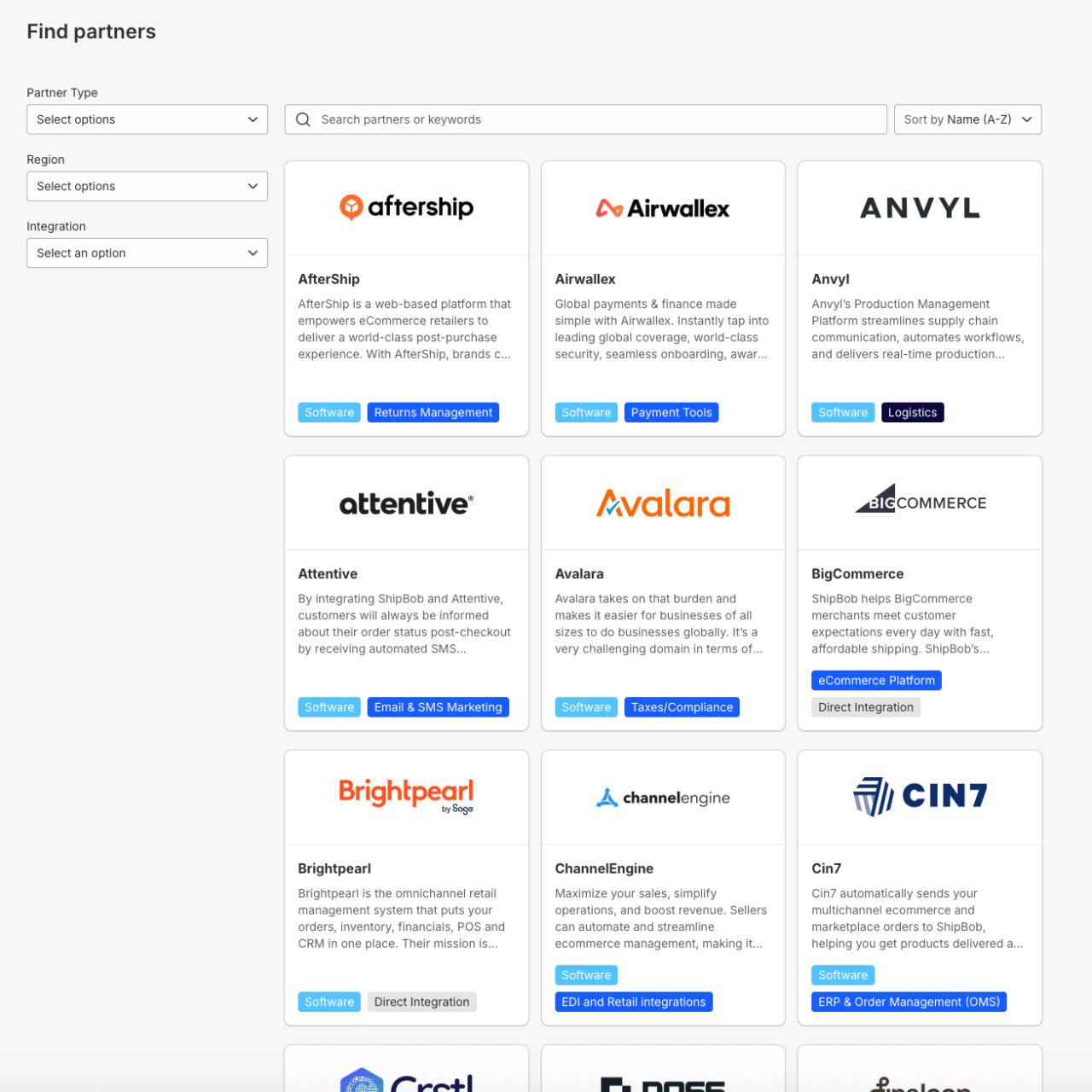
ShipBob WMS tracks inventory at the SKU level across all locations in a unified dashboard. Filters help teams troubleshoot quickly when issues arise.
But the system’s real power comes from unified product catalog management and barcode scanning, which ensure that the same product sold across multiple channels and locations is always counted and recorded correctly.
One system. One count. One source of truth.
This visibility equips you to make better decisions across your business. You can identify slow-moving inventory before it becomes a problem, forecast working capital needs more accurately, and plan promotions with confidence.
“ShipBob is so good at what they do as an omnichannel solution. They understand the complications of taking inventory on the road and our need to maintain separate inventories while still achieving inventory visibility.
We finally have cohesive visibility across our online Shopify store, our retail stalls, and our warehouse, and ShipBob has done a really good job of making it all work together.”
Tucker Robinson, Warehouse Director at Savannah Bananas
Fulfill DTC and B2B from one pool
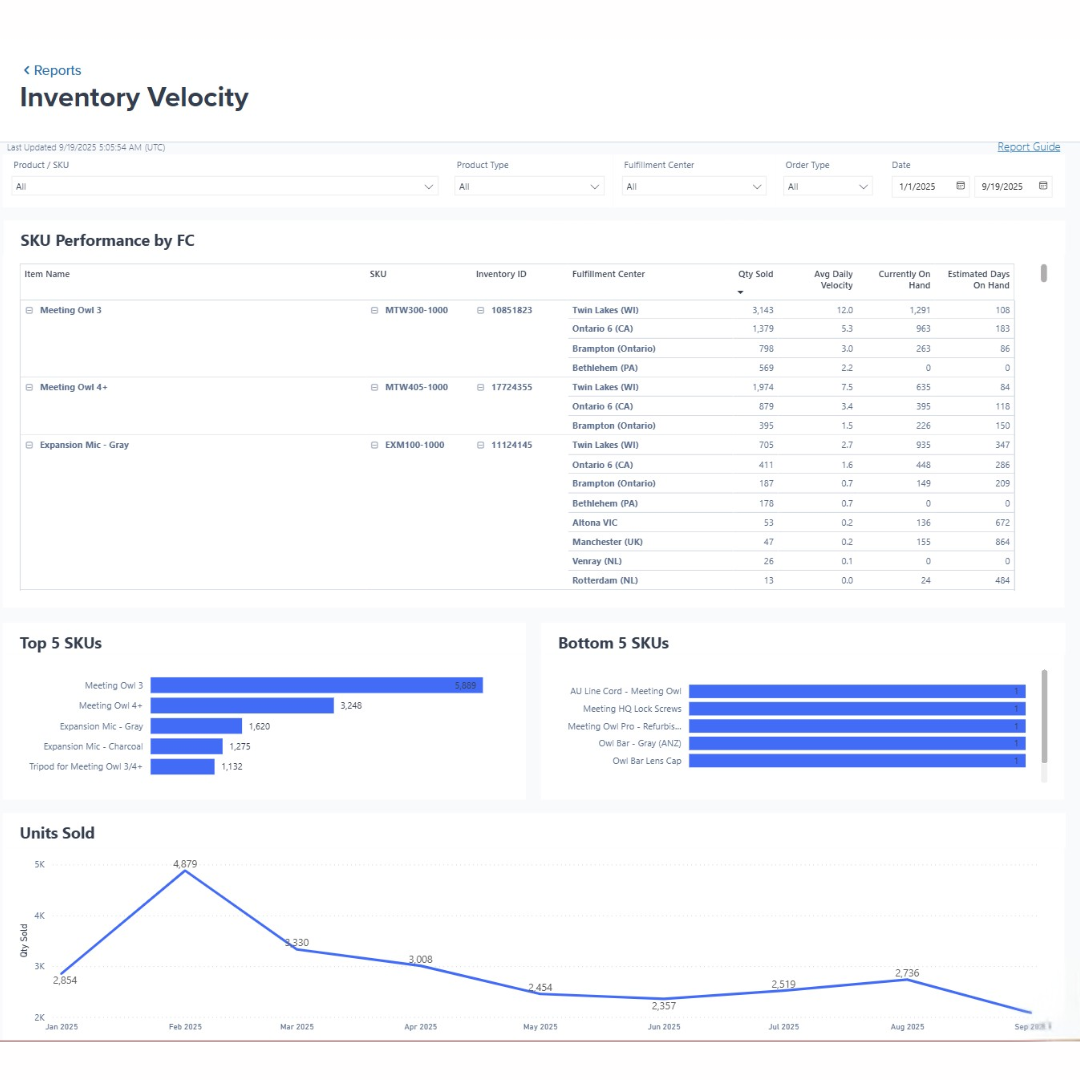
ShipBob’s omnichannel fulfillment solution supports both DTC and B2B fulfillment from one inventory pool.
ShipBob also offers EDI-automated B2B, supporting EDI workflows for retailer orders from US fulfillment centers with operational flows tailored to each retailer’s requirements.
Brands can fulfill retail dropshipping and distribution orders for approved retailers like Nordstrom, Target, Bloomingdale’s, and more – all from the same inventory that serves their DTC customers.
This unified approach eliminates the need to split stock or manage multiple providers. It reduces complexity and ensures that inventory is always working, never sitting idle in channel-specific pools.
“When it comes to fulfillment, DTC and B2B channels require different skill sets and have their own unique challenges, so a lot of brands end up juggling multiple different partners.
Having just one omnichannel fulfillment partner in ShipBob who can handle these two very different aspects of the business is really important, and definitely makes our job easier.”
Sergio Tache, Founder and CEO of Dossier

Strategic inventory placement to cut shipping times and costs
ShipBob’s Inventory Placement Program helps US-based brands automate inventory distribution across ShipBob’s network of 60+ fulfillment centers.
Our proprietary algorithm analyzes your brand’s actual order patterns to recommend the optimal inventory split that best meets demand.
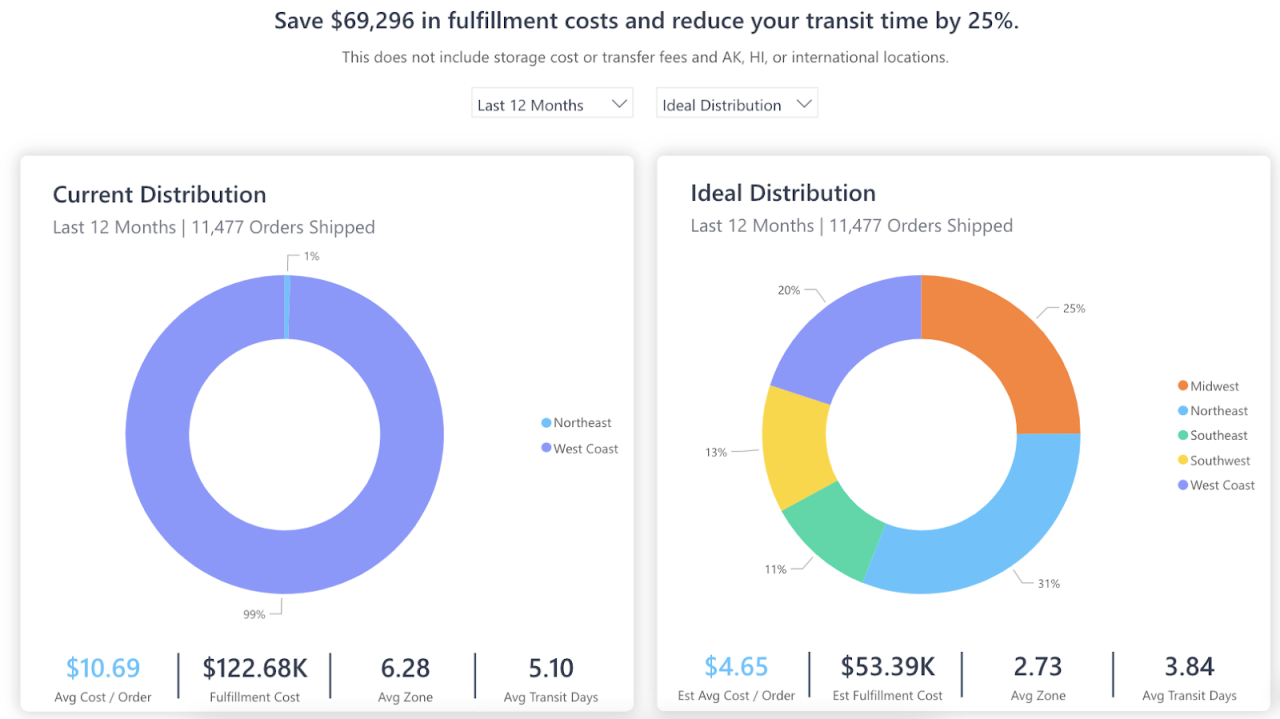
ShipBob then distributes your inventory regionally for you, saving you time and minimizing shipping costs for your customers.
“By letting ShipBob handle physically distributing our inventory for us across their hub-and-spoke fulfillment center network, we’re actually saving money. We’ve seen that shipping to customers is $3 cheaper on average using IPP compared to similar 3PLs’ services, which is a huge upside.”
Oscar Gutierrez, Operations Fulfillment Manager at goPure
To see how ShipBob can help with your specific needs, click the button below to get in touch.
3PL warehouse management system FAQs
Below are answers to some of the most common questions about 3PL WMS solutions.
When should I use an OMS vs a 3PL warehouse management system?
Use an OMS to orchestrate orders across channels and manage routing logic.
Use a 3PL WMS to execute warehouse operations, track inventory, and ensure orders are picked, packed, and shipped accurately.
How does a 3PL WMS handle inventory across multiple warehouse locations?
A 3PL WMS provides real-time visibility into inventory at each location. It tracks SKU-level counts and updates availability as orders are received, picked, and shipped. This ensures accurate inventory across all channels and locations.
What reports should I expect from a strong 3PL WMS?
Expect reports on:
- Dock-to-stock time
- Order cycle time
- Pick and ship exception trends
- Backorder rates
- Inventory adjustment reasons
- Aging inventory
These help you monitor performance and make data-driven decisions.
What should I ask a 3PL about WMS exceptions and issue resolution?
Ask how exceptions like shorted picks, stock discrepancies, and address issues are handled. Find out what visibility you have into resolution steps. Clarify how you’ll be notified and how issues are tracked to closure.
How does ShipBob structure its pricing and billing?
ShipBob uses an all-in fulfillment cost that includes the shipping label, picks, packing materials, and labor. Fee schedules are clearly published by country. Real-time, line-item billing is available in the dashboard for full transparency.
You can drill into invoices and analytics to see exactly what you were charged and why. Industry GRIs and peak surcharges are passed through transparently. Request a custom quote tailored to your order volume and product profile.
How does ShipBob ensure inventory accuracy and fulfillment reliability?
Every ShipBob facility runs on the same WMS with barcode scans and algorithmic pick and pack rules to reduce errors. Real-time inventory visibility, cycle counts, and audit trails are standard. You can track SLA performance with timestamped events in the dashboard. Network-level metrics are available at shipbob.com/data.
ShipBob also files carrier claims on your behalf. Multi-carrier rate shopping and standardized processes help maintain consistent delivery performance, even during peak.


