

In today’s competitive ecommerce landscape, an optimized supply chain is essential for success. With complex operations to manage, it can be hard to decide where to focus your improvement efforts.
The Supply Chain Operations Reference (SCOR) model simplifies this by organizing your supply chain into six core processes: Plan, Source, Make, Deliver, Return, and Enable. This standardized framework helps you identify bottlenecks, streamline operations, and drive continuous improvement.
This guide will show you how to apply SCOR principles to create faster, more resilient supply chains for your ecommerce business. You’ll discover practical performance metrics, implementation strategies, and operational best practices to delight your customers.
What is the SCOR (Supply Chain Operations Reference) model?
The SCOR model is a standardized framework that helps businesses evaluate and improve their entire supply chain performance.
Created by industry experts, SCOR serves as a common language that enables supply chain professionals to communicate effectively and work together toward shared goals.
Unlike other frameworks that focus on specific supply chain areas, SCOR takes a comprehensive approach by covering all processes from planning to delivery. This makes it valuable for ecommerce businesses of any size looking to identify bottlenecks, streamline operations, and drive continuous improvement.
SCOR simplifies complex supply chains by organizing them into six core processes: Plan, Source, Make, Deliver, Return, and Enable. This structure allows companies to measure performance against industry benchmarks and pinpoint improvement opportunities.
A brief history of the SCOR framework
The SCOR model was created in 1996 by the Supply Chain Council, a global non-profit organization seeking to develop a standardized framework for improving supply chain performance across industries.
In 2014, APICS (now the Association for Supply Chain Management or ASCM) acquired the Supply Chain Council and continued developing the SCOR model. Under ASCM’s leadership, the framework has been enhanced to address the needs of digital commerce and increasingly complex global supply networks.
Today’s version of SCOR has been tailored to meet ecommerce requirements, emphasizing agility, responsiveness, and customer focus. It has become an industry standard that helps organizations of all sizes optimize their supply chains and drive business success.
The 6 core processes in the SCOR model
The SCOR model provides a comprehensive framework that covers end-to-end supply chain operations, from planning and sourcing to delivery and returns. By breaking down the supply chain into six core processes – Plan, Source, Make, Deliver, Return, and Enable – SCOR helps ecommerce businesses map their operations to these standardized processes, creating a holistic view of the entire supply chain.
Each process plays a crucial role in ensuring the smooth flow of goods and information, ultimately impacting customer satisfaction and operational efficiency. Let’s take a closer look at how these processes interconnect and apply to ecommerce businesses.
1. Plan
The Plan process encompasses all strategic planning activities, including demand forecasting, inventory planning, and resource allocation.
Effective planning is essential for ecommerce businesses to ensure they:
- Have the right products in the right quantities to meet customer demand while minimizing excess inventory and operational costs.
- Can support long-term growth and scalability
- Improve their bottom line
- Position themselves for success in a competitive market.
However, planning in the ecommerce context comes with its own set of challenges. Seasonal demand fluctuations, flash sales, and rapidly changing consumer preferences can make accurate forecasting difficult.
To overcome these challenges, data-driven planning is crucial. By leveraging historical sales data, market trends, and customer insights, ecommerce businesses can make more informed decisions and adapt quickly to changing conditions.
2. Source
The Source process focuses on supplier selection, procurement strategies, and inventory acquisition.
Effective sourcing ensures that ecommerce businesses have a reliable supply of high-quality products at competitive prices, which directly impacts product availability and customer satisfaction.
Some best Source practices include:
- Building strong supplier relationships. By establishing clear communication channels, setting performance expectations, and fostering collaboration, ecommerce businesses can ensure a stable supply chain and minimize disruptions.
- Diversifying the supplier base, which can help mitigate risks associated with relying on a single supplier.
- Considering various sourcing models, such as dropshipping and just-in-time inventory, based on their specific needs and capabilities. Dropshipping, for example, allows businesses to offer a wide range of products without holding inventory, while just-in-time inventory helps minimize storage costs and reduce the risk of obsolescence.
Ultimately, sourcing decisions have a significant impact on overall supply chain performance. To optimize your sourcing strategy, you’ll need to carefully evaluate suppliers, negotiate favorable terms, and implement efficient procurement processes.
3. Make
In the SCOR model, the “Make” process encompasses all activities related to the production of goods, including manufacturing, assembly, and kitting.
While not all ecommerce businesses are directly involved in manufacturing, understanding the “Make” process is crucial for ensuring product quality, customization, and timely availability.
For businesses that do manufacture their own products, the “Make” process involves managing production schedules, monitoring quality control, and implementing efficiency improvements to optimize output and minimize waste. This may include strategies such as lean manufacturing, Six Sigma, or other methodologies aimed at streamlining production processes.
Ecommerce businesses that don’t manufacture their own products can still apply SCOR principles to the “Make” process by focusing on value-added activities such as product customization, custom packaging, or kitting.
Kitting and assembly
Kitting refers to the process of grouping individual items together into a single SKU, often for the purpose of creating a bundled product or promotional offering. Effective kitting requires careful planning and coordination to ensure that all necessary components are available and that the assembly process is efficient and scalable.
By applying SCOR principles to kitting and assembly, ecommerce businesses can improve order accuracy, fulfillment times, and the customer experience
This may involve:
- Implementing standardized processes.
- Utilizing technology to streamline workflows.
- Monitoring performance metrics to identify opportunities for improvement.
Quality control and customization
Regardless of whether a business manufactures its own products or sources them from suppliers, maintaining consistent quality is essential for customer satisfaction and brand reputation. Implementing robust quality control measures within the “Make” process helps ensure that products meet or exceed customer expectations.
For businesses that offer product customization, the “Make” process also involves managing the customization workflow to ensure accuracy and efficiency. This may require specialized equipment, trained personnel, and streamlined processes to minimize errors and delays.
By focusing on quality control and customization within the “Make” process, ecommerce businesses can differentiate themselves from competitors, build customer loyalty, and reduce the risk of returns or negative reviews.
Ultimately, the “Make” process in the SCOR model plays a critical role in ensuring that products are produced efficiently, meet quality standards, and are available when and where customers need them. In optimizing this process, ecommerce businesses improve operational performance, reduce costs, and enhance the overall customer experience.
4. Deliver
The Deliver process is where ecommerce supply chains directly impact customer experience.
This critical stage covers everything from order fulfillment to last-mile delivery: the moment when all behind-the-scenes work creates a tangible customer touchpoint.
Today’s customers expect both speed and accuracy. Ecommerce businesses must:
- Optimize their fulfillment operations by streamlining pick, pack, and ship workflows, implementing technology solutions, and partnering with reliable carriers.
- Ensure orders arrive complete, undamaged, and exactly as described, making quality control and real-time inventory visibility essential components of effective delivery.
As customer expectations evolve toward same-day and next-day delivery, businesses must continuously refine their delivery processes to reduce time and costs while maintaining service quality. For companies expanding internationally, cross-border shipping adds complexity through customs regulations, tariffs, and regional logistics challenges that require adaptable fulfillment networks.
5. Return
In ecommerce, a seamless returns experience can transform a one-time buyer into a loyal customer. The SCOR model recognizes this by dedicating an entire process to returns management and product recalls.
Effective returns start with a clear, customer-friendly policy that minimizes friction. Businesses should provide simple instructions, prepaid return labels, and multiple return options while protecting themselves from potential abuse. Once initiated, returns must be efficiently processed through inspection, restocking, repair, or disposal. Each step requires coordination to control costs and maintain inventory accuracy.
Smart ecommerce businesses leverage returns data for improvement. By analyzing return reasons and trends, companies can identify quality issues, refine sizing information, or adjust marketing claims to prevent future returns.
Returns significantly impact customer lifetime value. Research shows customers with positive return experiences are more likely to purchase again, while frustrating processes drive customers away, so prioritizing the return experience helps businesses build stronger customer relationships while minimizing the financial impact of returns.
6. Enable
The Enable process is the foundation that supports all other SCOR processes. It encompasses the supporting activities and infrastructure that keep the supply chain running smoothly.
Some of the most important elements of the Enable process are:
- Technology: From warehouse management systems to transportation platforms, the right tools provide visibility, automation, and data-driven insights. However, technology must integrate with business processes to deliver maximum value.
- Data: Data drives supply chain performance through standardized collection and reporting. By establishing consistent metrics and KPIs, businesses can benchmark performance, track progress, and identify optimization opportunities — essential for informed decision-making in changing markets.
- Organizational alignment: Supply chain management requires cross-functional collaboration and communication. The SCOR model provides a common language that helps break down silos and foster shared goals across departments.
- Continuous improvement: Supply chains must evolve to meet new challenges and opportunities. By building a culture of ongoing optimization and providing necessary resources, businesses stay competitive and responsive.
SCOR metrics explained
The SCOR model offers a standardized approach to measuring supply chain performance with common metrics that let you benchmark against competitors and spot improvement opportunities. However, choosing which metrics to track can be challenging.
SCOR organizes metrics in three levels: Level 1 (high-level metrics for executives), Level 2 and 3 (detailed metrics for managers and analysts). Here are the essential SCOR metrics for ecommerce:
- Perfect Order Fulfillment: Percentage of orders delivered complete, on-time, and damage-free
- Order Fulfillment Cycle Time: Average time from order placement to delivery
- Total Supply Chain Management Cost: All costs of running your supply chain operations
- Cash-to-Cash Cycle Time: Time needed to convert inventory investments into sales revenue
- Return on Supply Chain Fixed Assets: Performance of your infrastructure investments
SCOR now includes sustainability metrics like carbon footprint and waste reduction, which are increasingly important to environmentally-conscious consumers.
When implementing SCOR metrics:
- Align metrics with your specific business goals.
- Focus on a few key metrics rather than trying to measure everything.
- Establish baselines and set realistic improvement targets.
- Use industry benchmarks as reference points, but focus on improving your own performance over time.
How to implement the SCOR model in 5 steps
Implementing the SCOR model can seem like a daunting task, especially for small to mid-sized ecommerce businesses with limited resources. The good news is that SCOR is a flexible framework that can be tailored to your specific needs and goals.
Here’s a five-step roadmap for getting started:
Step 1: Define objectives and scope
The first step in any SCOR implementation is to define your objectives and scope.
What are you trying to achieve with your supply chain? Are you looking to reduce costs, improve delivery speed, or enhance customer satisfaction?
Once you have a clear understanding of your goals, you can determine which areas of the supply chain to focus on first.
It’s important to involve key stakeholders in this process, including senior executives, functional leaders, and front-line employees. Securing buy-in and alignment from all levels of the organization is critical for success.

Step 2: Map current processes
The next step is to map your current supply chain processes and identify any pain points or inefficiencies.
This can be done through a combination of interviews, observations, and data analysis. The goal is to create a detailed picture of how your supply chain currently operates, from planning and sourcing through delivery and returns.
During this process, it’s important to establish performance baselines for key metrics. This will give you a starting point for measuring progress and identifying areas for improvement.

Step 3: Align metrics and technology
Once you have a clear understanding of your current processes, the next step is to align your metrics and technology with your SCOR implementation.
This may involve selecting new metrics to track, implementing new software or systems, or integrating existing tools to create a more seamless data flow.
Choose metrics that are relevant to your business goals and that can be easily measured and reported on a regular basis. You may also need to invest in new technology or upgrade existing systems to support your SCOR implementation.

Step 4: Develop and execute improvement plans
With your metrics and technology in place, the next step is to develop and execute improvement plans. This may involve a variety of initiatives, such as:
- Streamlining processes to reduce waste and inefficiency.
- Implementing new inventory management strategies to reduce stockouts and overstocks.
- Partnering with new suppliers or carriers to improve delivery speed and reliability.
- Enhancing customer service and returns processes to improve satisfaction and loyalty.
Improvement plans should be prioritized based on their potential impact and feasibility. Quick wins that deliver tangible results can help build momentum and secure ongoing support for your SCOR implementation.

Step 5: Monitor, review, and iterate
The SCOR model is not a one-time exercise; it’s an ongoing process of continuous improvement. Once you’ve implemented your initial improvement plans, it’s important to monitor your progress and review your results on a regular basis. This may involve weekly or monthly performance reviews, as well as more in-depth quarterly or annual assessments.
Based on your results, you may need to adjust your plans or identify new areas for improvement. The key is to remain agile and adaptable, always looking for ways to optimize your supply chain and deliver better results for your business and your customers.

Applying the SCOR model to ecommerce and omnichannel
While SCOR works for any supply chain, ecommerce and omnichannel businesses face unique challenges. Here’s how to apply SCOR effectively in these environments:
🛠️ Building sustainable workflows with SCOR
Today’s consumers demand environmentally responsible practices. SCOR helps integrate sustainability across your supply chain through:
- Partnering with eco-conscious suppliers.
- Using biodegradable or recyclable packaging.
- Optimizing transportation to reduce emissions.
- Tracking sustainability metrics like carbon footprint.
Sustainable SCOR processes both reduce environmental impact and boost brand loyalty.
🔌 Technology integrations & real-time data
Technology powers effective SCOR implementation, especially for digital-first businesses. Key tech considerations include:
- Connecting your ecommerce platform with WMS and OMS systems for real-time visibility.
- Implementing analytics tools to track SCOR metrics.
- Using automation and AI to streamline processes.
- Ensuring data security and compliance.
The right tech stack creates a more agile, responsive supply chain that drives results.
🤝 The expert advantage for SCOR adoption
Partnering with a fulfillment expert can accelerate your SCOR implementation through:
- Access to established fulfillment networks.
- Specialized expertise in inventory and order management.
- Advanced technology for visibility and optimization.
- Scalability to adapt as your business grows.
Choose a fulfillment partner that aligns with your SCOR objectives and has a proven success with similar businesses.
How ShipBob helps ecommerce brands implement SCOR principles
As a leading supply chain enablement platform for ecommerce businesses, ShipBob is uniquely positioned to help brands implement SCOR principles and achieve their supply chain goals.
Here’s how ShipBob supports each of the six SCOR processes:
Plan: ShipBob’s technology platform provides real-time visibility into inventory levels, order volumes, and performance metrics, enabling better demand planning and forecasting.
“The number one thing that any mid-market company evaluating fulfillment partners should consider is: What is the software platform like, and does it meet all your needs?
For us, ShipBob absolutely met all our needs and more. They provided way more data, visibility, and ease of use than we were getting before, even more than we thought we needed. ShipBob’s already built out so many of the tools and reporting capabilities brands want, so don’t bother reinventing the wheel. You can use what ShipBob provides, because it’s all great and all right there for you.”
Gregory Frye, VP of Operations at Hi-Altitude Brands
Source: ShipBob’s recieving network and seelction of trusted carriers ensures reliable and cost-effective sourcing of materials and products.
“We went on a very fast production run during November and December this past year, and ShipBob expedited receiving for a lot of new inventory that supported our sales.
It was a huge operation that required a ton of cooperation between manufacturing, trucking, shipping to all the facilities, and stowing – plus everything had to be expedited to have stock arrive in fulfillment centers by peak.
But ShipBob didn’t miss a beat. They worked with us tirelessly to make sure we had the right inventory where we needed it, when we needed it. In the end, we didn’t have a single stockout of any item during all of peak season.”
Nadav Haras, VP of Supply Chain at Particle
Make: While ShipBob doesn’t directly manufacture products, they do offer value-added services like kitting and assembly to support production processes.



Deliver: ShipBob’s global fulfillment network and advanced order management system enable fast, accurate, and cost-effective delivery to customers around the world.
“Currently, we’re using the Inventory Placement Program (IPP) to distribute our inventory across 3 of ShipBob’s fulfillment centers in the US. It’s allowed us to service our customers in a better way, because we’re able to provide much faster shipping times.
In the past, our shipping times were anywhere between 5-7 business days; now we’re averaging around 3 days – and that’s just using standard shipping. That in itself has driven more purchases and customers for us, because it allows us to compete with Amazon and their delivery times. I’d rather get my stuff faster than having to wait five to seven days (who wouldn’t?), so being able to offer quick delivery makes us more attractive to customers and helps us win more business.”
Oscar Gutierrez, Operations Fulfillment Manager at goPure
Return: ShipBob’s automated returns processing and disposition capabilities help brands manage reverse logistics efficiently and effectively.
“Our business relies heavily on the key integrations between ShipBob, Loop Returns, and Shopify. The direct integration between ShipBob and Shopify is crucial to our success, serving as the primary driver for all our third-party services that depend on up-to-date order data. Additionally, the direct integration with Loop Returns enhances our customer support team’s efficiency and empowers our customers.”
Sal Perera, Director of Supply Chain at CLEARSTEM
Enable: ShipBob’s technology platform and data analytics capabilities provide the foundation for continuous improvement and optimization across all SCOR processes.
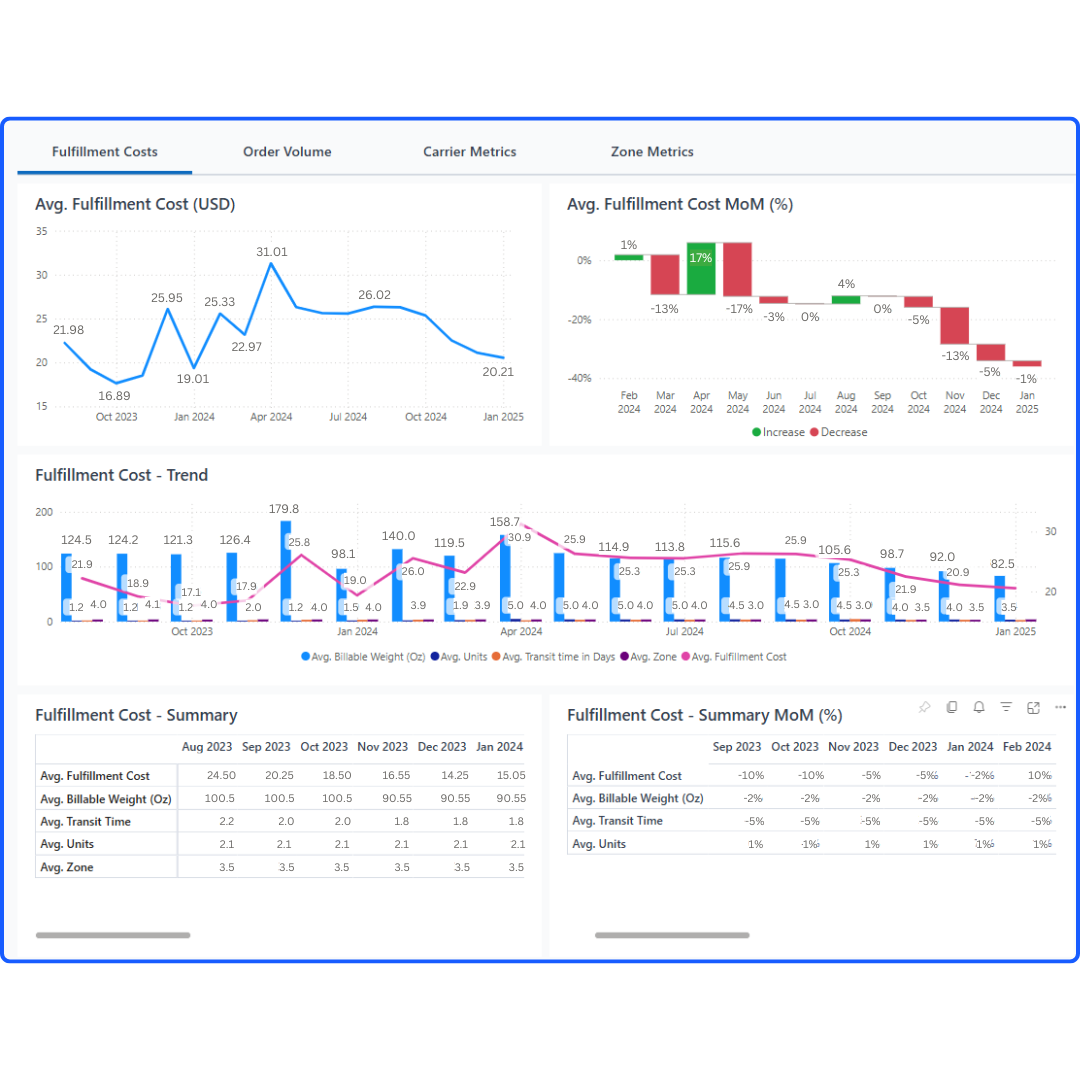
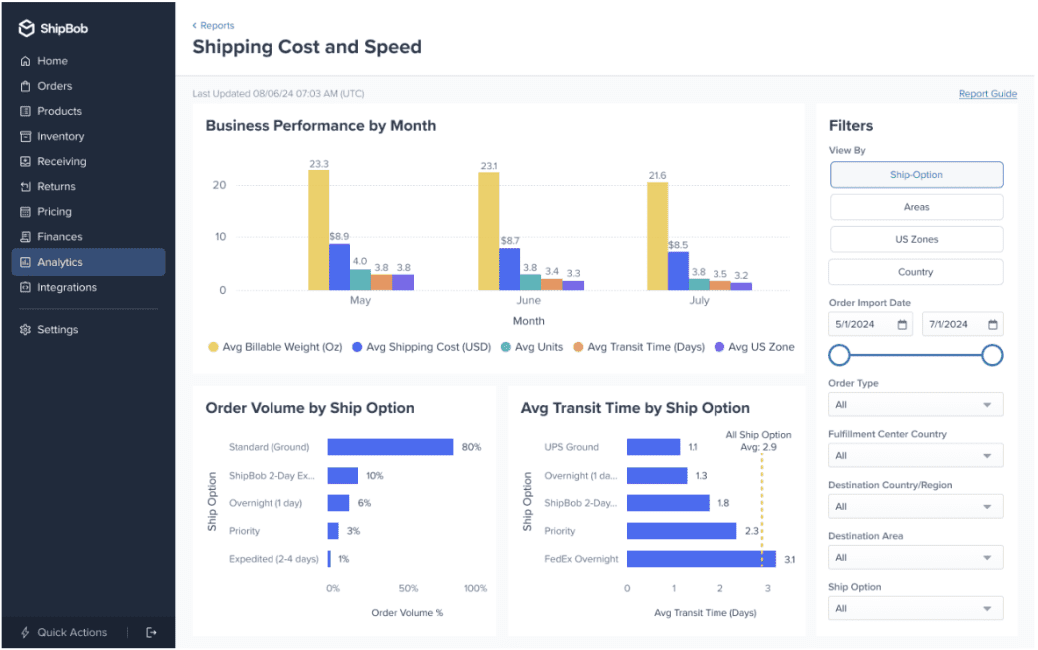
By partnering with ShipBob, ecommerce brands can leverage proprietary technology, infrastructure, and expertise to implement SCOR principles and drive measurable improvements in supply chain performance. Whether you’re just starting out or looking to take your operations to the next level, ShipBob can help you achieve your goals and grow your business.
For more information about how ShipBob can help you optimize your supply chain and fulfillment operations, click the button below to get in touch.
FAQs about the Supply Chain Operations Reference model
Here are answers to common questions about the SCOR model.
How does the SCOR model differ from other supply chain frameworks?

Unlike Lean and Six Sigma which focus on specific improvement areas, SCOR offers a comprehensive end-to-end view of your entire supply chain. It provides standardized metrics and terminology that enable easier benchmarking and communication across industries.
SCOR complements rather than replaces other methodologies. You can integrate it with Lean, Six Sigma, or other approaches to create a customized supply chain optimization strategy.
Which SCOR metrics should ecommerce brands prioritize first?
Start with metrics that address your biggest pain points. For most online retailers, this means customer-facing metrics like order accuracy, on-time delivery, and return processing time.
Balance these with internal metrics such as inventory turns, cycle time, and cost per order to gain insights into operational efficiency.
Small to mid-sized businesses should take a phased approach. Begin with core metrics aligned to your strategic goals, then expand as your SCOR implementation matures.
How does ShipBob help ecommerce brands adopt the SCOR model?
ShipBob’s platform supports all six SCOR processes with technology that integrates with popular ecommerce platforms. This provides real-time visibility into key metrics and enables data-driven decision making.
By leveraging ShipBob’s fulfillment network and logistics partnerships, you can scale operations while maintaining SCOR best practices. ShipBob’s supply chain experts guide you through implementation, helping overcome challenges and achieve your goals.
What role does sustainability play in the SCOR model?
Sustainability is increasingly important in SCOR as consumers demand environmentally responsible practices. The framework addresses sustainability at each supply chain stage and includes environmental impact metrics like carbon footprint and waste reduction.
Is SCOR suitable for omnichannel fulfillment?
Yes, SCOR works well for omnichannel operations by providing a framework for managing multi-channel inventory and orders. It helps businesses optimize inventory placement, streamline fulfillment, and deliver consistent customer experiences across all channels.
ShipBob’s omnichannel capabilities align with SCOR, enabling you to manage inventory across channels, fulfill from optimal locations, and maintain supply chain visibility.
How can small ecommerce businesses implement SCOR without significant resources?
Take a phased approach by focusing on your most critical supply chain areas first. Partnering with a supply chain enablement partner like ShipBob reduces barriers to adoption by providing access to established infrastructure and expertise without major upfront investments.
Use cost-effective tools like cloud-based software and standardized templates to streamline implementation. The SCOR framework scales with your business, allowing for gradual expansion.
What are the most common challenges in SCOR implementation?
The biggest challenges include:
- Resistance to change: Overcome this with clear communication and phased implementation
- Data integration issues: Ensure your systems can capture and share necessary data points
- Resource constraints: Focus on high-impact elements and leverage external partnerships
Learning from other ecommerce brands’ experiences helps you proactively address these challenges and set your implementation up for success.


