

For ecommerce brands, the technical details of carrier vetting aren’t the biggest concern. It’s actually whether your fulfillment partner has a reliable, repeatable process for choosing and monitoring carriers.
You don’t need to become a transportation expert, but you do need confidence that your orders are in good hands.
This guide breaks down what carrier vetting is and offers a simple checklist for brands that want to understand the basics, and also explains how fulfillment partners can handle carrier selection and oversight so you don’t have to.
What is carrier vetting?
Carrier vetting is the process of qualifying shipping carriers before entrusting them with your orders.
Carrier vetting is different from ongoing monitoring, which checks performance after onboarding.
Most ecommerce brands don’t own this process directly. Instead, they rely on brokers, shippers, or third-party logistics providers (3PLs) to handle it.
When done well, carrier vetting leads to fewer delivery surprises and reduces the volume of “where is my order?” (or WISMO) tickets from customers.
What a repeatable carrier vetting process looks like (simple checklist)
A structured carrier vetting process helps ensure every shipment is handled by a legitimate, capable carrier. Even if you outsource fulfillment, understanding the basics helps you ask the right questions and set expectations with your partners.
1. Must-do vs should-do vs optional checks ✅
Carrier vetting can be broken down into three tiers: must-do, should-do, and optional checks. This approach keeps your process consistent without overcomplicating it:
- Must-do: Essential checks every time you tender a shipment. These non-negotiables protect you from fraud, compliance failures, and uninsured losses.
- Should-do: Extra steps that reduce risk as your shipping volume grows. These checks add a layer of confidence when you’re moving beyond a handful of shipments per week.
- Optional: Deeper checks for new lanes, peak seasons, or special requirements. Reserve these for high-value shipments, unfamiliar routes, or carriers you haven’t worked with before.
Here’s how these tiers break down:
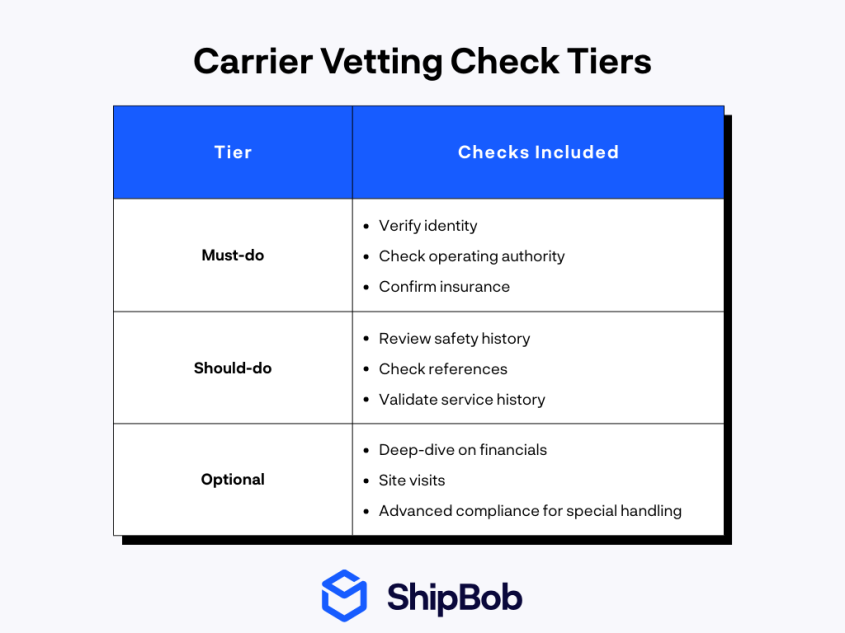
A tiered checklist keeps your team focused and ensures nothing critical is missed, even as your business scales.
2. Verify legitimacy and operating credentials 🤝
Start by confirming the carrier’s identity matches official records. Check the company name and contact information for consistency. Small discrepancies can signal big problems.
Once you’ve verified basic identity information, move on to operating authority. Check the carrier’s Motor Carrier or DOT number through the Federal Motor Carrier Safety Administration (FMCSA) database in the US, or use similar public registries in other countries. This step confirms the carrier is legally authorized to carry your shipments.
🚩
Throughout this process, watch for red flags like mismatched contact details, addresses that don’t match the business size (such as a residential address with ten trucks listed), or inconsistent paperwork.
These warning signs can indicate potential fraud or unauthorized carriers posing as legitimate operations.
3. Validate insurance coverage details 💰
Always confirm that the carrier has a current certificate of insurance (COI) that has not expired . The COI should match the carrier’s name and cover the types of shipments you plan to send.
🚩
Be wary of COIs with altered contact information or insurance agency emails ending in generic domains like “@gmail.com,” as these can indicate forgeries. When in doubt, contact the insurance agency directly using independently verified contact information.
Beyond verifying authenticity, check that coverage limits are appropriate for your shipment’s value and destination.
A carrier with adequate shipping insurance for domestic parcels may not have sufficient coverage for high-value international freight. Store COIs and renewal dates in a centralized system to avoid scrambling for documentation when you need it most.
4. Review safety history and performance indicators ⚠️
Review publicly available safety data such as inspection records, out-of-service rates, and violation history. In the US, the FMCSA’s Safety Measurement System provides this information, but look beyond the numbers to identify patterns of non-compliance or frequent incidents.
Safety data tells only part of the story—on-time delivery performance matters just as much. The difference between 95% and 99% on-time deliveries is significant when carriers handle thousands of shipments daily. Monitoring performance over time reveals how well a carrier maintains consistency during demand surges.
That said, use safety checks as one input among many, rather than the only factor. When onboarding a new carrier, set stricter thresholds. For proven partners with a strong track record, you can relax these checks slightly, but never skip them entirely.

Lock in your carrier vetting process (or hand it off)
Carrier vetting protects delivery consistency and customer satisfaction, but ecommerce brands shouldn’t have to build transportation operations from scratch. The right approach depends on your resources, growth stage, and appetite for logistics complexity.
Here’s what to do next:
- Assign ownership: Decide whether carrier vetting lives in-house or with your fulfillment partner. Clear accountability prevents gaps.
- Adopt a minimum viable checklist: Even a simple tiered approach (must-do, should-do, optional) keeps your process consistent and scalable.
- Set a re-check cadence: Carriers should be re-verified at least annually, or more frequently during peak seasons or after service issues.
- Document exceptions and escalation paths: When problems arise, your team should know exactly who to contact and what steps to take.
Evaluate whether your current setup supports your growth and global expansion goals. If carrier vetting feels like a distraction from your core business, that’s a sign it may be time to hand it off.
How ShipBob can handle carrier vetting (so you don’t have to)
Many ecommerce brands choose to outsource fulfillment to avoid the complexity of carrier vetting. A capable fulfillment partner brings specialized knowledge, established carrier networks, and technology investments that would be costly to build internally, turning what could be a resource drain into a competitive advantage.
Supply chain enablement platforms like ShipBob operationalize carrier selection and oversight, reducing manual risk while freeing your team to focus on growth instead of logistics administration. Here’s how:
Standardized carrier selection and routing decisions
ShipBob’s full-stack fulfillment platform centralizes shipping operations, ensuring that carrier selection and order routing follow consistent, auditable workflows.
This eliminates subjective, ad-hoc decisions across teams and locations. That way, every shipment moves through the same disciplined process.
This consistency translates directly into visibility. Within the ShipBob dashboard, you can review shipping options and routing outcomes in real time, giving you transparency into how each order is handled.
You stay informed and maintain confidence in your shipping operations without micromanaging every detail. The platform handles the heavy lifting while you focus on strategic decisions.
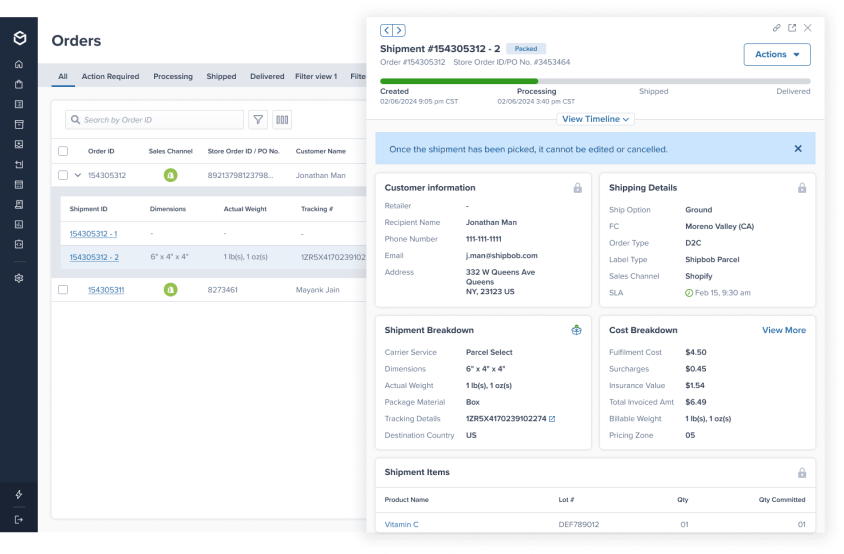
Reduced exposure to unauthorized carrier activity
ShipBob automates carrier selection and order routing through our proprietary logistics infrastructure and Decision Engine, significantly reducing the risk of fraud or unauthorized carrier activity.
The platform minimizes manual handoffs (each one a potential vulnerability) and tracks every shipment from fulfillment center to delivery.
This automation is powered by ShipBob’s carrier-agnostic approach, which means the platform isn’t locked into a single provider.
Instead, it selects the best carrier for each shipment based on cost, speed, reliability, and destination.
This flexibility gives brands both competitive rates and disciplined oversight without the burden of managing multiple carrier relationships directly.
“Shipping used to be a huge cost center for us, because our previous 3PL didn’t have any ability to do carrier rate shopping. They only worked with UPS, FedEx, DHL, and USPS, but we could only choose one of those to use for all of our shipments.
ShipBob’s model is completely different. Their software has a carrier selection algorithm that automatically chooses the fastest, most cost-effective carrier for each unique package, and they work with the same, plus many more highly vetted carriers (for which they monitor performance and optimize lanes at the zip code level).
Leveraging ShipBob’s intelligent carrier mix, vast network, and algorithms, our actual per shipment rate is at least a dollar less than it was before. Combined with every kind of fee being lower, switching to ShipBob has saved us $1 million dollars in one year alone.”
Gregory Frye, VP of Operations at Hi-Altitude Brands



Ongoing visibility as you scale shipment volume
ShipBob’s onboarding and support teams help set up your operational workflows, while analytics and reporting provide ongoing visibility into shipping trends.
As your business grows, you can track key metrics directly in the platform: monitoring shipping costs, delivery performance, and exception trends without manual data collection.
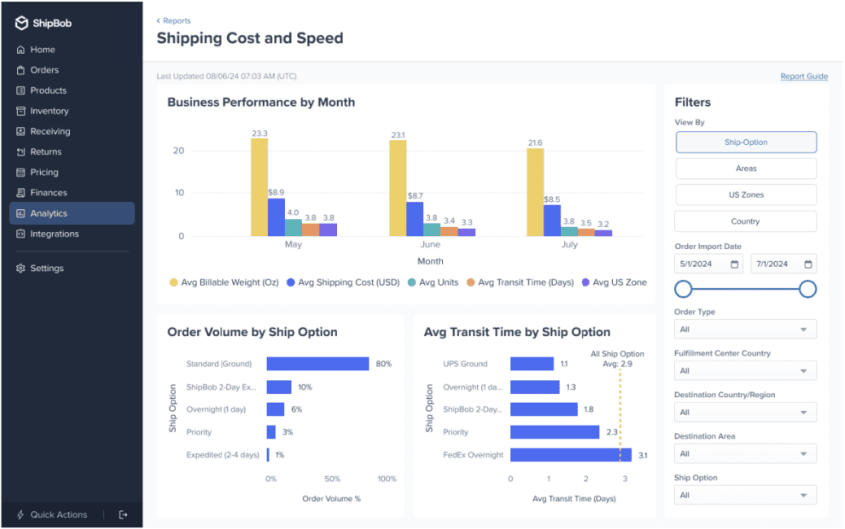
“ShipBob is so much more than a pick and pack 3PL. ShipBob provides data I didn’t have access to before. Using the ShipBob dashboard, I can see where orders are going, which states we ship to most, and other critical information that informs how I move my business. That level of detail is invaluable.”
Annie Leal, owner of I Love Chamoy
To learn more about how ShipBob can help you optimize your carrier strategy, click the button below to get in touch.
Carrier Vetting FAQs
Here are answers to some of the most common questions about carrier vetting.
What is the difference between carrier vetting and carrier monitoring?

Carrier vetting is the process of qualifying a carrier before you use them, while carrier monitoring involves ongoing checks of their credentials and performance after onboarding.
How often should carriers be re-checked after onboarding?
Carriers should be re-checked at least annually, or more frequently if you notice issues, changes in service, or during peak seasons.
What are common red flags for carrier identity spoofing?
Watch for mismatched contact details, last-minute changes in communication, inconsistent paperwork, or requests to change payment instructions.
Do ecommerce brands need to do carrier vetting themselves?
Most ecommerce brands rely on their fulfillment partner or 3PL to handle carrier vetting, but understanding the basics helps you set expectations and ask the right questions.
How does ShipBob help with carrier vetting for ecommerce shipping?
ShipBob automates carrier selection and oversight, using a centralized platform and proprietary Decision Engine to ensure every shipment is handled by a vetted, reliable carrier.
What makes ShipBob different from a single-carrier shipping setup?
ShipBob is carrier-agnostic, meaning it selects the best carrier for each shipment based on multiple factors, rather than relying on a single provider.
How does ShipBob monitor carrier performance and handle delivery exceptions?
ShipBob continually monitors shipping trends and exceptions through its analytics and reporting. It can adjust carrier selections to help maintain delivery consistency as conditions change.
If an issue occurs in transit, ShipBob’s support team can help investigate and can file carrier claims on your behalf when appropriate.


