
Key Takeaways
1
B2C fulfillment involves shipping orders directly to consumers (as opposed to B2B fulfillment, which deals with bulk orders to businesses).
2
Key factors in choosing a B2C fulfillment partner include technology integration, order accuracy, shipping reliability, and customer service responsiveness.
3
Outsourcing to a 3PL can save your brand time and money, and provide access to advanced technology and a robust distribution network.
4
A suitable B2C fulfillment partner should offer scalable solutions, including international fulfillment and seamless integration with existing ecommerce systems.
What is one of the biggest challenges of growing a business-to-consumer (B2C) ecommerce business? Reliableorder fulfillment.
Believe it or not, logistics operations (from warehousing to shipping) are more tied to your customer experience than you might think. They’re fundamental to becoming a long-term beloved brand.
Use this guide to learn how to master B2C fulfillment, so you can build a solid foundation for long-term success.
What is B2C fulfillment?
B2C fulfillment refers to fulfilling orders that are shipped directly to an end consumer, as opposed to a business or other party.
The process tends to be relatively more straightforward than fulfilling B2B orders, since product pricing is standardized, orders are smaller, and in most cases, there are no contracts associated with orders.
What is the difference between B2B fulfillment & B2C fulfillment?
With B2B fulfillment, orders are fulfilled and shipped directly to a business, whereas B2C fulfillment requires picking and packing items for smaller, one-off orders or subscriptions fulfilled on a predetermined, recurring basis.
Here is an overview of the key differences between B2B and B2C fulfillment.
| B2C Fulfillment | B2B Fulfillment | |
| Buyer’s Journey | Individual customers Shorter sales cycle Repeat purchases driven by experience | Bulk orders placed less frequently by businesses Longer sales cycle Multiple stakeholders involved. |
| Order Size & Volume | Smaller orders, but higher order volumes overall Shipped in boxes or poly mailers Delivered directly to the end customer | Large, bulk orders every few months Freight shipping required Delivered to the buyer’s warehouse or distribution center |
| Regulations & Compliance | Fewer regulations Requires real-time tracking and clear shipping and returns policies | May require EDI, barcodes, invoices Stricter international shipping rules |
| Technology Requirements | Basic ecommerce platforms Focus on user-friendly checkout and tracking | EDI systems often used for large retailers Streamlined ordering processes essential |
| Customer Relationship | No contracts Customers can buy freely Loyalty depends on experience | Contract-based Relationship-building is key Repeat bulk purchases |
5 important factors to look for in an ecommerce B2C fulfillment partner
Not all B2C fulfillment partners are created equal. That’s why it’s important to take your time and choose the right partner for your business.
Here are the five important factors to consider when choosing the right fulfillment partner (also known as a 3PL) for B2C fulfillment.
1. Connects to your online store
A 3PL’s technology should integrate directly with your ecommerce platforms (e.g., Shopify, Amazon, Walmart), so orders placed online to be automatically sent to your fulfillment provider to be picked, packed, and shipped right away. This helps prevent duplicate SKUs and inventory errors across channels.
Look for software that offers real-time data on orders, inventory, and shipments. For advanced needs, some 3PLs (like ShipBob) offer a Developer API for custom integrations.
2. Integration with other ecommerce solutions
A strong B2C fulfillment partner should easily connect with all your existing ecommerce tools, from inventory planning to returns management. Make sure to review a 3PL’s integration options, and double-check that everything is compatible with your platforms.
You should also look for a partner that regularly introduces new integrations, which offers you greater flexibility and long-term scalability.
3. Order accuracy
Order accuracy (i.e., delivering the correct items without error) is key to customer satisfaction. Mistakes hurt the unboxing experience and cost time and money to fix.
Ask potential 3PLs about their average accuracy rate (ideally 96–98%+) and what steps they’ve taken to improve operations and maintain consistency.
4. Shipping reliability
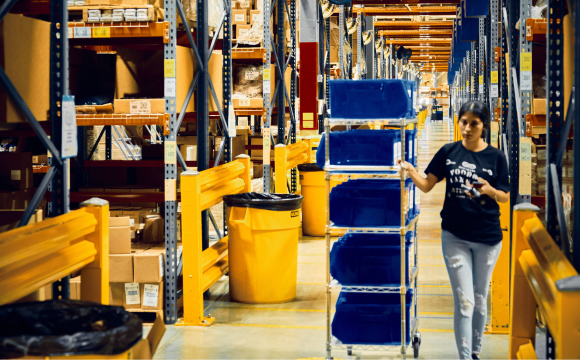
While carriers control the quality of last-mile delivery, your fulfillment partner can improve speed and reliability in shipping by:
- Splitting inventory inventory across multiple distribution centers to place it close to customers and achieve faster, cheaper shipping.
- Using multiple carriers (both major and regional) to reduce delays and expand coverage.
A diversified shipping strategy helps ensure consistent service and a better customer experience.
5. Responsive customer service
Customer service quality varies across B2C fulfillment providers, so ask about support responsiveness and request case studies or success stories from brands similar to yours.
Unlike 4PLs that manage third parties, 3PLs operate fulfillment directly. This lets them offer faster, more consistent support from teams familiar with your brand.

How to choose the right B2C fulfillment service for your ecommerce business
At ShipBob, we understand choosing the right B2C fulfillment service can be a time-consuming and challenging process. But it doesn’t have to be; knowing what to look for and what questions to ask potential 3PLs can help you find a long-term solution.
Here’s an overview of how to vet potential B2C fulfillment providers, including what to look for, what to ask them, and what to expect as you start search process.
Determine whether your business is ready to outsource B2C fulfillment
The first step is always determining whether or not you and your team is ready to outsource fulfillment. There is no “right” time, but there are signs to look out for within your business.
Here are a few ways to identify whether or not you’re ready to outsource. If one or more relate to your business today, it might be time to hand off B2C fulfillment to the experts.
- I spend several hours a week packing and shipping orders.
- I’m running out of space to store inventory.
- I need more time to spend on strategic projects.
- I don’t want to invest in distribution infrastructure.
If you decide you’re ready to outsource B2C fulfillment, here are some tips to help you choose the right fulfillment provider for your business.
List your “must-have” requirements
Before choosing a B2C fulfillment provider, list your must-have services and compare offerings across providers. While all 3PLs handle basics like receiving, warehousing, picking, packing, and shipping, value-added services vary.
You’ll need to determine which value-adds are the most important based on your business’s unique needs. For instance, if you serve international customers, consider a 3PL with global fulfillment centers to reduce shipping delays.
During the selection process, weigh features, pricing, and support carefully. The cheapest option isn’t always the best, and premium options may lack essentials.
Ask about inventory distribution
A 3PL’s distribution network should always provide room for growth. Working with a 3PL that has fulfillment centers in different regions of the country (that you can always expand into over time) can be vital to making sure your customers’ expectations are met through faster, affordable shipping.
For instance, ShipBob offers dozens of fulfillment centers globally, as well as intelligent, automated inventory distribution.
Since our entire fulfillment network is operated by the same warehouse management system (WMS), you can use fulfillment data to identify an ideal product allocation strategy and store inventory in strategic locations based on where your customers are and where there is the most demand.
Think long-term
Switching 3PLs can be a stressful process, so you will want to consider your long-term goals as you’re searching for the right B2C fulfillment partner.
- Do you want to take your brand global?
- Does your brand need a custom solution?
- Will you eventually want to offer a subscription box service?
These are just few examples of how ecommerce growth relies on the type of 3PL partner you choose. Many 3PLs offer additional services, such as international fulfillment, so be sure to choose a 3PL that offers room for growth based on your brand’s current needs and your vision for the future.
Why are 3PLs a good choice for B2C fulfillment?
As your brand grows, in-house fulfillment can become costly and time-consuming. A best-in-class 3PL helps scale operations by providing the tech, infrastructure, and expertise needed to meet customer expectations.
Instead of building your own logistics network, 3PLs like ShipBob offer end-to-end solutions—from warehousing and inventory tracking to retail and automated shipping.
Here is an overview of how ShipBob has supported growth for direct-to-consumer brands.
Taste Salud grew from $0 to over $20M in sales
Taste Salud creates functional drink mixes inspired by Latin flavors, designed to support hydration, energy, and sleep.
Before partnering with ShipBob, the founders fulfilled orders themselves from their apartment. After rapid growth and selling out their first batch in hours, they began searching for a scalable 3PL solution.
With fast onboarding, multi-channel support, and nationwide fulfillment centers, ShipBob became a long-term partner that helped Taste Salud scale to over $20M in revenue in just three years.
“We’ve scaled so much, and there have been zero hiccups in fulfillment with ShipBob. I don’t think even as we keep scaling in the years to come that there will be any hiccups there.
That cannot always be said of brands that run their own warehouse. Running your own warehouse, you have to go out and hire very experienced people, invest in equipment, build in automation – and often, you’re wasting a lot of time, energy, resources, and human capital for a sub-par result. Why do that when a partner like ShipBob exists, and makes fulfillment so easy at a fair price?”
Tyler McCann, Co-Founder of Taste Salud
Dossier scaled from 0 to 100,000 orders
Dossier sells affordable, luxury-level fragrances that are vegan, cruelty-free, and made with 100% clean ingredients.
Before partnering with ShipBob, B2C fulfillment was done in-house. Before reaching a breaking point, they started their search for the ideal 3PL partner and came across ShipBob.
With an easy-to-understand pricing structure and excellent customer service, ShipBob is now a long-term partner that has enabled the brand to grow fast.
“Logistics is something you never think about until it stops working, and we’ve never come to that point with ShipBob. Everything just works. We are super happy with ShipBob and very impressed by how well they’ve pumped out our large volume of orders.”
Sergio Tache, CEO of Dossier
ShipBob is a best-in-class 3PL that offers premium B2C fulfillment services. Start a conversation with the ShipBob team by clicking the button below.
B2C fulfillment FAQs
Here are common questions and answers related to B2C fulfillment.
Why is B2C order fulfillment a difficult task?

B2C order fulfillment can be difficult because it requires orders to be fulfilled quickly and accurately. Since inventory levels fluctuate, you need a system that track and manages inventory in real time to avoid stockouts (or overstocking).
There’s a lot that goes into a fulfillment strategy, from warehousing to returns, so it can be a time-consuming and costly process. That’s why many online brands outsource B2C fulfillment to a 3PL.
What are the best B2C order fulfillment services?
For the best B2C order fulfillment services, look for a 3PL that offers a robust fulfillment network with locations across the country or even internationally. Another factor to keep in mind is a 3PL’s software. Make sure a fulfillment provider’s technology integrates with your tech stack, and that it provides full visibility into the fulfillment process. Check out ShipBob here.
What are the benefits of working with a B2C fulfillment partner versus self-fulfillment?
Many online brands start out by fulfilling orders in-house, but find that:
- It keeps them from scaling
- It eats up too much of their time
- It’s too costly to invest in infrastructure (like warehouses, equipment,a nd technology)
Partnering with a fulfillment expert lets you outsource the daily grind of picking and packing, giving you time back to focus on higher priorities. It also gives you the tools and capabilities you need to scale into new markets and locations, and keep up with increasing order volumes (without sacrificing quality).
How do I choose the right B2C fulfillment service for my business?
It’s always a good idea to source several B2C fulfillment service providers before choosing one.
As a 3PL becomes an extension of your brand, you will want to partner with the right 3PL from the beginning, so as you expand, you won’t need to deal with the stresses of switching 3PLs. The two most important services to look for in a 3PL is fulfillment location(s) and technology. To request a pricing quote from ShipBob, fill out the form here.
How does ShipBob handle spikes in order volume due to viral campaigns?
ShipBob offers ecommerce merchants flexible storage capacity and labor to meet SLAs during viral moments. Through strategic inventory placement, real-time inventory visibility, and omnichannel connectivity, ShipBob helps ensure your fulfillment quality and speed never waver at key moments.
Who is the best 3PL for B2C fulfillment?
The best 3PL for your brand’s B2C fulfillment will depend on your brands priorities, needs, and goals. That said, ShipBob is an industry leader in fulfillment and supply chain logistics, and offers brands the capabilities and tools they need to scale, including:
- Dozens of fulfillment centers across the US, UK, Europe, Australia, and Canada
- Integrations with major ecommerce platforms and tools
- Support for B2B fulfillment, including retail dropshipping and distribution
- Intelligent inventory allocation and placement
- All-in-one OMS + IMS + RMS + ERP + Analytics
- A WMS brands can leverage in their own warehouse(s)
- 2-day shipping solutions
- And more!
How many customers does ShipBob do B2C fulfillment for?
ShipBob fulfills B2C orders for thousands of ecommerce merchants worldwide.
What B2C delivery options (e.g. next‑day, same‑day) does ShipBob support?
ShipBob provides a range of delivery speeds for direct-to-consumer (B2C) orders, depending on the destination, product type, and carrier availability. Sellers can also choose from standard and expedited services across ShipBob’s global network, including:
2-Day Express (US only)
- ShipBob’s main expedited option, covering 100% of the continental US.
- Uses a mix of ground, air, and regional carriers to reach customers within two business days at competitive rates.
- Orders imported into the dashboard before 2:00 pm local time at a fulfillment center are typically picked, packed, and handed off the same day.
- Not available for HAZMAT, dangerous goods, or most shipments to Alaska, Hawaii, or Puerto Rico.
Standard & Expedited Options (Global)
ShipBob also offers standard and expedited delivery across the US, UK, EU, Canada, and Australia. Delivery times vary:
- Domestic expedited: 1-3 business days, depending on country and region.
- Cross-border expedited: 1-6 business days depending on distance, customs clearance, and carrier service.
Inventory Placement for faster fulfillment and shipping
Brands can leverage ShipBob’s Inventory Placement Program to intelligently distribute their inventory across multiple ShipBob fulfillment centers. By placing inventory closer to end customers, brands can achieve 2-day or even next-day delivery without having to pay for expedited shipping.
How does ShipBob manage returns and exchanges for DTC orders?
ShipBob helps merchants process customer-initiated returns for DTC orders, but it does not handle refunds or exchanges directly. Returns can be managed in the ShipBob dashboard or through integrations with return management platforms like Loop and AfterShip, and each returned item must include a Reference ID (RMA). Merchants choose how products should be handled once received:
- Restock – with up to three merchant-provided inspection steps; items that fail follow a backup action such as Quarantine or Dispose
- Quarantine – to be stored temporarily but must be removed within 30 days or will be disposed of
- Dispose – the item is discarded
What packaging strategies does ShipBob recommend to enhance the unboxing experience?
ShipBob helps brands create memorable unboxing experiences through its Customization Suite, which lets merchants bring their branding directly into the fulfillment process. Merchants can:
- Use custom-branded boxes, mailers, or other packaging materials (which are stored as separate SKUs).
- Add marketing inserts to encourage repeat purchases or share promotions.
- Include personalized gift notes for a more personal touch.
ShipBob’s technology integrates these preferences into its packaging algorithm, ensuring the right box size and protective dunnage are used for each order. While ShipBob doesn’t source branded packaging itself, this setup gives merchants flexibility to design high-quality, consistent experiences that delight customers at delivery.
What is B2C fulfillment and how does it differ from B2B fulfillment workflows?
B2C (Business-to-Consumer) fulfillment is the process of shipping individual orders directly to end customers. It emphasizes speed, affordability, and the customer experience.
B2B fulfillment (Business-to-Business), on the other hand, involves larger, bulk shipments sent to retailers, wholesalers, or warehouses. These workflows are more complex and may include compliance requirements, Electronic Data Interchange (EDI) for major retailers, freight arrangements, or kitting services.
In short, B2C fulfillment is designed for speed and customer delight, while B2B fulfillment is structured around compliance, efficiency, and retailer requirements.
How can automation speed up B2C order processing?
Automation helps B2C orders move quickly from checkout to delivery by reducing manual steps and routing orders through the most efficient path. With ShipBob, orders automatically flow into the fulfillment network, where algorithms select the best fulfillment center and carrier for speed and cost savings. Orders received before the 2:00 pm local cutoff are usually picked, packed, and ready for pickup the same day.
Merchants can also set automation rules in the dashboard to apply custom packaging, add marketing inserts, or split orders across multiple fulfillment centers when needed. These tools minimize delays, optimize packaging, and make personalization more efficient. By automating these workflows, brands often see faster turnaround times, higher productivity, and a more consistent customer experience.
What performance metrics should brands track for B2C fulfillment success?
To succeed in B2C fulfillment, brands should track both operational efficiency and customer experience. Key metrics include:
- Fulfillment cost per order: Helps evaluate the efficiency of operations.
- Average days to fulfill: Measures how quickly orders move from import to being shipped.
- Average days in transit: Tracks delivery speed and customer wait times.
- On-time delivery rate: Indicates reliability and SLA compliance.
- Order accuracy rate: Measures how many shipments were packed correctly and arrived on time.
- Inventory performance: Includes SKU availability, inventory levels, and days of inventory left to avoid stockouts or overstocking.
ShipBob’s dashboard provides real-time visibility into these metrics, along with insights into shipping costs and inventory distribution. By monitoring these KPIs consistently, brands can improve cost-effectiveness, boost delivery speed, and deliver a better overall customer experience.


