
Imagine you’re at the grocery store, and you need to pick up ingredients for two different recipes. Which is more efficient: walking through the entire store to find the ingredients for the first recipe, then doing it all again for the second; or making one trip through the store, picking the ingredients for both along the way?
The second option is much quicker – and applies to ecommerce picking as well. Brands are under pressure to make their fulfillment operations faster, leaner, and more scalable, so many are turning to cluster picking: a picking method allows workers to pick items for multiple orders at once from one trip through a warehouse’s aisles.
In this guide, we’ll break down what cluster picking is, how it works, and why it’s gaining popularity across modern fulfillment operations. Whether you’re scaling quickly or simply looking to streamline workflows, this article will show you how to make cluster picking work for your warehouse — and your bottom line.
What is cluster picking?
Cluster picking is an approach to order fulfillment in which pickers collect items for multiple orders simultaneously during a single trip through the warehouse.
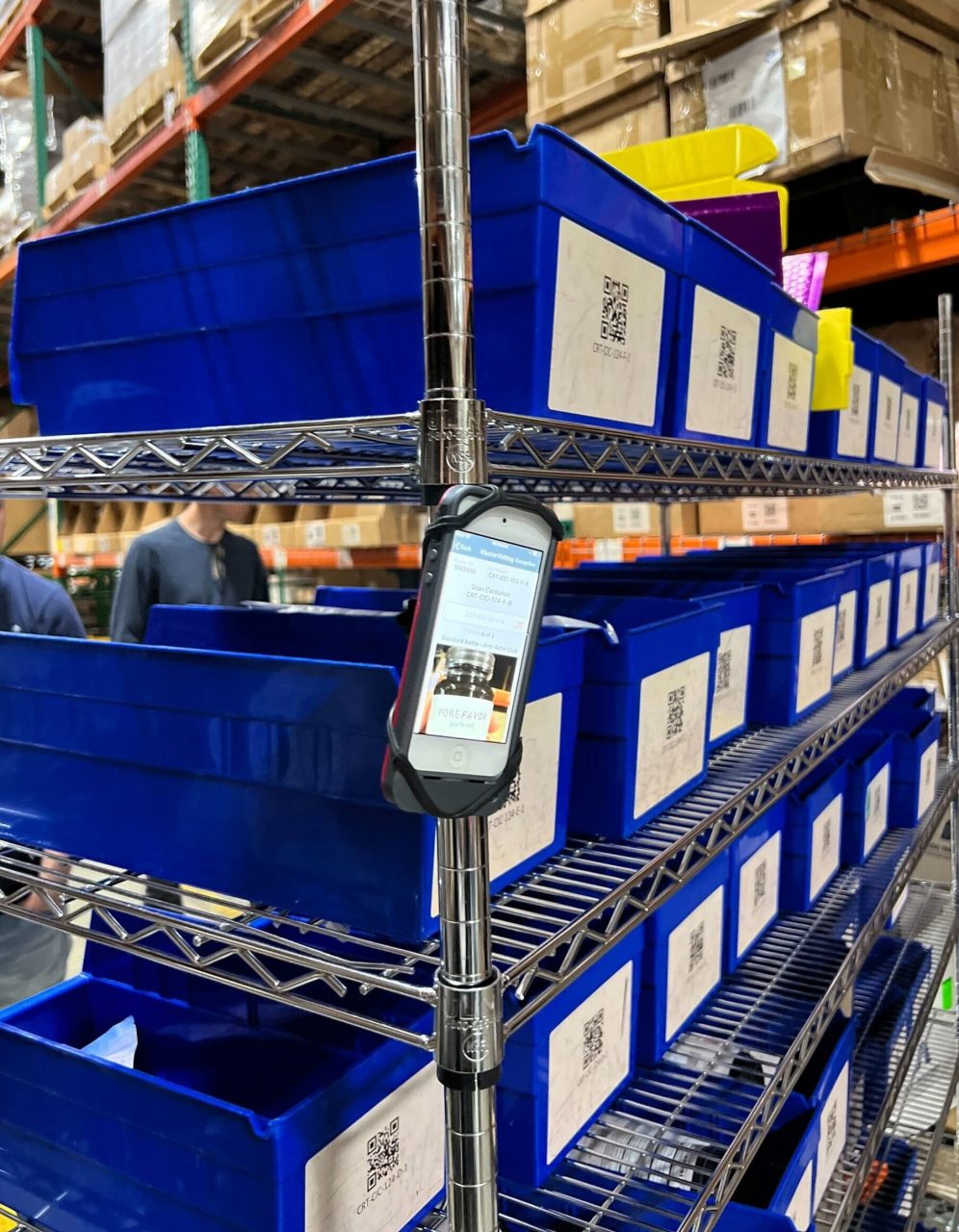
The cluster picking strategy requires brands to use specialized carts equipped with multiple totes or containers. Each tote is assigned to a specific order, allowing pickers to sort items accurately as they navigate the warehouse. This system ensures that the right products end up in the right orders, even as pickers collect items for several orders at once.
Implementing cluster picking can be a game-changer for ecommerce businesses looking to optimize their fulfillment operations. Specifically, it:
- Minimizes travel time: By collecting items for multiple orders in a single pass, pickers can spend less time walking through a warehouse. This translates to significant time savings compared to traditional single-order picking methods, where pickers must return to the starting point after each individual order is complete.
- Speeds up fulfillment: As online shopping continues to grow at an unprecedented pace, the ability to process orders quickly and efficiently it more important than ever. With cluster picking, merchants can unlock new levels of productivity and deliver a superior customer experience.
Optimizing warehouse layout for cluster picking
To fully leverage the benefits of cluster picking, it’s essential to optimize your warehouse layout for maximum efficiency. This involves strategically arranging your inventory to minimize travel time and ensure a smooth flow of goods through the ecommerce fulfillment process.
Consider the following tips when optimizing your warehouse for cluster picking:
- Group similar products together: Organize your inventory so that items frequently ordered together are located in close proximity. This reduces the distance pickers must travel to collect all the necessary items for a given set of orders.
- Utilize vertical space: Make the most of your warehouse’s vertical space by implementing tall shelving units and utilizing appropriate equipment (e.g., ladders, cherry pickers) to access high-level items safely. This allows you to maximize storage capacity while maintaining efficient picking routes.
- Implement clear labeling and signage: Ensure that all shelves, bins, and aisles are clearly labeled to help pickers quickly locate the items they need. Use a consistent and intuitive labeling system that aligns with your WMS for seamless integration.
- Analyze order data to inform layout decisions: Regularly review your order history and product velocity data to identify trends and patterns. Use this information to make data-driven decisions about inventory placement and picking route optimization.
By carefully designing your warehouse layout to support cluster picking, you can further enhance the efficiency and productivity gains associated with this powerful fulfillment method. A well-organized warehouse not only streamlines the picking process but also contributes to improved accuracy, reduced errors, and a more seamless overall fulfillment operation.
Cluster picking vs. other picking methods
While cluster picking offers significant efficiency gains, it’s not the only picking methodology available to ecommerce businesses. To make an informed decision about which approach best suits your needs, it’s essential to understand how cluster picking compares to other common strategies.
Single-order picking
In single-order picking, warehouse workers focus on completing one order at a time.
This method involves picking all the items for a single customer order before moving on to the next one. While this approach is straightforward and easy to implement, it can be time-consuming and inefficient, especially for businesses with high order volumes.
Compared to cluster picking, single-order picking typically results in longer travel times and lower overall productivity. However, it may still be appropriate for businesses with low order volumes or those just starting out with a very limited number of SKUs.
Batch picking
Batch picking refers to picking several identical orders simultaneously. The key difference between batch picking and cluster picking lies in the type of order being picked: batch picking deals with identical orders (i.e., orders that have the exact same SKUs in the exact same quantities), while cluster picking is for similar orders (i.e., orders that may contain some of the same SKUs, but not necessarily all of the same items or in the same quantities).
Batch picking can be more efficient when dealing with subscription orders, gift sets, bundles, and other orders that contain the same SKUs every time. However, cluster picking generally offers greater flexibility and efficiency for businesses with more diverse product ranges and order profiles.
Zone picking
In zone picking, the warehouse is divided into distinct zones, with each zone containing a specific set of products. Pickers are assigned to particular zones and are responsible for picking items only within their designated areas. This approach can be combined with cluster picking to further enhance efficiency.
For example, a warehouse might be divided into zones based on product categories, with pickers in each zone using cluster picking to gather items in that zone for multiple different orders at once. This hybrid approach leverages the benefits of both methods, allowing for efficient picking within each zone while still consolidating orders across the entire warehouse.
Wave picking
Wave picking involves scheduling picking tasks based on predefined order groupings, known as waves. Each wave represents a specific set of orders – often similar to each other – that are picked, packed, and shipped together. This approach focuses on optimizing the timing and sequencing of picking tasks to maximize efficiency and meet specific shipping deadlines.
While wave picking emphasizes scheduling and order grouping, cluster picking is less regimentally structured, and often puts orders on carts simply because they’re next up in the queue.
However, these two methods can be used together to create a highly efficient fulfillment operation. For example, businesses can use wave picking to group orders based on shipping deadlines, then apply cluster picking within each wave to minimize travel time and maximize picker productivity.
How to implement cluster picking in your warehouse
Implementing cluster picking in your warehouse operations can seem like a daunting task, but with the right approach and tools, it can transform your fulfillment operations.
Once you determine that cluster picking is a good fit for your business, follow these best practices to get it up and running as smoothly as possible.
Select appropriate equipment and technology
To execute cluster picking effectively, you’ll first need the right equipment and technology. Essential items include:
- Picking carts with multiple totes or containers to separate items for different orders.
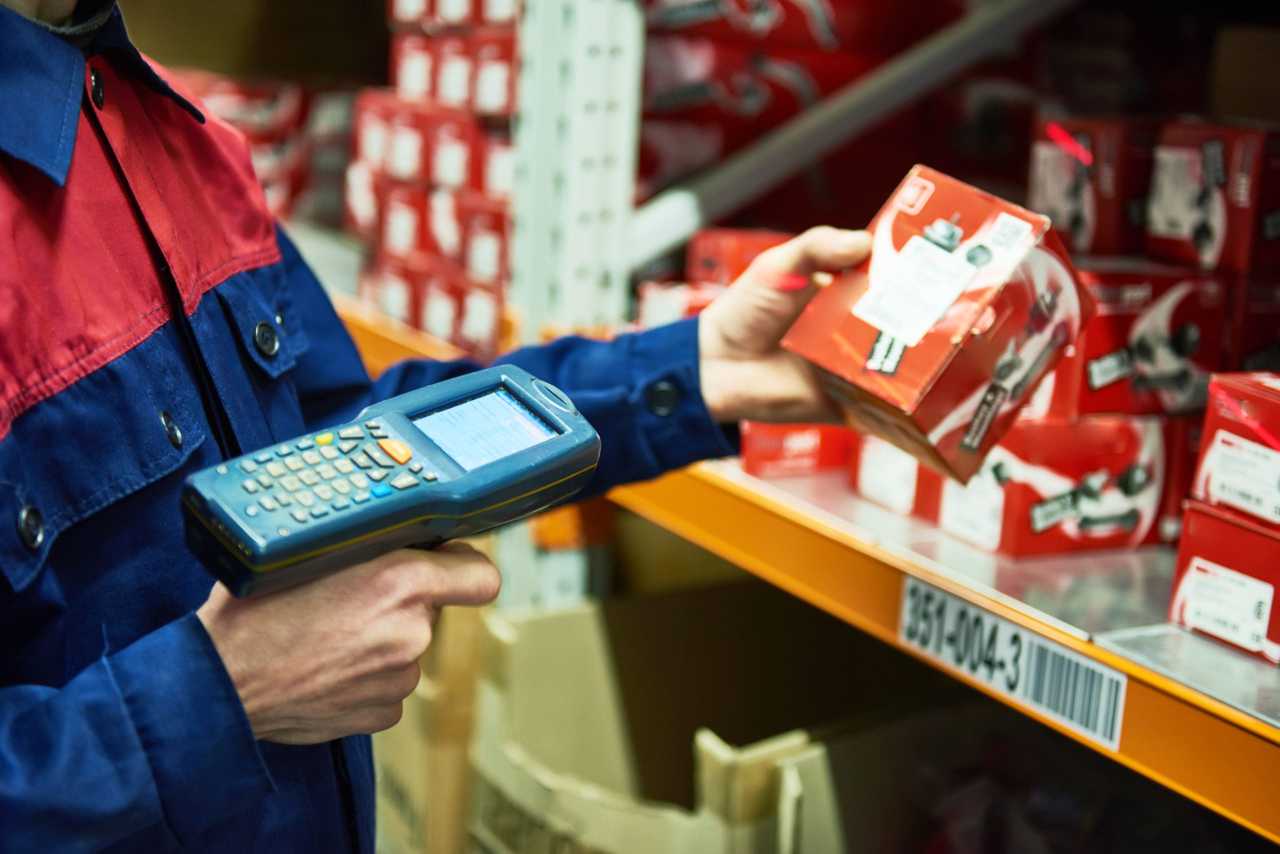
- Barcode scanners or mobile devices for accurate item verification.
- A robust warehouse management system (WMS) to organize and optimize picking workflows.
When selecting picking carts, consider the average size and number of orders you’ll be grouping together. Choose carts with the appropriate number of totes to accommodate your typical cluster size.

Configure your WMS to support cluster picking
A powerful WMS is the backbone of any efficient cluster picking operation. Your WMS should be configured to support key features such as:
- Route optimization to minimize travel time and distance.
- Real-time inventory updates to ensure accurate stock levels.
- Order grouping capabilities based on predefined criteria.
Work with your WMS provider to set up the necessary parameters and workflows to enable smooth cluster picking processes.
Establish verification procedures
To maintain accuracy and prevent order mix-ups during cluster picking, it’s crucial to establish robust verification procedures. This can include:
- Barcode scanning protocols to ensure the right items are selected and sorted into the correct totes.
- Quality checks at various stages of the picking process to catch any errors.
- Final verification steps before orders are packed and shipped.
Implementing these verification measures will help maintain high accuracy levels while still realizing the efficiency gains of cluster picking.
Train your team effectively
Transitioning to cluster picking requires thorough training for your warehouse staff. Develop a comprehensive training program that covers:
- The principles and benefits of cluster picking.
- Step-by-step workflows for executing the process.
- Best practices for maintaining accuracy and efficiency.
- Common challenges and how to overcome them.
Consider implementing a phased approach to minimize disruption during the transition. Start with a small team or a specific product category and gradually expand as your staff becomes more comfortable with the new processes.
By following these implementation steps and leveraging the right technology, you can successfully adopt cluster picking in your warehouse and start realizing the benefits of faster, more efficient order fulfillment.

Benefits of cluster picking for ecommerce brands
In today’s fast-paced ecommerce landscape, businesses are constantly seeking ways to optimize their fulfillment processes to give themselves a competitive edge – and cluster picking delivers. Here are just some of the benefits of cluster picking, and how such a small operational shift can transform your efficiency and productivity.
🚚 Reduced travel time and distance
One of the most significant benefits of cluster picking is the reduction in travel time and distance for warehouse workers. When pickers collect items for multiple orders simultaneously, they make far fewer trips through the warehouse and significantly reduce the time spent walking between locations.
This translates into:
- A substantial increase in overall productivity.
- A higher number of orders processed per hour.
- Faster fulfillment times.
- Higher customer satisfaction.
🚀 Increased order throughput
Another key benefit of cluster picking is the significant increase in order throughput. Processing multiple orders concurrently means businesses can dramatically improve the efficiency of their fulfillment operations and handle a higher volume of orders without overburdening their workforce.
This increased throughput is particularly valuable for ecommerce businesses that are:
- In the middle of a peak season.
- Striving to meet demanding shipping deadlines, such as 2-day or same-day delivery promises.
- Experiencing sudden spikes in order volume, such as promotional events or unexpected viral moments.
With cluster picking, businesses can handle these increased demands without compromising on speed or accuracy, and maintain a high level of customer satisfaction even during the busiest periods.
💰 Lower labor costs
In addition to improving fulfillment speed and efficiency, cluster picking can also help ecommerce businesses reduce their labor costs, since it reduces the number of labor hours required per order.
For instance, a business that implements cluster picking may be able to process the same number of orders with 20-30% fewer labor hours compared to single-order picking. This reduction in labor costs boosts your bottom line, especially for businesses dealing with high tight profit margins, labor shortages, and rising wage costs.
🎯 Improved accuracy with proper systems
While some may assume that consolidating multiple orders into a single picking run could lead to increased errors, cluster picking can actually improve accuracy when implemented with the right verification systems and technology.
This is because cluster picking relies on consistent barcode scanning and other verification processes into the cluster picking workflow, which ensures that the correct items are selected and sorted into the appropriate totes or containers for each order. This systematic approach helps prevent mistakes such as missing items or incorrect product selections, which can lead to costly returns and dissatisfied customers.
📈 Enhanced scalability
Finally, cluster picking offers ecommerce businesses a highly scalable solution for managing growth and adapting to changing demand. As order volumes increase, businesses can easily adjust their cluster picking processes to accommodate the additional workload without requiring a proportional increase in staff or resources.
This scalability is particularly valuable for businesses experiencing rapid growth or seasonal fluctuations in demand. By implementing cluster picking, these businesses can handle rising order volumes efficiently, maintaining fast and accurate fulfillment even as their operations expand.
Moreover, cluster picking can be adapted to support both B2C and B2B fulfillment needs, making it a versatile solution for businesses with diverse customer bases. Whether processing small, individual orders or larger, bulk shipments, cluster picking can be customized to meet the specific requirements of each fulfillment scenario.
Technology-driven cluster picking strategies
While cluster picking offers significant benefits on its own, it’s most effective when it’s paired with the right technology. If you’re considering adopting cluster picking, consider implementing the following tools and systems.
Leveraging WMS for optimized pick paths
A critical component of a successful cluster picking implementation is a robust warehouse management system (WMS) that can optimize pick paths and guide pickers through the most efficient routes.
The right WMS will meet all your brand’s requirements, and be able to:
- Use sophisticated algorithms to analyze order data, inventory locations, and warehouse layout to determine the shortest possible path for each picking run.
- Dynamically generate optimized pick paths, minimizing the travel time and distance required to collect all the items for a given cluster of orders.
- Adapt to real-time changes in inventory locations or order priorities, ensuring that pickers always follow the most efficient path based on the current state of the warehouse.
Mobile scanning and verification technology
Equipping pickers with handheld scanners or mobile devices ensures that the correct items are selected and sorted into the appropriate totes or containers for each order.
These mobile scanning devices guide pickers through the picking process, providing real-time information on item locations, quantities, and order details. As pickers scan each item, the system verifies that the correct product has been selected and updates the order status accordingly.
This real-time verification helps prevent errors and ensures that orders are picked accurately, even when multiple orders are being processed simultaneously. It also eliminates the need for manual data entry or paper-based picking lists.
Voice-directed picking integration
Voice-directed picking is another innovative technology that can be integrated with cluster picking to further enhance efficiency and productivity. With voice-directed picking, pickers wear headsets connected to the WMS, which provides audible instructions and prompts to guide them through the picking process.
By freeing pickers’ hands and eyes from manual data entry or paper-based picking lists, voice-directed picking:
- Allows workers to focus solely on the task of locating and selecting items.
- Speeds up the picking process (since workers won’t have to stop and consult written instructions).
To successfully implement voice-directed picking with cluster picking, businesses must ensure that their WMS is compatible with voice technology and that their warehouse infrastructure can support the necessary hardware and connectivity. Additionally, pickers will require training on how to use the voice system effectively and adapt to the hands-free picking process.
Customizing cluster picking for different business needs
One of the key advantages of cluster picking is its adaptability to various business scenarios and requirements. Here are some ways you can customize your cluster picking approach based on your business’s unique circumstances.
Cluster picking for fast-growing ecommerce brands
For ecommerce brands experiencing rapid growth, cluster picking offers a scalable solution that can keep pace with increasing order volumes and customer demands.
As businesses expand their product lines and customer base, they can easily adapt their cluster picking processes to handle the additional workload without sacrificing speed or accuracy.
To ensure that cluster picking remains efficient as order volumes grow, businesses should focus on:
- Continuously optimizing their processes and technology.
- Regularly reviewing and adjusting pick paths, cluster sizes, and inventory layouts to maintain optimal performance.
- Investing in advanced WMS solutions and mobile scanning technology to automate and streamline the picking process, enabling businesses to handle higher order volumes with minimal manual intervention.
Adapting cluster picking for varied product types
Depending on the nature of the products being picked, businesses may need to modify their cluster picking strategies to ensure that items are handled safely, efficiently, and accurately.
For example, when picking fragile items such as glassware or electronics, businesses may need to use specialized packaging materials and handling procedures to prevent damage during the picking and packing process. This may involve using separate totes or containers for fragile items, or implementing additional verification steps to ensure that these products are picked and packed correctly.
Similarly, when dealing with apparel or other soft goods, businesses may need to adapt their cluster picking processes to accommodate different sizes, colors, and styles. This may require using specialized equipment such as garment racks or hanging systems to keep items organized and easily accessible during the picking process.
To optimize cluster picking for different product categories, businesses should analyze their inventory data and order patterns to identify common product groupings and characteristics. This information can then be used to design customized picking strategies and workflows that maximize efficiency and accuracy for each product type.
Seasonal scaling with cluster picking
For many ecommerce businesses, managing seasonal peaks in demand is a critical challenge that can strain their fulfillment operations and resources. Cluster picking can be a valuable tool for scaling fulfillment operations during these peak periods, enabling businesses to handle higher order volumes without compromising on speed or accuracy.
To prepare for seasonal peaks, businesses should focus on:
- Ramping up their cluster picking operations well in advance of the anticipated surge in demand (e.g., hiring and training additional temporary staff, expanding warehouse space or equipment, and optimizing inventory levels to ensure that popular products are readily available for picking).
- Training temporary staff on cluster picking procedures, prioritizing clear, concise instructions and hands-on practice to ensure that new hires can quickly become proficient in the picking process.
- Adjusting their cluster picking strategies to accommodate the additional workload. This may involve increasing the size of picking clusters, reassigning staff to high-demand areas of the warehouse, or implementing additional quality control measures to maintain accuracy under pressure.
By proactively planning for seasonal peaks and leveraging the flexibility and scalability of cluster picking, ecommerce businesses can successfully navigate even the busiest periods without compromising on customer satisfaction or operational efficiency.
How ShipBob supports efficient picking methods
At ShipBob, we understand the critical role that efficient picking plays in the success of ecommerce fulfillment operations. That’s why our proprietary fulfillment technology is designed to support advanced picking strategies – including cluster picking – that enable our clients to optimize their order processing and reduce fulfillment costs.
ShipBob’s proprietary WMS capabilities
At ShipBob, we built our own warehouse management system (WMS) to streamline complex picking operations and maximize efficiency. It uses sophisticated algorithms and real-time data to organize and optimize picking workflows, ensuring that orders are processed quickly and accurately across our global network of fulfillment centers.
ShipBob’s WMS offers flexible picking options, including cluster picking. It analyzes order data and inventory locations to generate optimized pick paths that minimize travel time and maximize the number of items collected per trip, intelligently routing pickers to collect items for multiple orders in a single pass through the warehouse to shorten lead times.
“ShipBob’s WMS has more than doubled, if not tripled, our productivity in terms of labor hours. Our average days to ship is now only 0.8 days, so most packages are shipping same-day or next-day, with rare exceptions. We’ve cut 4 days of lead time because orders are getting processed, fulfilled, and shipped more efficiently. When we first started with ShipBob, we were doing about 15K orders per month, and now we’re processing 30K — double what we were doing just six months ago.”
Ben Tietje, Co-Founder and CEO of Earthley
Real-time inventory management
ShipBob’s WMS features built-in inventory management capabilities, which provide up-to-the-minute visibility into stock levels and order data across our entire network, as well as:
- Reports on inventory velocity and storage cost breakdowns
- Replenishment recommendations
- Inventory allocation and balancing calculations
- SKU-level location specific visibility within a warehouse
By maintaining accurate, real-time inventory data, ShipBob’s system ensures that pickers always have access to the products they need to fulfill orders, and that orders are picked accurately every time.
“One of my favorite parts of ShipBob’s solution is the analytics I get through the ShipBob dashboard. I use the reporting constantly, especially to track my stock. It’s even helping me get better at inventory forecasting. Before, I was just fumbling through the demand planning process and just ordering inventory based on what sold out. But now I have insight into metrics like SKU velocity and inventory days on hand, and I’m using that to decide what to reorder and how much of it I need. That helps a lot, especially now that the brand is scaling and I’m ordering my products in bigger batches.”
Luke Rolls, Founder of The Protein Pancake
Adaptable fulfillment workflows
Every ecommerce business has unique fulfillment needs and requirements, so our technology is designed to be highly adaptable. This enables brands to customize picking strategies and workflows to meet their specific needs.
Whether a business is focused on B2C or B2B orders, our system can be configured to handle a wide range of order types and volumes efficiently. This includes supporting both single-item and multi-item orders, as well as accommodating different product types and packaging requirements.
ShipBob’s WMS can also accommodate picking strategies based on the specific characteristics of each client’s products and order patterns. For example, brands can optimize our pick paths and cluster sizes based on the size and weight of different products, or adjust workflows to accommodate seasonal fluctuations in demand.
By providing this level of flexibility and customization, ShipBob empowers ecommerce merchants to optimize their fulfillment operations and achieve the best possible results in terms of speed, accuracy, and cost-effectiveness.
Global fulfillment network advantages
With strategically located facilities across the US, UK, Canada, Europe, and Australia, ShipBob helps brands distribute their inventory closer to their customers to reduce shipping costs and transit times.
Every one of ShipBob’s dozens of locations is powered by ShipBob’s WMS, which means you achieve consistency in picking, packing, and shipping no matter where you fulfill from. Our WMS is designed to support seamless communication and coordination between our facilities, enabling us to route orders to the optimal location for fulfillment based on factors such as inventory availability, shipping destination, and delivery requirements.
This global fulfillment network not only improves the speed and reliability of order processing, but lets you expand into new markets with ease and without the need to invest in your own infrastructure or resources.
“The beautiful thing about ShipBob is everything was connected. I could log on to our ShipBob account and see everything in one place, no matter if I’m looking at our facility in Kankakee, IL, or the ShipBob fulfillment centers in Canada or Europe. It was all the same system. I didn’t have to learn various different platforms or deal with support representatives at different companies. Plus, if we experience any issues with syncing orders between systems, there’s one place we go to reconcile it. ShipBob is connected to our ERP, NetSuite, which is our single source of truth. Now we only have one place to troubleshoot and resolve potential issues across all logistics.”
Adam LaGesse, Global Warehousing Director at Spikeball
For more information on how ShipBob can optimize your picking strategy for speed and cost, click the button below to get in touch.
Cluster picking FAQs
Here are answers to some of the most common questions about cluster picking.
What’s the difference between cluster picking and batch picking?

Cluster picking is about picking multiple similar orders – that is, orders that contain some of the same items or item quantities, but may vary slightly. Batch picking involves picking multiple identical orders – that is, orders that contain exactly the same SKUs in exactly the same quantities.
How many orders should be picked in one cluster?
This will depend on your order size, SKU count, and cart capacity. Start with 4-8 orders per cluster, then adjust based on picker performance and error rates. The goal is to maximize efficiency without overwhelming pickers.
What types of businesses benefit most from cluster picking?
High-volume ecommerce brands, subscription box companies, and businesses with diverse SKUs or similar order profiles benefit most from cluster picking. It’s especially helpful for warehouses with limited space and recurring product combinations.
How can I prevent errors with cluster picking?
Use barcode scanning, well-organized pick carts, clear labeling, and quality checks. Train your team thoroughly and keep pick paths optimized. Technology and process discipline are also key to maintaining accuracy.
What equipment is needed for cluster picking?
You’ll need multi-compartment picking carts, labeled totes, barcode scanners, a WMS, and label printers. As order volume grows, invest in additional carts and devices to keep operations running smoothly.
How does ShipBob’s tech support cluster picking?
ShipBob automates and enhances cluster picking with real-time inventory tracking, dynamic pick path optimization, and seamless platform integrations. This helps brands fulfill orders faster and more accurately without manual setup.
Can cluster picking work with a large number of SKUs?
Yes. If your brand uses the right WMS, optimized layout, and scanning tools, cluster picking can scale for large SKU catalogs. Regularly analyze order patterns and adjust picking strategies to maintain speed and accuracy.


