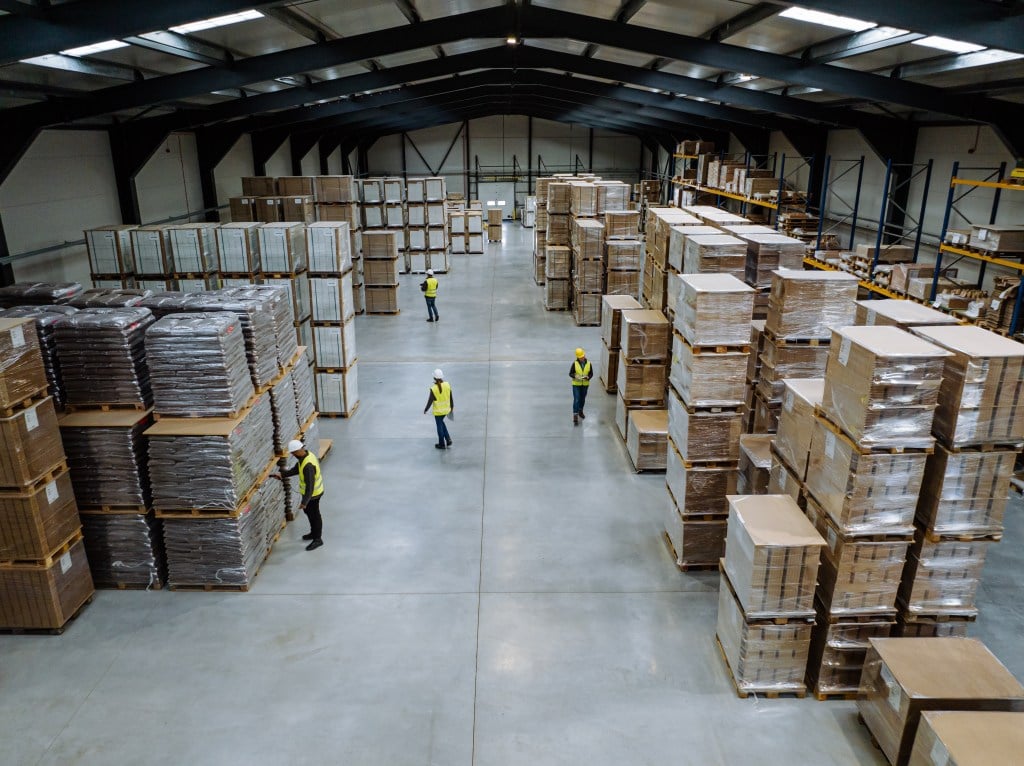

As your ecommerce business scales, so do the demands on your fulfillment operation. Rising order volumes, growing SKU counts, and increasing customer expectations can quickly outpace the capacity of your current warehouse setup. When that happens, expanding your warehouse isn’t just a next step; it’s a strategic necessity.
In this guide, we’ll break down what it really takes to scale your warehouse operations the right way. From evaluating current performance to choosing the right expansion model, you’ll get expert insights and actionable advice to grow confidently and sustainably.
What is warehouse expansion?
Warehouse expansion is the strategic growth of storage and operational capacity to accommodate business growth.
Warehouse expansion can mean simply adding more square footage – but it usually goes far beyond that. It almost always involves optimizing operations, technology, and logistics networks to support increased order volumes, SKU counts, and customer expectations.
The right approach will depend on factors such as the stage of the business, projected growth, available capital, and long-term logistics strategy.
Types of warehouse expansion
There are several approaches to warehouse expansion, each serving different business needs and growth scenarios. The most common types include:
- Physical expansion of existing facilities: This involves adding more square footage to a current warehouse location. It can be a good option for businesses with ample space to grow and a need to maintain operational continuity in their existing location.
- Opening additional warehouse locations: For businesses expanding into new markets or looking to improve shipping speeds, opening additional facilities in strategic locations can be powerful. This type of expansion can help reduce shipping costs, improve delivery times, and enhance the customer experience.
- Optimizing current warehouse space: In some cases, significant gains in capacity and efficiency can be achieved without adding physical space. Optimizing the layout of existing facilities, implementing new storage systems, and leveraging automation can increase storage density and streamline operations.
The best type of expansion will depend on the unique needs and constraints of each business.
For example, a brand experiencing rapid growth in a new geographic market may benefit from opening an additional warehouse closer to that customer base.
On the other hand, a business with seasonal demand fluctuations may focus on optimizing its existing space to accommodate peak periods without the need for permanent expansion.
Warehouse expansion vs. building new
One of the first decisions in scaling your fulfillment footprint is whether to expand an existing facility or build a new one. Each option has trade-offs in cost, timeline, and long-term flexibility.
Expanding an existing warehouse is typically faster (3–6 months) and more cost-effective upfront. It allows you to leverage existing infrastructure, staff, and workflows with minimal operational disruption – especially if land is available adjacent to your current site.
Building a new warehouse, while more expensive and time-intensive (often 12–18 months), offers a blank slate to design for future needs. You can implement advanced layouts, automation, and location-specific advantages that might be difficult to retrofit into an existing space.
The right choice for your brand will depend on your growth trajectory, operational constraints, and strategic goals. If speed and cost are key, expansion may be the answer. If you’re entering a new market or need custom capabilities, new construction could offer greater long-term value.
7 strategic considerations for warehouse expansion
Expanding your warehouse is a significant undertaking that requires careful planning and execution. To ensure a successful expansion, it’s crucial to approach the process strategically, balancing short-term needs with long-term business goals.
Consider the following seven key factors when developing your warehouse expansion strategy.
1. Long-term logistics & network planning
Effective warehouse expansion should align with your company’s 3-5 year growth projections.
Analyze your customer locations to determine the optimal placement of facilities, ensuring that you can efficiently serve your target markets. Implementing a multi-node distribution strategy, with strategically located warehouses, can significantly reduce shipping times and costs.
Additionally, consider how your expansion plans support overall supply chain resilience and flexibility, and if they allow you to adapt to changing market conditions and customer demands.

2. Operational layout & equipment optimization
As you expand your warehouse, take the opportunity to redesign your layout for maximum efficiency.
- Evaluate your current operations to identify bottlenecks and areas for improvement, and incorporate solutions into your expansion plans.
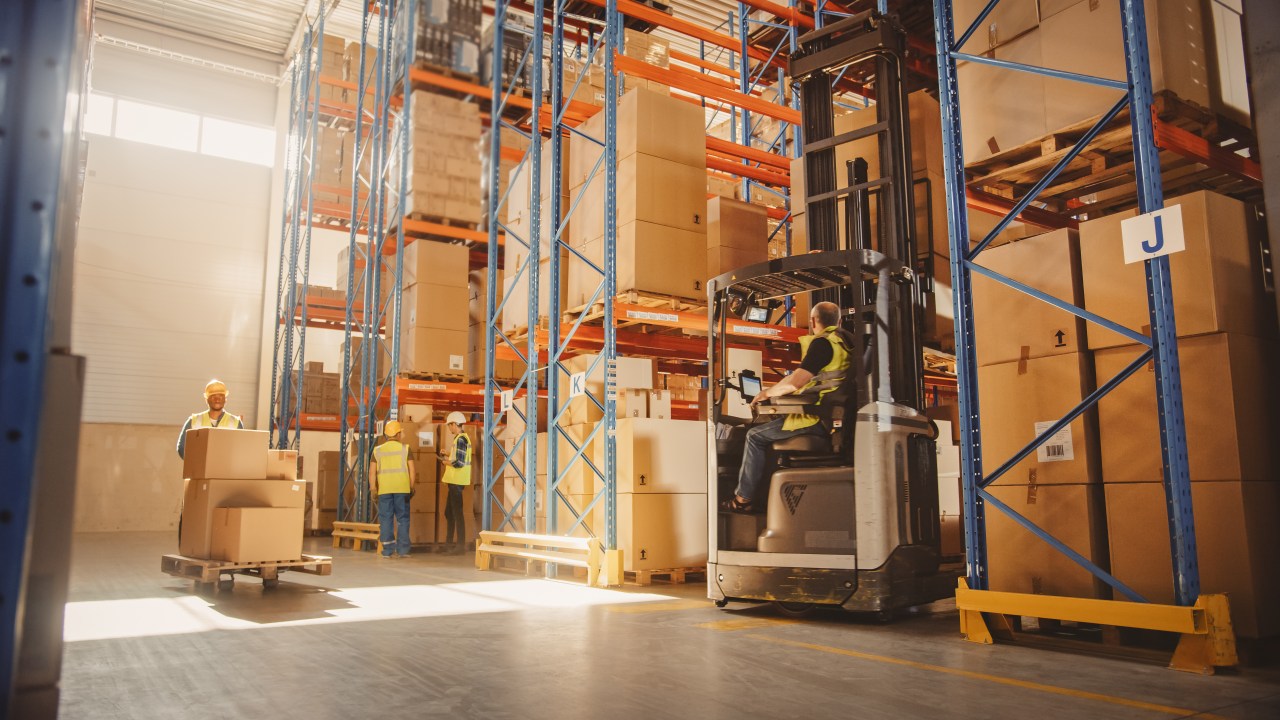
- Maximize cubic footage utilization by implementing vertical storage solutions, such as mezzanines or high-bay racking.
- Assess your equipment needs and plan for necessary upgrades (such as conveyors, forklifts, and packing stations) to support increased throughput and optimize your team’s productivity.
3. Cost analysis: expansion vs. new construction
Conduct a thorough cost analysis to compare the financial implications of expanding an existing facility versus constructing a new warehouse.
Don’t forget to account for often-overlooked expenses, such as permits, potential business disruption during construction, and temporary storage needs during the transition.
Develop an ROI calculation framework that considers the payback period and long-term value of each option, and explore financing options and capital allocation strategies that align with your chosen approach.

4. Workforce management solutions
As your warehouse expands, so will your staffing needs.
- Develop a workforce management plan that includes staffing calculations based on projected volume increases.
- Create comprehensive training programs for new hires and existing staff to ensure a smooth transition during the expansion process.
- Consider implementing multi-shift operations to maximize facility utilization and meet growing demand.
When expanding into new regions, be mindful of local labor market conditions and adjust your recruitment and retention strategies accordingly.

5. Reducing transit times & improving inventory flow
Strategic warehouse placement can significantly reduce average shipping distances and transit times.
- Analyze your sales data to identify optimal facility locations that minimize the distance between your products and your customers.
- Implement advanced inventory management techniques, such as cross docking, to streamline the flow of goods through your supply chain.
- Develop inventory allocation strategies that distribute your products across multiple facilities based on regional demand patterns.
- Leverage data analysis to continuously optimize which products are stored at each location, ensuring that you can efficiently fulfill orders and meet customer expectations.

6. Technology integration for scalable operations
Investing in the right technology is crucial for managing expanded warehouse operations effectively. Implement a robust warehouse management system (WMS) that provides real-time visibility across your entire network, enabling you to track inventory levels, monitor performance, and make data-driven decisions.
Additionally, explore automation options that can scale with your business, such as conveyor systems, pick-to-light technology, and robotics solutions that complement your human workforce. When integrating new technology, be mindful of implementation timelines and potential challenges with existing systems, and plan accordingly to minimize disruption.

7. Regulatory compliance & community relations
As you expand your warehouse footprint, ensure that you remain compliant with all relevant regulations and zoning requirements.
- Research permit processes and engage with local authorities early in the planning stage to avoid costly delays.
- Consider the environmental impact of your expansion and incorporate sustainability best practices into your design and operations.
Building positive relationships with the surrounding community is also essential.
- Engage with local stakeholders, communicate transparently about your expansion plans, and explore opportunities to create value for the community through job creation, partnerships, and philanthropic initiatives.
- Stay informed about tax implications and potential incentives for warehouse development in your chosen region, as these can significantly impact your bottom line.
By carefully considering these seven strategic factors, you can develop a comprehensive warehouse expansion plan that positions your business for long-term success.

Building vs. outsourcing vs. hybrid models: A full comparison
When it comes to expanding your warehousing capacity, there are three main approaches to consider: building or expanding your own facility, partnering with a 3PL, or creating a hybrid model that combines both.
Each option has its own advantages and challenges, and the right choice for your business will depend on factors like your growth stage, capital availability, and operational complexity.
👷 Building or expanding your own facility
For some ecommerce brands, maintaining complete control over their fulfillment operations is top priority. Building or expanding your own warehouse allows you to customize the facility to your exact specifications, implement your own processes, and have direct oversight of your inventory and staff. This approach can also lead to long-term cost savings, as you’re not paying a partner.
However, building or expanding your own warehouse is a significant undertaking that requires substantial upfront investment, time, and resources. You’ll need to navigate real estate acquisition, construction or renovation, equipment purchasing, hiring and training staff, and more. This can be a complex and time-consuming process that diverts focus from other areas of your business.
🤝 Leveraging 3PL partnerships for instant scale
Partnering with a 3PL offers a more flexible and scalable approach to warehouse expansion. With a 3PL, you gain immediate access to a network of established fulfillment centers in strategic locations, without the need for capital investment or lengthy setup times. You can tap into additional capacity as your business grows, paying only for the space and services you use.
3PLs also bring technology and expertise to the table, with advanced warehouse management systems (WMS) and experienced staff that can quickly integrate with your operations. This can be especially valuable for ecommerce brands that don’t have extensive in-house logistics expertise or technology resources.
🔗 Creating a hybrid fulfillment network
For many ecommerce brands, the optimal solution is a hybrid approach that combines in-house and outsourced fulfillment. This allows you to maintain control over certain aspects of your operations while leveraging the flexibility and scalability of a 3PL partnership.
For example, you might choose to handle your core product lines or high-volume SKUs in-house while outsourcing fulfillment for seasonal items, international orders, or new product launches to a partner. This approach allows you to balance operational control with risk management and capital efficiency.
ShipBob’s technology platform is designed to support hybrid fulfillment models, with a WMS that can power both your own facilities and ShipBob’s network for seamless inventory management and order processing across all locations. This gives you the best of both worlds: the ability to scale quickly with outsourced fulfillment while maintaining control over your core operations.
“ShipBob’s hybrid fulfillment solution – which allows us to simultaneously outsource fulfillment to three of ShipBob’s fulfillment centers and use ShipBob’s warehouse management system (WMS) to power operations in our Miami warehouse – turned out to be just what we needed. This gave us the inventory storage and operational capacity we needed to keep up with our growing order volume, and since all of ShipBob’s warehouses run on the same WMS we’re using in our facility, we still achieved the unified fulfillment experience we required.”
Rachel Tannenholz, President, and Melissa Mosheim, Director of Logistics at Aroma360
Considering the layered network strategy: a modern expansion approach
As ecommerce businesses grow, many find that the traditional approach to warehouse expansion (simply adding more space to an existing facility or building a new one) may not be the most efficient or cost-effective solution.
An alternative strategy that has gained traction in recent years is the layered network approach, also known as distributed fulfillment. This strategy involves strategically placing inventory across multiple smaller warehouses or fulfillment centers, often in different geographic regions, rather than relying on a single large facility, and offers several benefits.
Distributing inventory across multiple nodes
For most ecommerce brands, a network of smaller, strategically located facilities can outperform a single large warehouse in terms of efficiency and customer satisfaction. By analyzing sales data and customer locations, businesses can determine the optimal placement of inventory to minimize shipping distances and costs.
Distributing inventory across multiple nodes also allows for more granular control over stock levels and enables businesses to allocate products based on regional demand patterns. For example, faster-moving SKUs can be stored in larger quantities at fulfillment centers closest to high-demand areas, while slower-moving items can be consolidated in a centralized location.
How ShipBob helps: ShipBob’s technology platform automatically determines the optimal inventory placement across its network of fulfillment centers, ensuring that products are stored in the most efficient locations to meet customer demand.
International expansion without the headaches
For ecommerce businesses looking to expand internationally, the layered network approach offers a way to enter new markets without the complexity and risk of establishing their own overseas warehouses. Traditional international expansion often involves navigating unfamiliar legal and tax requirements, hiring local staff, and investing in infrastructure – all of which can be time-consuming and expensive.
Partnering with a global fulfillment partner like ShipBob enables brands to test international markets with minimal upfront investment.
How ShipBob helps: By leveraging ShipBob’s established network of fulfillment centers in Canada, Europe, Australia, and soon Mexico, businesses can start shipping to customers in these regions without the need to set up their own facilities. ShipBob’s expertise in cross-border shipping and customs clearance further simplifies the process, allowing brands to focus on marketing and sales rather than logistics.
Technology that powers multi-location operations
To effectively manage a layered fulfillment network, businesses need advanced technology that provides visibility and control across all locations. A robust warehouse management system (WMS) is essential for tracking inventory levels, managing orders, and optimizing fulfillment operations in real-time.
How ShipBob helps: ShipBob’s proprietary WMS connects all fulfillment nodes in its network, enabling seamless operations and providing merchants with a centralized view of their inventory and orders. The platform also offers powerful analytics tools that help businesses make data-driven decisions about inventory allocation, demand forecasting, and network optimization.
By leveraging technology to automate and optimize multi-location operations, businesses can realize the full benefits of the layered network approach while minimizing the complexity of managing a distributed fulfillment network.
5 warehouse expansion best practices
Expanding your warehouse capacity is a significant undertaking that requires careful planning and execution. Whether you choose to expand your own facilities, partner with a 3PL, or adopt a hybrid approach, following best practices can help ensure a successful outcome.
Here are five key considerations to keep in mind as you embark on your warehouse expansion journey.
1. Scale in phases to minimize risk
One of the most important best practices for warehouse expansion is to take a phased approach rather than trying to do everything at once. By breaking the project down into smaller, manageable stages, you can minimize risk and ensure a smoother transition.
Start by creating pilot areas within your existing facility to test new layouts, processes, or technologies before rolling them out across the entire warehouse. This allows you to identify and address any issues on a smaller scale, without disrupting your entire operation.
When planning your expansion, build in flexibility to accommodate future growth. Rather than building to maximum capacity from day one, consider a modular approach that allows you to add space incrementally as your business grows. This can help you avoid overcommitting resources and ensure that your expansion aligns with your actual needs.
2. Let data drive expansion decisions
To make informed decisions about when, where, and how to expand your warehouse capacity, it’s essential to rely on data rather than guesswork or intuition. Analyze your order volume, geographic distribution of customers, and seasonal sales patterns to identify trends and pinpoint areas for improvement.
Key metrics to track before, during, and after expansion include:
- Order processing time
- Shipping costs per order
- Inventory turnover rate
- Space utilization
- Labor efficiency
ShipBob’s analytics tools provide valuable insights that can help brands determine the optimal timing and location for expansion. Analyzing historical data and applying predictive modeling lets businesses forecast future capacity needs and make proactive decisions about when and where to expand.
3. Optimize location strategy for maximum impact
The location of your warehouse can have a significant impact on your ability to serve customers efficiently and cost-effectively. When expanding your warehouse network, it’s important to consider factors such as proximity to customers, transportation infrastructure, and labor availability.
One common approach is to aim for 2-day ground shipping coverage to as much of your customer base as possible. By analyzing customer locations and order data, you can identify the optimal placement of warehouses to minimize shipping distances and costs.
Urban locations may offer faster delivery times and access to a larger labor pool, but they also tend to have higher real estate costs and more competition for space. Suburban or rural locations may offer lower costs and more room for expansion, but they may also require longer shipping distances and have a smaller available workforce.
ShipBob’s fulfillment network is strategically designed to provide 2-day ground shipping coverage to the contiguous US, with facilities located in major metropolitan areas as well as key transportation hubs. By leveraging ShipBob’s existing infrastructure, businesses can quickly expand their reach without the need to build their own facilities in multiple locations.
4. Build sustainability into expansion plans
As businesses expand their warehouse operations, it’s important to consider the environmental impact of their activities. Building sustainability into your expansion plans can help reduce long-term costs, improve efficiency, and demonstrate your commitment to corporate social responsibility.
Some eco-friendly warehouse design elements to consider include:
- Energy-efficient lighting and HVAC systems
- Solar panels or other renewable energy sources
- Water conservation measures such as low-flow plumbing fixtures and rainwater harvesting
- Recycled or locally sourced building materials
- Electric vehicle charging stations for employees and visitors
In addition to green building practices, businesses can also reduce their carbon footprint by optimizing transportation and logistics. The layered network approach, which involves distributing inventory across multiple locations closer to end customers, can help reduce the distance packages need to travel, resulting in lower emissions from transportation.
Engaging with the local community is another important aspect of sustainable expansion. Building positive relationships with neighbors, community organizations, and local government can help build goodwill and support for your business. Consider hosting open houses, partnering with local schools or nonprofits, and communicating openly about your expansion plans and their potential impact on the community.
5. Focus on workforce development and training
Your warehouse workforce is the backbone of your fulfillment operations, and investing in their development and training is essential for successful expansion. As you add new team members and introduce new processes or technologies, it’s important to have a robust training program in place to ensure a smooth transition.
Consider creating a dedicated training team responsible for onboarding new hires and providing ongoing education for existing staff. Develop standardized training materials and procedures to ensure consistency and quality across your workforce.
As your business grows, it’s also important to build a scalable staffing model that can adapt to changing needs. This may involve cross-training employees to handle multiple tasks, implementing flexible scheduling to accommodate fluctuations in demand, and leveraging temporary or seasonal workers during peak periods.
Technology can also play a role in enhancing worker productivity and safety during expansion. For example, mobile scanning devices can help streamline picking and packing processes, while wearable technology can provide real-time feedback and guidance to workers on the warehouse floor.
How ShipBob supports your warehouse expansion strategy
As an ecommerce business looking to expand your warehouse capacity, partnering with a 3PL like ShipBob can offer numerous benefits. Whether you’re looking to complement your existing in-house facilities or fully outsource your fulfillment operations, ShipBob provides a flexible and scalable solution that can grow with your business.
Expand without the capital investment
One of the biggest advantages of partnering with ShipBob is the ability to expand your warehouse capacity without the need for significant capital investment. ShipBob operates a global network of dozens of fulfillment centers across multiple countries, providing businesses with immediate access to warehouse space in strategic locations.
With ShipBob’s pay-for-what-you-use model, businesses only pay for the storage space and fulfillment services they actually use, eliminating the need for large upfront costs associated with building or leasing their own facilities. This approach frees up capital that can be invested in other areas of the business, such as product development, marketing, or customer acquisition.
Consider a typical scenario where a business is looking to expand its warehouse capacity by 50,000 square feet. Building a new facility from scratch could cost upwards of $5-10 million, while leasing an existing space might require a long-term commitment and significant upfront costs for equipment and setup.
In contrast, partnering with ShipBob allows businesses to access the same amount of warehouse space on a flexible, pay-as-you-go basis, with no long-term contracts or minimum volume requirements. This approach can result in significant cost savings and reduced risk, especially for businesses with fluctuating or seasonal demand.
“We’ve scaled so much, and there have been zero hiccups in fulfillment with ShipBob. I don’t think even as we keep scaling in the years to come that there will be any hiccups there. That cannot always be said of brands that run their own warehouse. Running your own warehouse, you have to go out and hire very experienced people, invest in equipment, build in automation – and often, you’re wasting a lot of time, energy, resources, and human capital for a sub-par result. Why do that when a partner like ShipBob exists, and makes fulfillment so easy at a fair price?”
Tyler McCann, Co-Founder of Taste Salud
Scale across borders seamlessly
For businesses looking to expand internationally, navigating the complexities of cross-border shipping and logistics can be a daunting challenge. ShipBob’s global fulfillment network makes it easy for brands to test new markets and scale across borders with minimal risk and investment.
With facilities in Canada, Europe, Australia, and soon Mexico, ShipBob enables businesses to store inventory closer to their international customers, reducing shipping times and costs. ShipBob’s expertise in cross-border shipping and customs clearance further simplifies the process, ensuring that orders are delivered quickly and efficiently to customers around the world.
“From the very beginning, I knew we would need a partner that also had fulfillment centers in or near all the countries we sell to – and the ones we want to expand into – so that I could cut shipping times and costs for those shoppers as well. That’s part of why we went with ShipBob: they have a huge global presence, including fulfillment centers in key markets like the UK, the US, and Canada. They had great coverage for the places we were selling and the places on our growth roadmap, so we could scale without a lot of complications.”
Luke Rolls, Founder of The Protein Pancake
Technology that grows with your business
ShipBob has developed a proprietary warehouse management system (WMS) that provides real-time visibility and control across its entire network. ShipBob’s WMS integrates seamlessly with major ecommerce platforms, allowing businesses to manage their inventory and orders from a single, centralized dashboard.
In addition to powering ShipBob’s own fulfillment centers, ShipBob’s WMS can also be used to manage merchant-owned facilities, providing a unified view of inventory and orders across all locations. This flexibility enables businesses to adopt a hybrid fulfillment model, combining in-house and outsourced operations as needed.
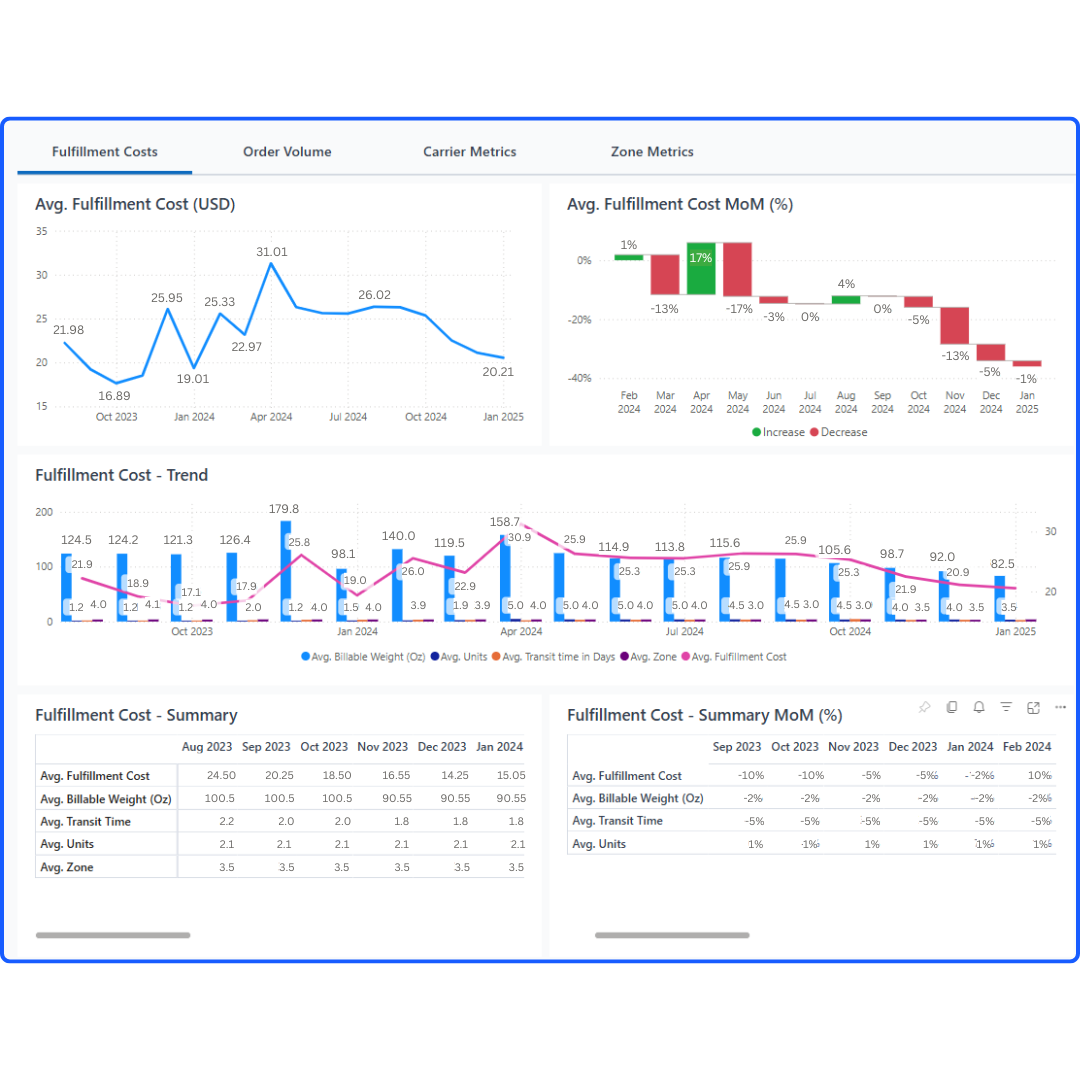
ShipBob’s technology platform also includes powerful analytics tools that provide valuable insights for informed decision-making. Businesses can track key metrics such as order volume, shipping costs, and inventory turnover, and use this data to identify trends and opportunities for optimization.
To learn more about how ShipBob can help you expand your warehouse operations quickly cost-effectively, click the button below to get in touch.
Warehouse expansion FAQs
Here are answers to some of the most common questions about warehouse expansion.
What are the main benefits of warehouse expansion for ecommerce businesses?

Warehouse expansion can significantly improve the operational efficiency and customer experience for ecommerce businesses by:
- Increasing storage capacity and optimizing inventory management to process orders faster, reduce shipping costs, and improve delivery speeds.
- Boosting customer satisfaction and increased repeat purchases.
- Enabling businesses to enter new markets and support their growth trajectory.
How long does warehouse expansion typically take?
The timeline for warehouse expansion varies depending on the approach taken. Renovating an existing facility typically takes 3-6 months, while constructing a new warehouse can take 12-18 months or more. Partnering with a supply chain enablement expert like ShipBob can provide almost immediate access to additional capacity, as the infrastructure is already in place.
How do I measure ROI after expanding a warehouse?
To measure the ROI of a warehouse expansion, track key performance metrics before and after the expansion. This includes order processing time, shipping costs, labor efficiency, inventory accuracy, and customer satisfaction scores. Comparing these metrics will provide a clear picture of the impact of the expansion on your operations.
When evaluating ROI, consider both short-term and long-term benefits. While the initial costs of expansion may be high, the long-term value of improved efficiency, increased sales, and better customer retention can far outweigh the upfront investment.
What’s the difference between adding square footage vs. opening multiple smaller sites?
Adding square footage to an existing warehouse is a centralized approach to expansion, which can be cost-effective and easier to manage. However, it may not provide the same shipping time and cost advantages as a distributed network of smaller fulfillment centers.
Opening multiple smaller sites places inventory closer to customers in strategic locations. This can significantly reduce shipping costs and transit times, as orders are shipped from the facility closest to the customer. However, managing multiple locations requires more advanced technology and can be more complex operationally.
Which automation technologies should I prioritize first?
When prioritizing automation technologies, focus on solutions that address your current operational bottlenecks and provide the highest ROI. For example, if your picking process is a major pain point, consider implementing a pick-to-light or voice-picking system. If your packing process is inefficient, automated packaging machines may be a good investment.
How can I expand my warehouse capacity without disrupting current operations?
To minimize disruption during warehouse expansion, consider a phased implementation approach. This involves gradually transitioning operations to the new facility or system, rather than attempting to switch everything over at once. This allows you to test new processes and make adjustments as needed without impacting your entire operation.
Partnering with a professional fulfillment provider like ShipBob can also provide additional capacity during the transition period. By outsourcing some or all of your fulfillment to a 3PL, you can continue to meet customer demand while your in-house expansion is underway. This hybrid approach provides flexibility and risk mitigation during the expansion process.
How does ShipBob help reduce expansion risks and costs?
ShipBob’s variable cost model allows businesses to pay only for the storage and services they use, rather than the fixed costs of operating their own warehouse. This eliminates the need for large capital investments and provides greater flexibility to scale up or down as needed.
By leveraging ShipBob’s established network and technology, businesses can expand into new markets quickly and easily. ShipBob’s platform provides real-time visibility and control across all locations, enabling brands to manage their inventory and orders seamlessly.
Finally, ShipBob’s team of experts has extensive experience in scaling operations for growing ecommerce brands. They can provide valuable guidance and support throughout the expansion process, helping businesses avoid common pitfalls and optimize their operations for success.


