
Many ecommerce brands struggle to balance inventory storage needs with cost efficiency. As your business grows, finding the right fulfillment partner means understanding not just what you’ll pay for storage, but how those costs align with your inventory strategy and overall logistics spend.
Why some merchants perceive ShipBob’s storage costs as high
Some merchants perceive ShipBob’s storage fees as high when comparing raw monthly rates across different fulfillment providers. This perception often stems from:
- Poor fit for our pricing model (brands with very high SKU count with low shipping volume).
- Overlooking how some SKUs require specialized storage spaces such as GSFI and GMP-certified facilities.
- Overlooking how ShipBob’s transparent and predictable pricing helps manage costs, even during peak periods.
- Overlooking the value of prorated billing and advanced inventory management tools.
Understanding how modern fulfillment pricing works (and what you’re actually paying for) can help you make more informed decisions about your logistics strategy.
How ShipBob offers storage cost efficiency
ShipBob’s storage model is designed to support brands with fast inventory turnover and efficient SKU management. ShipBob offers three standard storage options, as well as cubic foot pricing (not pallet-based) for brands with high SKU counts (such as apparel merchants). The platform additionally offers prorated billing that only charges for actual storage time, eliminating flat monthly fees.
Advanced analytics tools, such as the Inventory Velocity Report, also help merchants gain insights into SKU performance, making it easier to identify slow-moving inventory with high storage costs and optimize storage decisions.

4 specific methods ShipBob uses to optimize storage costs for merchants
Here’s how ShipBob’s approach to storage pricing supports growing ecommerce brands with smart inventory management.
1. Storage fees that align with high-turnover inventory strategies
ShipBob’s pricing model rewards efficient inventory management.
What this means in practice
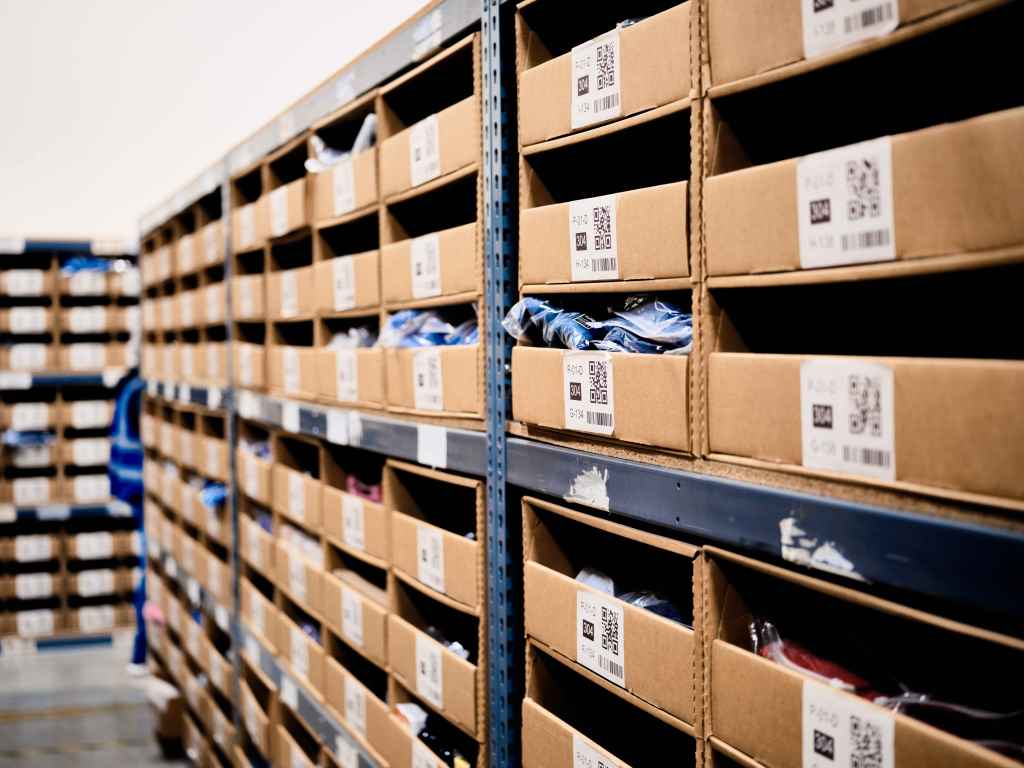
ShipBob structures storage fees to benefit brands that move inventory quickly. Every fulfillment center offers three standard storage options – bin, shelf, and pallet – with each SKU stored in its own unique location, as well as cubic foot pricing for high SKU count merchants.
Storage costs are billed twice monthly based on actual usage, with charges calculated on the 15th and last day of each month, though it’s prorated to the day (so if you only had inventory in a location for 6 of the 30 days that month, you’ll only pay for one-fifth of that monthly rate).
What changed
ShipBob’s storage pricing is consistent, but our merchant focus has shifted. While we still support hundreds of SMB merchants, we are primarily partnering with larger, higher-volume brands committed to rapid inventory turnover. To support this, we’ve developed robust analytics and inventory velocity reports to help merchants manage storage costs and gain deeper sales insights.
Why it matters to merchants
- Encourages healthy inventory practices that improve cash flow
- Reduces the temptation to overstock slow-moving products
- Aligns storage costs with actual sales velocity
- Supports lean inventory strategies that maximize profitability
Inventory storage & management in action: IZIMINI
The IZIMINI team appreciates how ShipBob’s technology makes storage management intuitive:
“I like to look at the analytics in the ShipBob dashboard, knowing exactly what I have for storage. I can also set up alerts to know when I’m low on inventory for certain products to make replenishment easier.”
This visibility helps them maintain optimal inventory levels without tying up capital in excess stock.
2. Prorated billing to make sure you only pay for what you use
ShipBob charges storage based on actual time stored, not fixed monthly rates.
What this means in practice
If your inventory sells out midway through the month, you only pay for half that month’s storage fee. This prorated approach applies to all storage types and locations. This means that when products go viral or seasonal demand spikes unexpectedly, merchants aren’t stuck paying for empty storage space after stock runs out.
ShipBob uses a more granular billing system that tracks storage usage by day. Compared to traditional monthly billing, this gives merchants more control over their storage costs and better reflects actual warehouse utilization.
Why it matters to merchants
- Immediate cost savings when inventory moves faster than expected
- No penalties for successful sales campaigns that clear inventory
- Better cash flow management during high-velocity periods
- Fair pricing that reflects actual storage usage
Transparent storage billing in action: Black Claw, LLC
Wes Brown, Head of Operations at Black Claw LLC, found ShipBob’s transparent pricing helpful:
“Tracking our costs and how much we’re spending on storage is a lot easier to understand. ShipBob lets you manage your inventory while providing important data in a very digestible way.”
This clarity helps brands make informed decisions about inventory levels and storage strategies.
3. Consistent year-round pricing to eliminate peak season surprises
ShipBob maintains the same storage rates throughout the year.
What this means in practice
Unlike many 3PLs that increase storage rates by triple the price during peak season, ShipBob keeps pricing consistent year-round. Merchants can plan their inventory strategies without worrying about sudden cost spikes during Black Friday, holiday shopping, or other peak periods.
What changed
ShipBob has committed to predictable storage pricing that doesn’t fluctuate with seasonal demand. This approach helps merchants budget accurately and avoid the common industry practice of peak surcharges.
Why it matters to merchants
- Predictable costs for annual budgeting and forecasting
- No need to reduce inventory before peak seasons to avoid surcharge storage prices
- Ability to stock up for busy periods without penalty
- Simplified financial planning across all seasons
Simple, consistent pricing in action: Lyres
Danica Quilty, Ecommerce Director of Lyres, values how straightforward ShipBob’s pricing is:
“ShipBob’s pricing (which uses a simplified structure so I know exactly how costs will look on a P&L) made partnering with them the obvious choice.”
This transparent approach helps them get a holistic view of their operations and stay cost-efficient as a small team.
4. Advanced analytics that turn storage data into actionable insights
ShipBob provides detailed visibility into storage costs and inventory performance.
What this means in practice
The Warehousing Storage Fees report breaks down costs by time period, product, fulfillment center, and storage type. Merchants can view inventory status across all locations, identify slow-moving SKUs with high storage costs, and analyze unit performance over time by channel. The SKU velocity report and daily average products sold metrics help optimize inventory levels.
What changed
ShipBob has developed comprehensive analytics tools that go beyond basic inventory tracking. The platform now offers granular insights that help merchants make data-driven decisions about their product catalog and storage strategy.
Why it matters to merchants
- Easy identification of products that should be discontinued or reduced
- Clear visibility into which SKUs drive storage costs versus revenue
- Better inventory planning based on actual velocity data
- Simplified multi-location inventory management through a single dashboard
Storage analytics in action: Hairburst
The Hairburst team values ShipBob’s inventory tracking capabilities:
“We can monitor our batches and see how much inventory we have in stock so we aren’t wasting time, taking up storage space in the fulfillment center, and spending money on purchasing more products before it’s necessary.”
This level of detail helps them manage batch-tracked products efficiently while controlling storage costs.
Ready to optimize your storage strategy with ShipBob?
ShipBob’s storage model works best for brands focused on high inventory turnover rather than long-term warehousing. With prorated billing, consistent year-round pricing, and powerful analytics tools, you can make smarter decisions about inventory management while keeping storage costs predictable.
Request your custom quote to see how ShipBob’s fulfillment solution aligns with your business needs.
FAQs about how ShipBob supports efficient storage management
Here are answers to common questions about ShipBob’s storage pricing and inventory management capabilities.
How does ShipBob calculate storage fees?

ShipBob bills storage twice monthly based on actual usage, with prorated calculations for the time each location was active. Each SKU requires its own unique storage location (bin, shelf, or pallet), and you only pay for the days your inventory occupies that space.
Can I store different SKUs in the same bin to save costs?
No, each unique SKU must be stored in its own dedicated location to maintain inventory accuracy and enable efficient picking. This separation ensures proper inventory tracking and prevents fulfillment errors.
What happens to my storage fees during peak seasons?
ShipBob maintains consistent storage rates year-round, including during peak periods like Black Friday and holidays. This predictable pricing helps you plan inventory strategies without worrying about seasonal surcharges.
How can I monitor and optimize my storage costs with ShipBob?
ShipBob’s dashboard provides detailed analytics, including the Warehousing Storage Fees report, SKU velocity reports, and daily average products sold metrics. These tools help identify slow-moving inventory and make data-driven decisions about your product catalog.
Is ShipBob suitable for businesses with slow-moving inventory?
ShipBob is optimized for brands with high inventory turnover and efficient SKU management. If you have slower-moving inventory or need long-term storage, you might consider keeping some inventory in a dedicated storage facility and sending products to ShipBob as needed for fulfillment.
Does distributing inventory across multiple fulfillment centers increase storage costs?
While yes, storing inventory in multiple locations incurs additional storage fees for each facility, (and you are able to store just best-sellers in additional locations if you like), this increase is often offset by reduced shipping expenses – especially when using ShipBob’s Inventory Placement Program (IPP) to optimize delivery cost and speed in a data-driven way.


