

RFID technology can be a game-changer for warehouses: it tracks inventory in real time, automates tasks, and helps keep customers happy.
The catch? It takes serious planning, money, and know-how to pull off. That’s why many businesses are looking for simpler options that get the job done without all the complexity.
This guide breaks down how RFID warehouse systems work and what they’re made of, and also looks at more affordable alternatives (like modern scanning tools and working with tech-savvy third-party logistics providers such as ShipBob).
Whether you’re ready to dive into RFID or just exploring your options, you’ll walk away with practical ideas for running your warehouse more efficiently.
What is an RFID warehouse management system?
An RFID warehouse management system uses radio frequency technology to track inventory automatically throughout your warehouse.
By attaching small tags to products, RFID systems can monitor inventory levels, locations, and movements in real time without manual scanning.
Unlike traditional inventory tracking methods that require staff to scan each item individually, RFID enables hands-free tracking that saves time, reduces labor costs, and improves accuracy significantly.
RFID isn’t meant to replace your existing warehouse management system, but rather enhance it with advanced tracking capabilities.
However, full RFID implementation can be expensive and complex, so many businesses find alternatives like high-performance barcode systems or computer vision technology that deliver similar benefits with less investment and complexity.
Core components of RFID warehouse systems
To understand how RFID technology works in a warehouse setting, you have to understand the core components that make up the system:
- RFID tags: These are small devices attached to each item, container, or label in the warehouse. They contain a microchip and an antenna that stores and transmits data. Tags can be passive (powered by the reader’s signal) or active (battery-powered for longer read ranges).
- RFID readers: These devices emit radio waves to communicate with the tags and capture their data. Readers can be handheld, mounted on vehicles, or installed in strategic locations throughout the warehouse.
- Antennas: Connected to the readers, antennas are responsible for sending and receiving radio waves to and from the tags. The placement and configuration of antennas are crucial for ensuring optimal read rates and coverage.
- Middleware and software: This is the layer that processes the data captured by the readers and integrates it with the warehouse management system. The software is responsible for filtering, aggregating, and analyzing the RFID data to provide actionable insights and automate processes.
When an item with an RFID tag passes through the read range of a reader, the reader captures the tag’s unique identifier and any associated data and transmits it to the WMS. The WMS then updates its inventory records, delivering real-time visibility into the item’s location and status.
This automated data capture process eliminates the need for manual scanning and data entry, reducing human error and increasing the speed and accuracy of inventory tracking.
With RFID technology, businesses can track items at the individual level, enabling more granular inventory management and optimization.

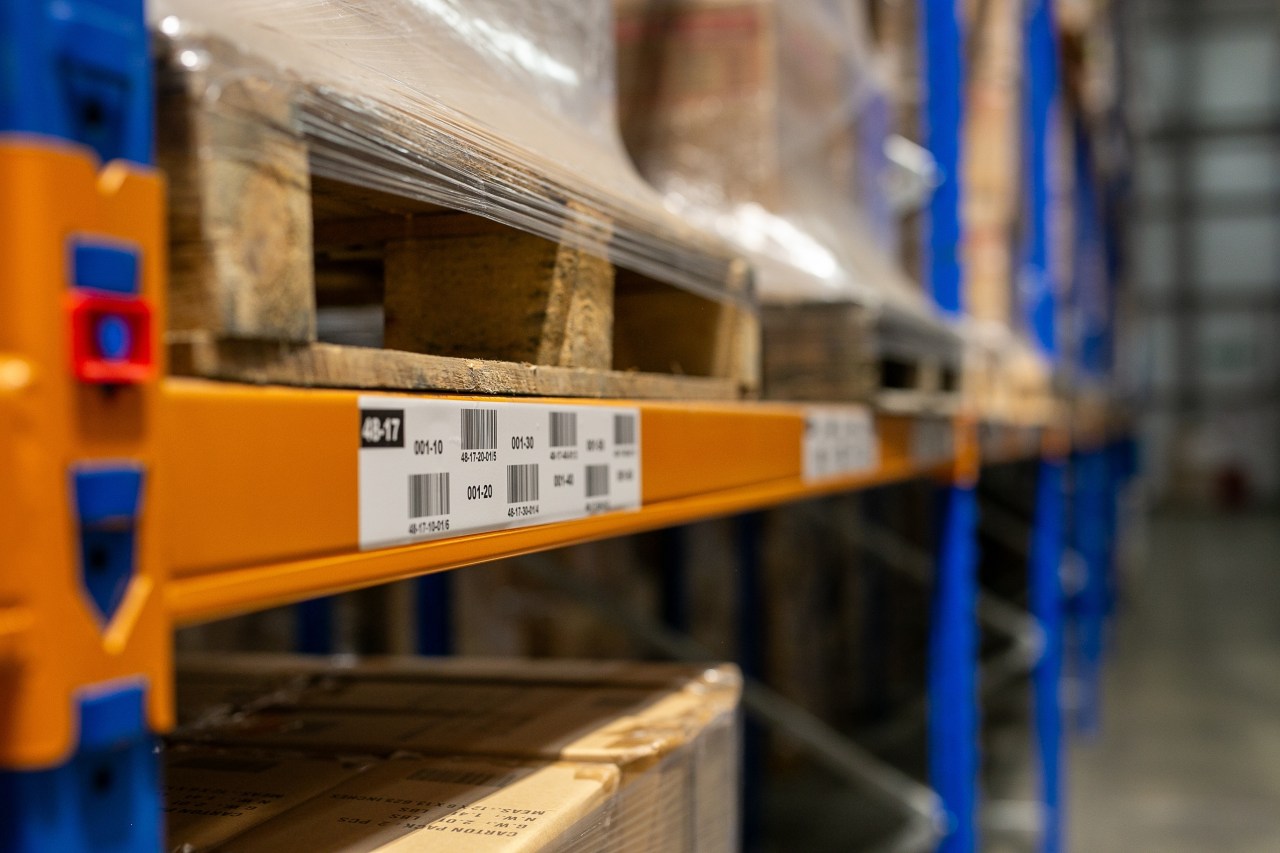
RFID vs. barcode scanning: key differences
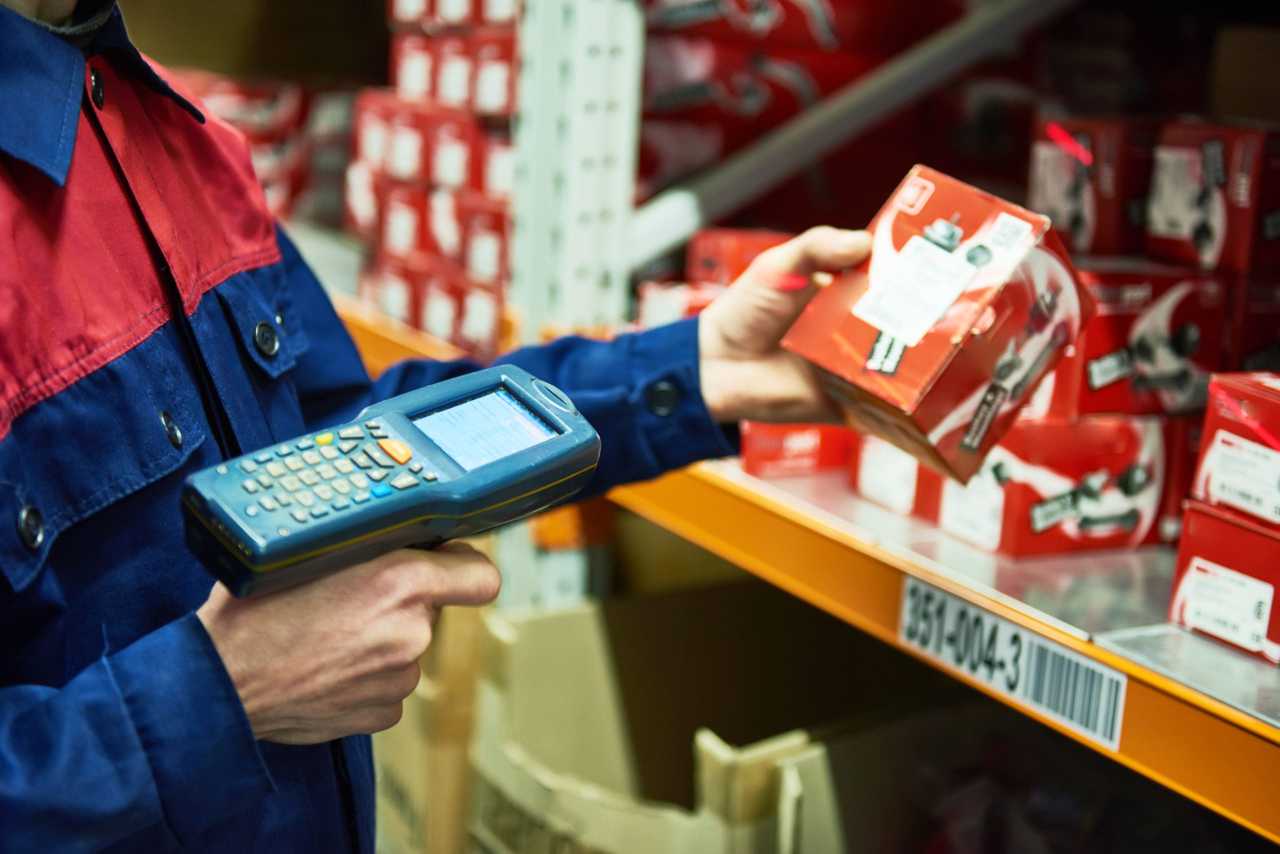
While RFID and barcode scanning both identify and track items, there are some key differences between the two:
| RFID | Barcode | |
| Read range | Can be read from a distance, often up to several meters away, depending on the type of tag and reader. | Require a direct line of sight and close proximity to the scanner. |
| Bulk scanning | Can scan multiple tags simultaneously, even if the items are not in direct view (which enables faster and more efficient inventory counting and traceability). | Must be scanned one at a time, which can be time-consuming for large volumes of items. |
| Data capacity | Store more information than barcodes, including unique identifiers, product details, and even sensor data (e.g., temperature or humidity). | Typically only contain a limited amount of static data. |
| Durability | Are readable through materials like plastic, wood, and even dirt, making them more suitable for harsh environments. | May become unreadable if damaged, dirty, or obstructed. |
Barcodes offer key advantages too, as they:
- Cost less than RFID tags, making them ideal for low-value items and budget-conscious businesses.
- Are easier to implement and maintain without the complex infrastructure and technical expertise RFID requires.
Many warehouses use both technologies strategically: RFID for high-value or critical inventory and barcodes for everyday items. This hybrid approach helps businesses maximize benefits while controlling costs based on their specific needs.
The benefits of RFID in warehouse management
RFID technology offers a range of compelling benefits for ecommerce warehouses, directly impacting key performance metrics like shipping speed, order accuracy, and customer satisfaction. Here are some of the best:
Real-time inventory visibility
RFID transforms warehouse inventory tracking by automatically scanning tagged products as they move, providing instant visibility with extremely high accuracy rates.
This precision dramatically reduces stockouts, overstocking, and picking errors while giving managers reliable data for smarter decisions. With products always findable and available, businesses improve both operations and customer satisfaction.
Cost savings and labor efficiency
RFID significantly reduces labor costs by automating manual warehouse tasks.
Instead of workers scanning items individually, RFID can process entire pallets at once, cutting both receiving time and picking time.
These efficiencies help:
- Lower labor costs.
- Allow staff to focus on higher-value activities like customer service.
- Decrease human errors from manual scanning substantially.
- Minimize time wasted on corrections and returns processing.
Faster shipping and order accuracy
RFID accelerates outbound operations by enabling workers to locate and scan multiple items simultaneously, dramatically speeding up order assembly.
This efficiency is particularly valuable during high-volume periods like holiday seasons. The technology also significantly improves accuracy, reducing mispicked orders and returns.
By consistently delivering accurate orders quickly, businesses also build customer loyalty and stand out from competitors.
Enhanced loss prevention and security
RFID strengthens security by tracking every tagged item’s location and movement in real time.
This visibility makes it easier to detect and investigate missing items, theft, and damage (which is particularly valuable for high-value inventory like electronics or pharmaceuticals).
The technology also supports anti-counterfeiting efforts through unique identifiers embedded in tags, helping verify returned items and prevent fraud.
While RFID benefits are compelling, it works best as part of a comprehensive strategy rather than a standalone solution.
By combining RFID with advanced WMS capabilities, data analytics, and strategic partnerships, businesses create a solid foundation for operational excellence.
Cost considerations and ROI for an RFID warehouse
Implementing an RFID warehouse management system is a significant investment, and it’s essential to understand the costs involved and the potential return on investment before making a decision.
Calculating your RFID investment
When planning your RFID implementation, budget for these key cost categories:
- Hardware: RFID tags (passive or active), readers, antennas, and infrastructure upgrades. Costs vary based on type and volume.
- Software: Middleware and integration software to connect with your existing WMS or ERP systems, either custom-built or off-the-shelf.
- Integration: Professional services or internal IT resources to connect RFID with your current technology stack.
- Training: Staff education through external trainers or internal knowledge sharing.
- Maintenance: Ongoing expenses for software updates, hardware repairs, and tag replacements.
Total costs range widely, from $10K+ for small warehouses to $100K+ or $1M+ for large operations. Your final investment will depend on the complexity of your existing infrastructure, number of locations, and customization needs.
Create a budget worksheet using vendor quotes and industry benchmarks to visualize your total investment and prioritize spending effectively.
Measuring return on investment
To determine if RFID is worthwhile for your business, track these key performance indicators (KPIs):
- Inventory accuracy: Compare how well your inventory counts match records before and after RFID to reduce stockouts and improve replenishment.
- Labor hours: Measure time spent on receiving, picking, and cycle counting to quantify labor savings from RFID automation.
- Order processing time: Track how quickly orders are processed and shipped to improve customer satisfaction.
Calculate ROI by first establishing baseline measurements, then tracking improvements and assigning dollar values to each metric. For instance, saving 500 labor hours monthly at $20/hour would equal $10,000 in monthly savings.
Expect 12-24 months to achieve positive ROI on your RFID investment. While the payback period requires patience, long-term benefits often include substantial ongoing cost savings and operational improvements.
Look at case studies from similar-sized ecommerce businesses to benchmark potential returns and strengthen your case to stakeholders.
Alternatives and complements to full RFID implementation
Full RFID deployment isn’t necessary for every business. Based on your inventory value, SKU count, operational complexity, and budget, alternatives may deliver similar benefits at lower cost.
You may want to consider:
- A hybrid approach that uses RFID only for high-value or frequently misplaced items while maintaining barcodes elsewhere to target RFID benefits while reducing overall investment.
- Advanced warehouse management systems that provide RFID-like advantages (sophisticated scanning, real-time tracking, and automation) without the full infrastructure, and leverage your existing barcode system.
📦 How fulfillment providers deliver RFID-like benefits
Partnering with an expert supply chain and fulfillment platform offers RFID benefits without the implementation headaches.
Companies like ShipBob have built sophisticated and smart warehouse management systems with advanced scanning technology that delivers comparable real-time visibility and accuracy.
By using a professional’s existing technology, businesses avoid the high upfront costs and complexity of RFID while gaining operational advantages.
These providers also offer years of valuable expertise, and can optimize inventory management and navigate common fulfillment challenges for you.
Key benefits of a partnership with a fulfillment provider include:
- Real-time inventory tracking across multiple locations.
- Smart order routing based on live inventory data.
- Seamless integration with your ecommerce platforms.
- Fewer stockouts and inventory errors.
- Higher order accuracy and fewer returns.
- Value-added services like kitting and custom packaging.
With an expert’s technology and expertise, ecommerce brands can achieve RFID-like benefits without major investment or ongoing maintenance costs.
❓When to choose RFID vs. alternative solutions
Choosing between full RFID, a hybrid approach, or a partnership with a professional fulfillment provider depends on your specific business needs. Consider these key factors:
- Inventory value and volume
- SKU complexity and variations
- Warehouse scale and layout
- Current accuracy and shrinkage rates
- Available budget and resources
- Growth plans and fulfillment strategy
Businesses with high-value inventory, complex product mixes, and large operations typically benefit most from full RFID. However, many small to medium ecommerce brands find that partnering with a tech-forward 3PL like ShipBob offers a more cost-effective solution while still delivering real-time visibility, accuracy, and efficiency.
The goal is finding the right mix of technology and processes that drives results while fitting your resources and objectives. With proper evaluation and expert guidance, you can position your warehouse operations for ecommerce success.
Step-by-step: how to implement an RFID warehouse management system
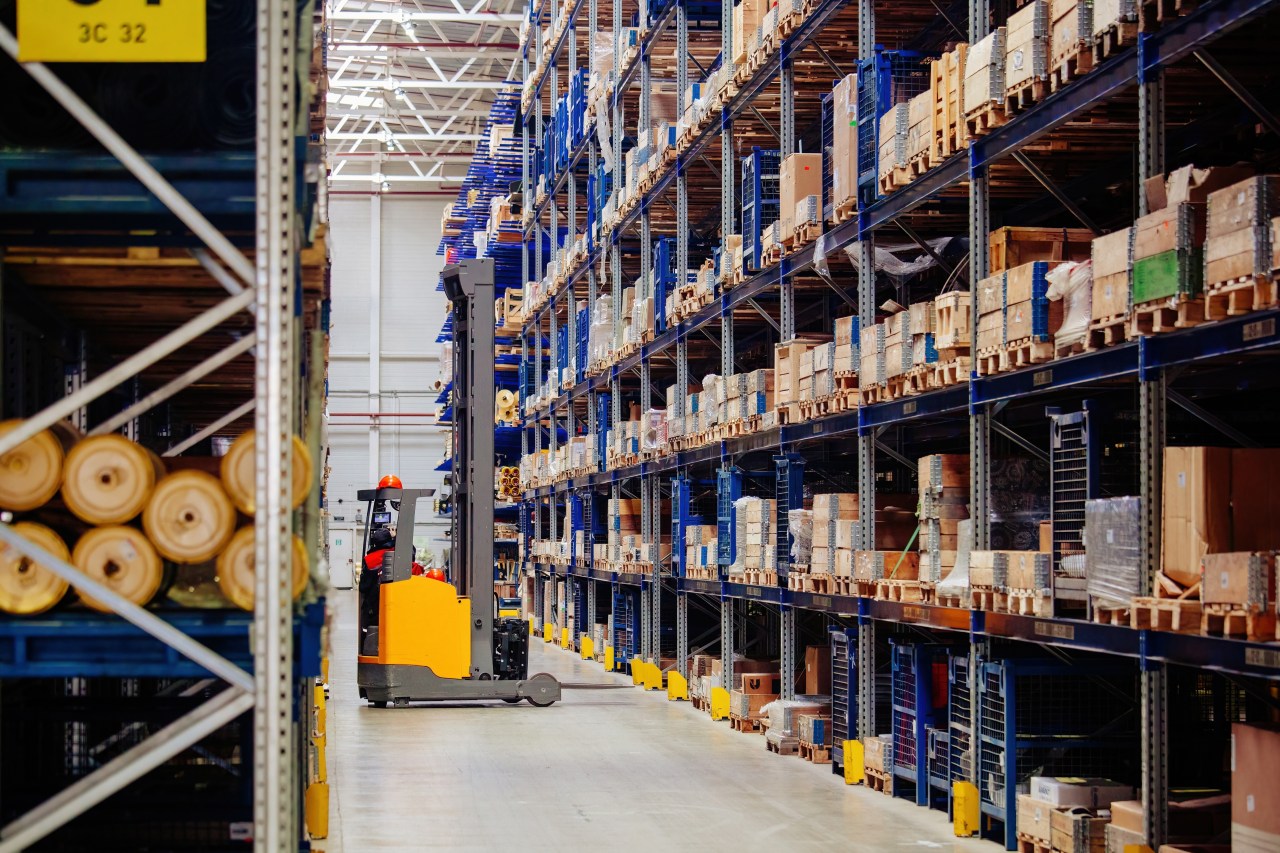
Implementing an RFID warehouse management system can be a complex undertaking, but with careful planning and execution, it can drive significant improvements in operational efficiency and inventory accuracy.
To get you started, here’s a structured roadmap that will help you plan your RFID deployments and avoid common pitfalls.
1. Assess current infrastructure and set goals
Start by evaluating your current WMS or ERP system for RFID compatibility and needed upgrades.
Review your inventory accuracy rates and identify operational bottlenecks to determine where RFID will add the most value.
Use a warehouse readiness checklist covering:
- WMS/ERP capabilities and integration options.
- Inventory accuracy and error sources.
- Throughput rates and capacity limits.
- Staff tech skills and training needs.
- Available budget and resources.
Then set specific, measurable KPIs aligned with your business goals, such as inventory accuracy improvements or faster order processing. Clear goals help you track RFID’s impact and make better decisions throughout implementation.
2. Plan software and hardware integration
Once you’ve assessed your current infrastructure and set goals, the next step is to plan the technical integration of your RFID components with your existing systems.
This typically involves connecting RFID readers, antennas, and tags with your WMS or ERP software to enable seamless data flow and real-time inventory updates.
Key considerations for software and hardware integration include:
- Compatibility with existing WMS/ERP systems and ecommerce platforms.
- Use of APIs and middleware to facilitate data exchange.
- Scalability and flexibility to accommodate future growth.
- Security and data protection measures.
Depending on the complexity of your integration, this phase can take anywhere from a few weeks to several months. It’s essential to work closely with your IT team and any external vendors to ensure a smooth and successful integration process.
3. Set up pilot runs and testing
Before rolling out your RFID system across your entire warehouse, it’s important to conduct thorough testing and pilot runs to validate system performance and identify any issues.
This phase allows you to refine your setup and processes in a controlled environment before committing to a full-scale implementation.
To set up effective pilot runs,you must:
- Select a specific location or product category for initial testing.
- Establish baseline measurements for key metrics (e.g., inventory accuracy, cycle count time).
- Design test scenarios that cover common use cases and edge cases.
- Monitor system performance and gather feedback from staff.
- Iterate and refine based on test results and feedback.
During the testing phase, it’s common to encounter issues such as reader interference, tag placement inconsistencies, or software glitches. To help troubleshoot these problems, create a guide that outlines common issues and their solutions. This can serve as a valuable resource for staff during the pilot and beyond.
4. Train staff and manage change
Effective staff training and change management are critical to the success of any RFID implementation. Even the most advanced technology will fail to deliver results if employees are not properly trained and bought into the new system.
To ensure a smooth transition:
- Develop a comprehensive training curriculum that covers both technical and process aspects of the RFID system.
- Use a mix of classroom instruction, hands-on training, and e-learning modules to cater to different learning styles.
- Designate RFID “champions” within each department to serve as resources and advocates for the new system.
- Communicate the benefits of RFID clearly and consistently to build staff buy-in.
- Provide ongoing support and refresher training to reinforce best practices and address any knowledge gaps.
Effective change management also involves actively seeking feedback from staff and addressing any concerns or resistance points. Regular communication and a willingness to adapt based on employee input can go a long way in ensuring a successful RFID adoption.
5. Go live across multiple locations
Once you’ve validated your RFID system through pilot testing and trained your staff, it’s time to roll out the technology across your entire warehouse network.
For businesses with multiple locations, this can involve either a phased approach or a simultaneous go-live, depending on factors such as resource availability, geographic dispersion, and operational readiness.
To ensure a smooth go-live, create a detailed launch plan that includes:
- Pre-launch checklists for each location to verify system readiness.
- Contingency plans for handling any disruptions or issues during the transition.
- Clear communication protocols for sharing updates and escalating problems.
- Dedicated support staff to assist with troubleshooting and questions.
During the initial go-live period, it’s important to closely monitor system performance and be prepared to quickly address any issues that arise. Having a centralized command center can help coordinate efforts across locations and ensure consistent data quality and visibility.
6. Review data and refine processes
After your RFID system is up and running, the work of optimization begins.
Regularly reviewing performance data and identifying areas for improvement is essential to realizing the full value of your investment.
Make sure you are consistently:
- Analyzing KPIs and comparing them to pre-RFID baselines to quantify impact.
- Conducting regular system audits to identify any performance issues or data discrepancies.
- Gathering feedback from staff on usability and efficiency gains.
- Identifying opportunities to expand RFID use cases or integrate with other technologies.
- Adjusting processes and configurations based on data insights and operational needs.
By treating your RFID implementation as an iterative process, you can continuously refine and adapt your system to drive maximum value for your business. Regularly revisiting your goals, monitoring performance, and making data-driven decisions will help ensure that your RFID investment delivers a strong ROI over time.
Best practices for RFID maintenance and data security
Implementing an RFID warehouse management system is just the beginning; ensuring its ongoing reliability, performance, and security is crucial to realizing its full potential.
Ongoing troubleshooting and hardware upkeep
Keep your RFID system performing optimally with a proactive maintenance plan that includes regular checks of all components to catch issues before they affect operations.
Key elements of an effective maintenance plan:
- Daily, weekly, and monthly component checklists
- Hardware cleaning and inspection procedures
- Testing and replacement protocols
- Spare parts inventory system
- Documented troubleshooting guides
Assign clear responsibilities and establish a consistent maintenance schedule to ensure long-term reliability and performance.

Preventing electromagnetic interference
Electromagnetic interference (EMI) from metal shelving, machinery, and other RF devices can cause read errors and performance issues that compromise your RFID system’s accuracy.
Best practices to minimize EMI are to:
- Survey your site to identify interference sources and optimize reader placement.
- Use shielding materials and specialized antennas.
- Choose appropriate frequencies for your environment.
- Test tag performance in various positions to maximize read rates.
- Implement filtering techniques to improve signal quality.
Select hardware designed for your specific environment to handle temperature, humidity, and dust challenges effectively.
Security measures and compliance
Protect your RFID system with robust security measures, especially if you handle high-value inventory or regulated products.
To preserve and strengthen security, make sure you:
- Encrypt tag data and communication channels.
- Implement access controls and user authentication.
- Conduct regular security audits.
- Ensure compliance with relevant regulations (HIPAA, PCI DSS).
- Train employees on security practices.
Work with IT and compliance teams to create security protocols that protect your data without hindering operational efficiency.

Future-proofing your RFID system
Design your RFID system with flexibility to adapt as your business grows and technology evolves. This means:
- Using industry-standard protocols for easier upgrades.
- Building with modular components that can be expanded.
- Staying current with RFID technology developments.
- Exploring integration with IoT, blockchain, and AI.
- Regularly reviewing and updating your RFID strategy.
A proactive approach to maintenance and future planning ensures your RFID investment continues delivering value for years to come.

RFID-enhanced multi-warehouse operations
For businesses with multiple fulfillment centers, RFID technology can be a game-changer in terms of inventory visibility, accuracy, and operational efficiency.
By providing real-time data across distributed warehouse networks, RFID enables more strategic inventory management and faster, more reliable order fulfillment.
🌎 Real-time data in global fulfillment
One of the biggest headaches in running a global fulfillment network is keeping accurate inventory counts across multiple locations.
With traditional barcode systems, updates lag behind as products move from place to place. This leads to mismatched numbers and items being out of stock when they shouldn’t be.
RFID fixes this by giving you an up-to-the-minute view of where everything is across your entire network. As tagged items pass through each location, your warehouse system updates automatically. This makes it much easier for managers to decide where to move inventory, when to reorder, and how to route orders efficiently.
Here’s a real-world example: if a customer orders something that’s out of stock at the closest warehouse, the RFID system can instantly find it at another location and reroute the order there. The customer gets their item faster and more reliably, and the business makes better use of its inventory and cuts down on storage costs.
💵 ROI beyond the warehouse
RFID’s benefits go well beyond the warehouse. Accurate, real-time inventory data can improve how your whole business runs.
On the customer side, connecting RFID to your online store means shoppers see accurate stock levels and realistic delivery estimates, which means fewer abandoned carts and fewer surprises. It can also flag returned products and reveal patterns that point to quality or design issues worth fixing.
For marketing, the data helps identify slow-moving products so you can run targeted promotions before they become a bigger problem. For finance, better inventory visibility leads to more accurate forecasting and smarter budgeting.
In short, RFID gives your entire organization a more reliable foundation to make decisions – not just your warehouse team.
Introducing ShipBob’s WMS: advanced inventory management, without RFID
Not ready for full RFID implementation? ShipBob’s proprietary warehouse management system offers similar benefits without the complexity and cost.
Using advanced scanning technology and real-time tracking, it delivers exceptional visibility and accuracy specifically designed for ecommerce businesses.
ShipBob’s WMS provides RFID-like benefits through simpler technology, such as:
- Real-time inventory tracking across our global fulfillment network.
- Automated order routing based on live inventory data.
- Seamless integration with popular ecommerce platforms.
- Comprehensive analytics on inventory performance.
“All in all, we have 4,000 SKUs. Most of our merchandise is apparel, so lots of our SKUs have multiple variants for size, color, team, and more. It can be challenging to keep them all straight – but ShipBob WMS makes it so much easier.
First, the interface is really easy to use. So many WMS systems are just archaic and confusing, because they’re built by engineers – not by the people who really utilize it. ShipBob’s WMS is different: the technology is great and works well, but it’s sleek and intuitive to navigate, too.
Second, it gives us the inventory tools we need. ShipBob’s WMS has built-in inventory management features, and I’m constantly discovering new ways to take advantage of the technology. We’re actually doing cycle counts now; before ShipBob, we had some cycle counting, but you couldn’t trust any of it. As we’ve spent more time on ShipBob WMS, our trust is going up, and our inventory accuracy is improving with it.”
Tucker Robinson, Warehouse Director at Savannah Bananas
A major advantage is the centralized dashboard showing inventory across all locations – whether it’s in ShipBob’s warehouses or your own facilities. This visibility helps you make smarter decisions about reordering, inventory placement, and order routing for faster, more cost-effective fulfillment.
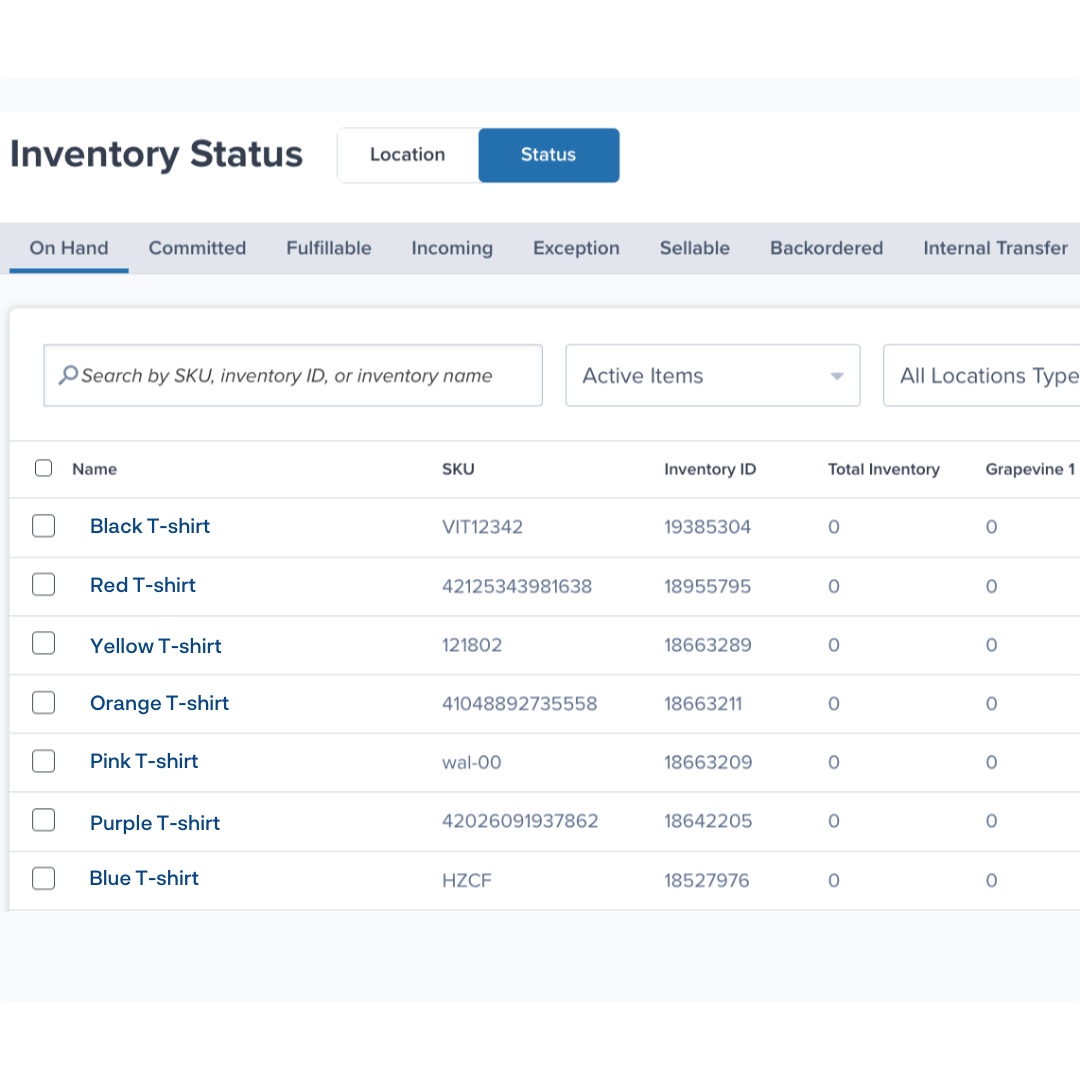
Beyond core inventory management, ShipBob’s WMS includes valuable operational features:
- Automated order processing and shipping labels
- Custom packaging options
- Returns management
- Kitting and assembly services
- Dedicated support
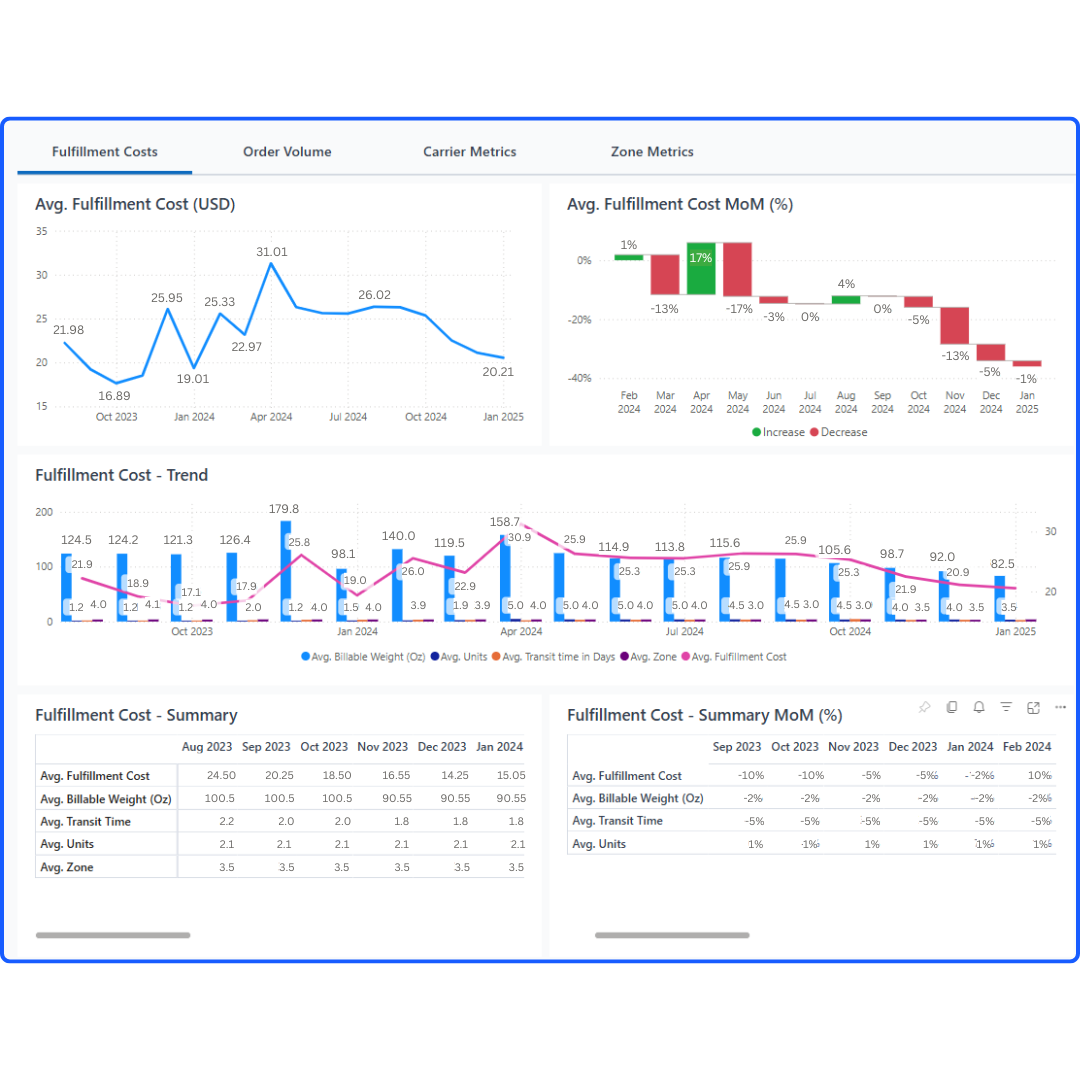
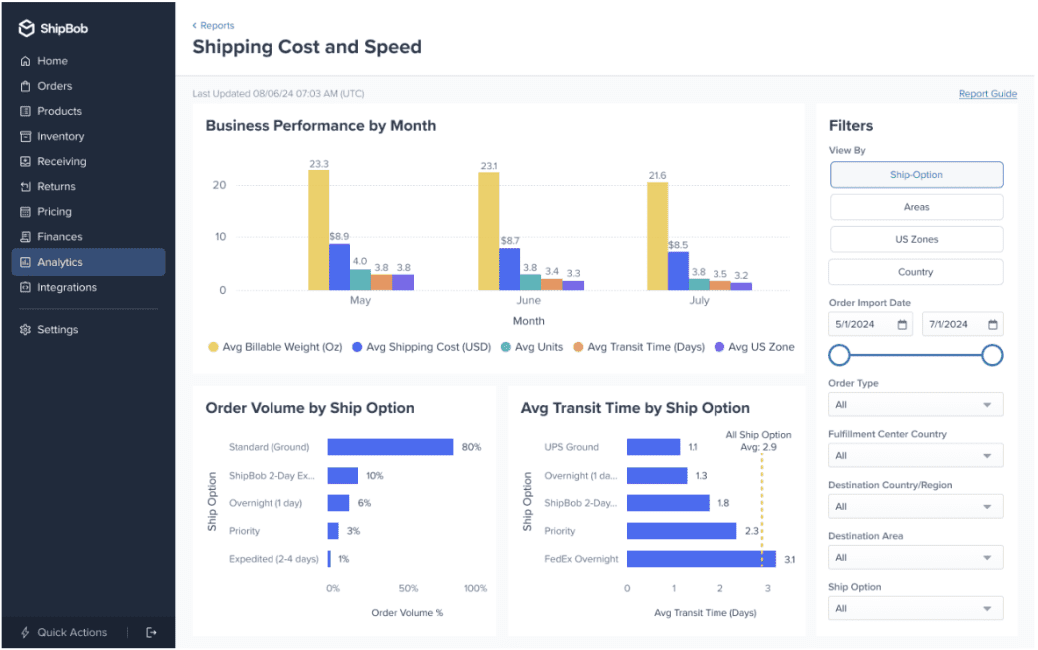
For businesses looking to scale without RFID’s complexity and cost, ShipBob offers a powerful alternative that delivers similar benefits plus value-added services. With ShipBob’s WMS powering your fulfillment, you’ll be prepared to tackle – and achieve – your brand’s long-term goals.
“Before ShipBob WMS, our entire team used to help fulfill orders. During peak season each year, everyone would be all-hands-on-deck with fulfillment: receiving, stowing inventory, picking, packing, and shipping. The laser focus on fulfillment put a stop to all other aspects of the business. Having everyone spend so many hours on fulfillment during peak season put us behind in many ways.
For example, since our designer was fulfilling orders, we were behind on designing new products, which led to manufacturing and product launch delays. Because we have to work around Chinese New Year deadlines for spring releases, we had to rush getting designs ready. By streamlining our fulfillment process, everyone can actually do their jobs.
As a result of implementing ShipBob WMS, we’re able to focus on marketing, product development, and photo shoots, all of which are things we couldn’t do before. We’ve been able to grow in ways that were previously impossible.”
Beth Welch, Co-Owner and Co-Founder, and Maddie Crawford, Fulfillment Manager, at Forest Ink and Groovy Things Co.
For more information about how ShipBob can help you optimize your ecommerce warehouse operations, click the button below to get in touch.
FAQs about RFID in warehouse management systems
Here are answers to common questions about RFID solutions for warehouses.
What is the difference between RFID and barcode systems?

RFID and barcodes both track inventory but function differently. RFID uses radio waves for automated scanning without line-of-sight, while barcodes require direct scanning of each item individually.
RFID can scan multiple items at once and store more data, but costs more and is more complex. Many warehouses leverage both strategically, using RFID for high-value items and barcodes for simpler tracking needs.
How do I budget for an RFID implementation?
Include hardware (tags, readers, antennas), software, integration, training, and maintenance in your budget. Costs vary based on your warehouse size and requirements.
Consider a phased approach, starting with high-ROI areas to spread costs while proving value to your organization.
Factor in expected returns from improved accuracy, labor savings, and efficiency when planning. Highlighting these long-term benefits helps secure stakeholder approval.
How does RFID help support multi-warehouse operations?
RFID provides real-time inventory visibility across all facilities, improving decision-making and coordination in multi-warehouse environments.
It accurately tracks inventory movements between warehouses, reducing lost items during transfers and enabling smarter inventory placement to meet customer demand.
With its unified view of inventory levels and locations, RFID helps optimize distribution networks for faster, more cost-effective delivery.
What are the alternatives to full RFID implementation?
For businesses not ready for full RFID, consider these alternatives:
- Advanced barcode systems with similar tracking capabilities at lower costs
- Computer vision using cameras and AI for inventory monitoring
- Modern WMS solutions with real-time tracking and automation
- Partnerships with tech-forward 3PLs offering advanced inventory management through their existing systems
How does ShipBob’s technology compare to RFID systems?
ShipBob’s WMS delivers many RFID benefits – including real-time visibility, high accuracy, and seamless integration – without using RFID technology. It relies on advanced scanning and robust software to achieve similar results.
Key advantages include unified inventory visibility across multiple fulfillment centers and seamless integration with popular ecommerce platforms.
For many businesses, ShipBob offers a more cost-effective, user-friendly alternative to in-house RFID, providing advanced inventory management without significant upfront investment or maintenance.
Does ShipBob support RFID for in-house warehouses?
When considering RFID, check compatibility with your existing systems. ShipBob’s experts can guide integration and share best practices.
However, RFID isn’t always necessary. ShipBob’s standard technology often delivers similar benefits with less cost and complexity. Evaluate your specific needs to determine the best fit for your warehouse.


