
Table of Contents
** Minutes
AI isn’t a buzzword at ShipBob. It’s how we build.
ShipBob Promise: Delivery that drives conversions
Cube-aware picking and the warehouse floor behind ShipBob Promise
Tracking: Turn your most expensive support problem into a brand moment
Returns: Recover margins where most brands quietly lose it
If you’ve ever refreshed a courier tracking page, chased down a missed delivery window, or tried to make sense of fragmented warehouse data across tools that don’t talk to each other, ShipBob’s latest innovations are for you.
ShipBob’s Spring ’26 Release isn’t a routine update. It’s our largest seasonal release to date. And the updates inside it, from an AI-powered delivery date engine to unified branded tracking to smarter returns, are only possible because ShipBob has spent more than a decade building and owning every layer of its technology.
Your fulfilment should be getting smarter, faster, and easier to manage with every passing quarter. Here’s exactly how ShipBob is making that happen.
AI isn’t a buzzword at ShipBob. It’s how we build.
Most companies talk about AI. ShipBob builds with it.
The most consequential AI advantage at ShipBob isn’t any single feature. It’s velocity.
ShipBob’s Yard Management System, which optimises trailer arrivals and departures across the fulfilment network in real time, went from problem identification to full production deployment in under ten days. That kind of speed is becoming standard across the company, and every merchant fulfilling with ShipBob gets the benefit of that velocity in every release.
The reason it’s possible is the same reason innovations like our Inventory Placement Program (IPP) and ShipBob Promise (keep reading for more info on this one!) are possible: ShipBob owns 100% of its technology, including our:
- Warehouse management system (WMS)
- Merchant-facing dashboards
- Decision engine
- Courier orchestration layer
All of these features are built in-house by more than 300 product and engineering team members. Unlike fulfilment providers running on third-party warehouse management systems, ShipBob controls the data, the workflows, and the speed at which improvements are launched.
That foundation now powers more than 250 integrations and retail partners across our global network, and it’s the reason brands fulfilling with ShipBob compound advantages over time.
What’s next on the AI roadmap makes the current pace look like a warm-up. ShipBob’s MCP server is now live, making inventory, orders, shipments, and operational data queryable through AI assistants. As more of brands’ day-to-day work shifts from dashboards to AI agents, the platforms that a brand’s AI tools can actually talk to will be the ones brands build on. ShipBob is already there.
On the returns side, ShipBob is building AI vision-based inspection that uses computer vision to grade returned items in seconds and route each unit to its highest-value outcome: restock, refurbish, liquidate, or dispose. This means brands can recover their margin faster. A preview is expected later in 2026.
ShipBob Promise: Delivery that drives conversions
Brands have one shot at the delivery promise they make to a customer.
- When it’s right: Conversion goes up, support tickets go down, customers come back
- When it’s wrong: Support tickets surge, costs rise, refunds are issued, customers don’t return
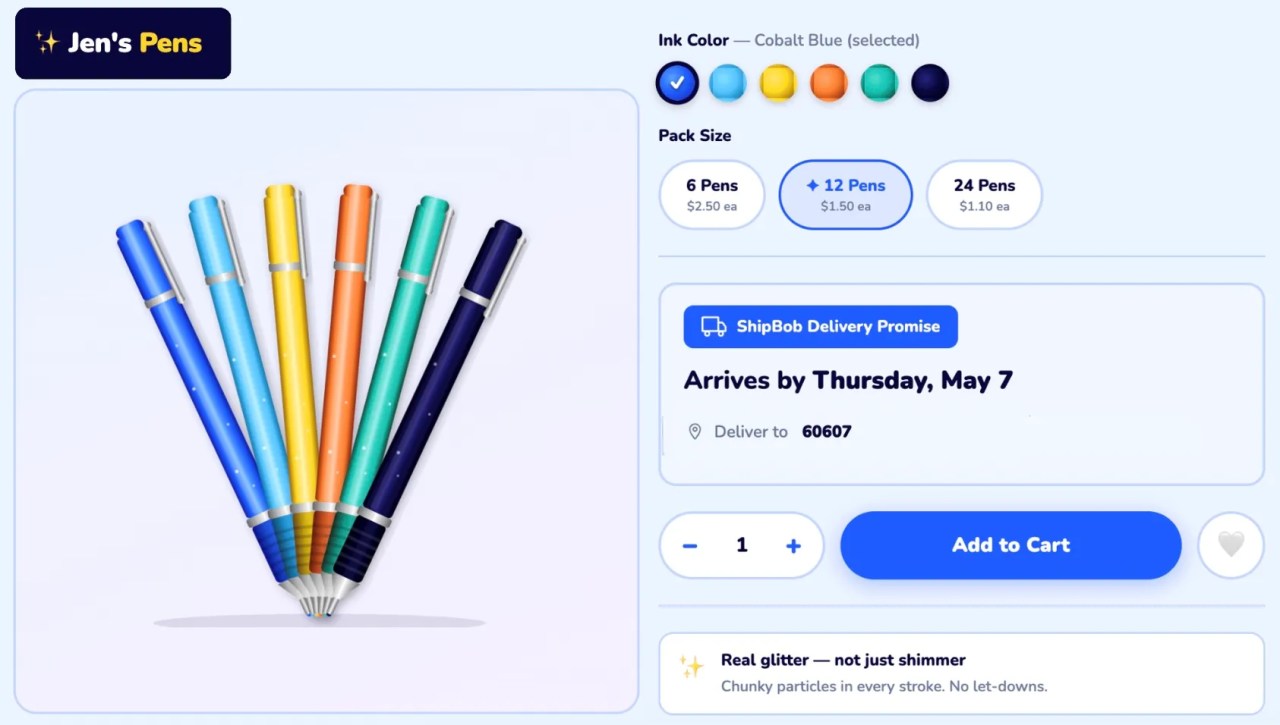
ShipBob Promise is a new delivery date engine designed to get it right. Promise is trained on hundreds of millions of shipments across ShipBob’s global network and continuously learns from every order it completes. Unlike most delivery date estimates, which rely on courier-published averages, Promise reflects what’s actually happening on the ground, fulfilment centre by fulfilment centre, ZIP code by ZIP code.
But courier intelligence is only half of what makes Promise work. The other half is operational. Promise works backward from the moment the truck leaves the dock. Every facility’s critical pull time (CPT), or the latest moment an order can be picked, packed, and staged to make its outbound courier, is known by the system in real time.
If an order misses a stage gate inside the warehouse, the system doesn’t just flag it; it changes the downstream decisions. A different courier service gets selected, and a different cutoff gets targeted, so the promise to the customer does not change.
The conversion impact is significant. Fast, accurate delivery dates have been shown to lift shopper conversion by 25 to 30%. Promise gives every ShipBob merchant that same conversion lever on their own storefront. For each shipment, the system chooses the most cost-effective courier that can still meet the delivery date. This means brands aren’t overpaying for speed the customer doesn’t need.
Promise enters beta in May 2026 for US parcel shipments, with global expansion to follow.
Cube-aware picking and the warehouse floor behind ShipBob Promise
A delivery promise is only as good as the warehouse operations behind it. Spring ’26 launches three capabilities designed to make sure the warehouse floor keeps every commitment Promise makes.
- Cube-aware cluster picking and packing uses smarter order-to-bin logic that accounts for both timing and physical size, so the right orders land on the right carts at the right time.
- Cart creation management lets merchants and ShipBob-operated sites configure fulfilment at the system level, modeling real equipment and execution rules.
- ShipBob’s new unified Order dashboard gives real-time visibility into fulfilment execution across all pick flows, surfacing order priority, courier cut-offs, and risk on a single screen.
Together, these reduce friction on the warehouse floor and ensure time-critical work gets prioritized. They’re the operational backbone of Promise.
Tracking: Turn your most expensive support problem into a brand moment
“Where is my order?” (WISMO) is the most common support question in ecommerce. It accounts for 30 to 40% of all support tickets across the industry, rising above 50 percent at peak. At $5 to $22 per ticket when a human agent handles it, it’s also one of the most expensive.
The root cause isn’t usually a lost package. It’s a visibility gap. Multiple courier handoffs create tracking gaps, confusing status updates, and a fragmented experience that sends customers straight to your support team.
ShipBob is closing that gap. With ShipBob’s recently launched Tracking API and recognition as an official courier on Shopify, tracking visibility now extends end-to-end, from the moment an order is labelled to the moment it reaches the customer’s doorstep, regardless of which courier completes the last mile.
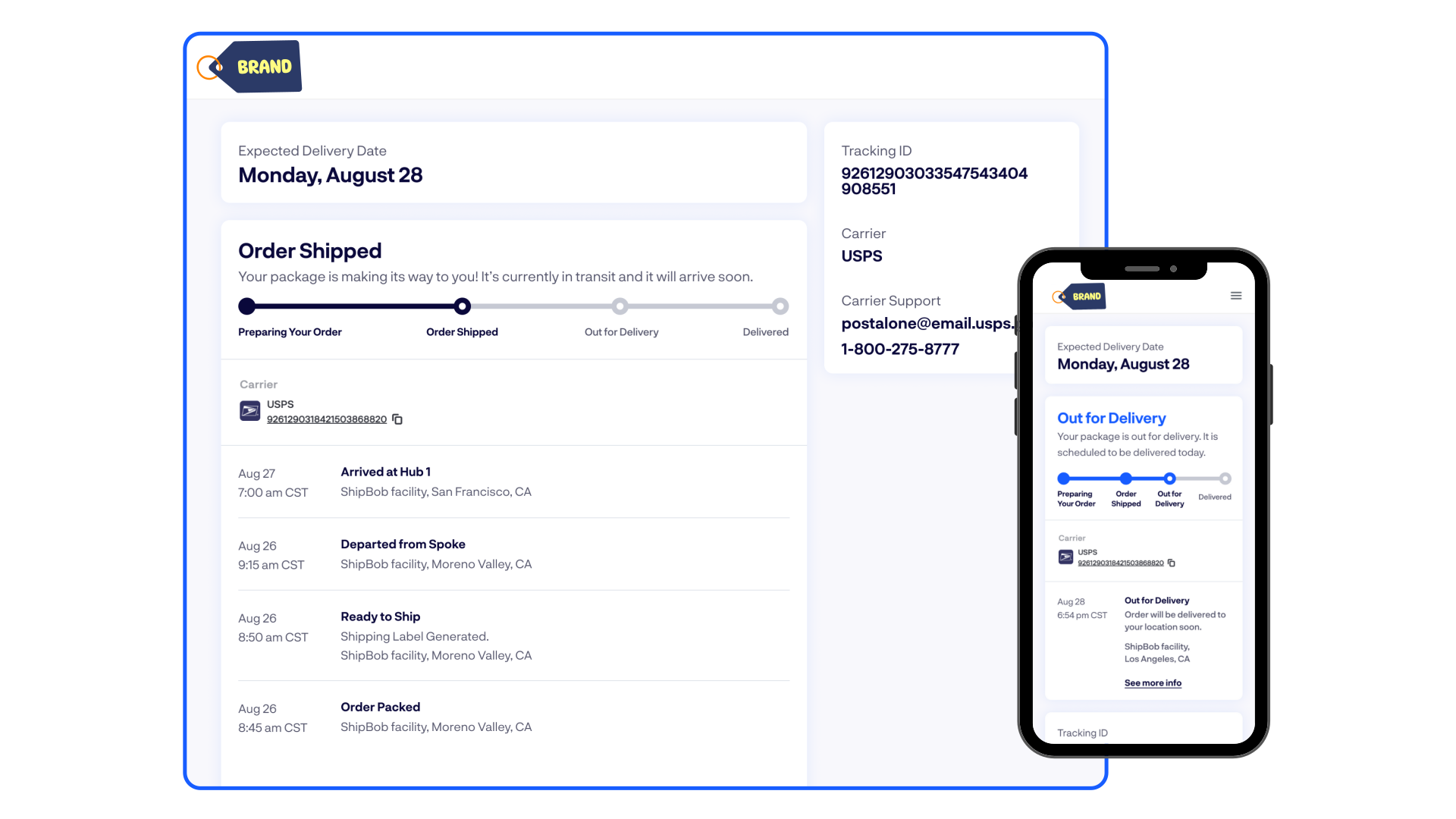
TrackBob, ShipBob’s branding tracking page, takes it a step further. Merchants can brand their tracking page with their own logo, colours, and assets, surface detailed order statuses, and turn one of ecommerce’s most expensive support touchpoints into a moment that reinforces their brand.
TrackBob is now generally available for all Shopify and ShipStation merchants globally.
Returns: Recover margins where most brands quietly lose it
Returns are the second hardest part of ecommerce after acquisition, and the place where most brands quietly lose margin. Spring ’26 launches updates across both of ShipBob’s returns solutions, standard and apparel, designed to recover that margin and reduce friction for the customer.
Lower-cost return labels. New QR-based return labels at ShipBob’s negotiated courier rates, available for both standard and apparel returns. Customers scan and ship, and the return flows back into the ShipBob network, managed end-to-end on one platform. Launching June 2026 in the US with Loop Returns.
Recovered value on returned lot-tracked products. If you sell supplements, food and beverage, beauty, or anything with lot tracking, returned inventory no longer has to sit in limbo. Eligible lot-tracked items can now be inspected and restocked on return, recovering inventory value while staying compliant. Lot quarantine management is also available via API for recalls and inspections. Available globally now, by request.
Expanded apparel returns. ShipBob’s Returns Hub in Fort Worth, TX is now accepting new merchants with complex returns requirements, including detailed SOPs, garment inspection, refurbishments, and value-added services. If your brand needs a returns partner that can match the complexity of apparel, talk to your ShipBob team. Available now, by request.
AI vision-based inspection. Computer vision that grades returned items in seconds and routes each unit to its highest-value outcome results in faster returns processing and meaningfully more recovered inventory value. A preview is expected later in 2026.
There’s a lot more where that came from. The full Spring ‘26 Release, with even more new features and updates, is live on our landing page.
Explore ShipBob’s Spring ’26 Releases
See all of ShipBob’s Spring ’26 Release innovations here.
Attend Fulfilled in Las Vegas
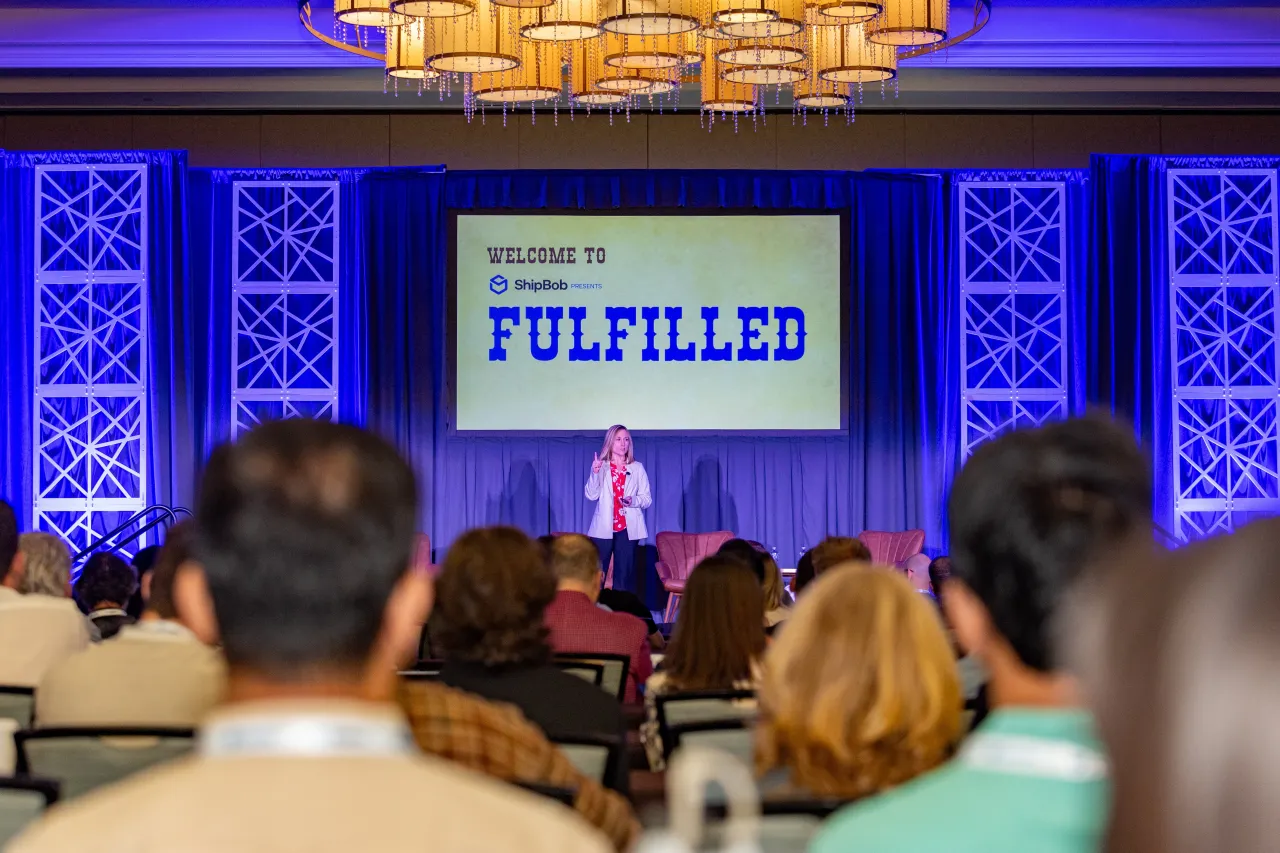
Fulfilled is ShipBob’s flagship merchant event, and this year’s agenda is built around exactly these topics: AI strategy, operational upgrades, and what it takes to scale fulfilment in 2026. You’ll get hands-on time with experts, product walkthroughs, and direct access to the team driving these innovations. Register for Fulfilled.
Get started with ShipBob
Connect with our team to learn how ShipBob can help your brand scale faster and smarter.


