

Inventory issues can quietly erode your margins and damage customer trust, long before you realize there’s a problem. From stockouts and overstocking to inaccurate counts and slow-moving SKUs, poor inventory management impacts every aspect of ecommerce operations.
As brands scale, these challenges multiply. Without the right systems in place, it becomes harder to forecast demand, track inventory in real time, and keep fulfilment running smoothly, all while customer expectations only continue to rise.
In this guide, we’ll break down the most common (and often overlooked) inventory management pitfalls ecommerce brands face, plus the cost of ignoring them. You’ll discover practical strategies to fix these issues for good, drawn from what’s worked for thousands of merchants across ShipBob’s global fulfilment network.
How inventory management challenges connect to your profitability
Proper inventory management is directly tied to your bottom line. If your inventory management isn’t up to par, you’ll face:
- The opportunity cost of inventory: Every dollar tied up in excess stock or lost due to stockouts represents money that could be invested in growth opportunities.
- Holding costs that squeeze profits: Holding costs alone can eat into margins, with expenses like storage fees, insurance, and potential obsolescence adding up quickly.
- Lost revenue and reputation: Stockouts lead to more than just a single lost sale. They result in abandoned carts, decreased customer loyalty, and a tarnished brand reputation.
- Lost competitive edge: If you can’t deliver a product on time, customers will find a brand that can. Poor inventory management leads to shipping delays and backorders that drive them to competitors.
On the flip side, accurate inventory management enables you to provide the fast, reliable fulfilment that keeps customers coming back. Positive experiences drive repeat purchases, higher lifetime value, and organic word-of-mouth growth.
The true cost of inventory management challenges
Inventory management challenges are more than just operational headaches; they have a direct and significant impact on your bottom line.
Here’s how common inventory management issues can quickly erode your profit margins, tie up valuable resources, and hinder your ability to grow.
Holding costs
At the most basic level, carrying excess inventory comes with substantial holding costs.
Every unsold item sitting in your warehouse represents money that could be invested elsewhere in your business. You’re paying for storage space, insurance, and potential obsolescence of products that may never sell.
These costs add up quickly, especially for businesses with a wide product range or seasonal fluctuations.
Over- or under-stocking
In addition to storage costs, overstocking ties up working capital that could be used more productively elsewhere.
The money invested in unsold inventory could be put toward marketing, product development, or other growth initiatives. This opportunity cost can be especially high for businesses with limited cash flow or those in rapidly evolving markets.
Running out of stock can be equally damaging. Stockouts lead to lost sales and disappointed customers who may take their business elsewhere.
These lost sales have a compounding effect over time, as dissatisfied customers are less likely to return for future purchases.
Inaccurate forecasting
Inaccurate forecasting can also lead to costly inventory issues.
- Overestimating demand leaves you with excess stock that may require discounting or liquidation to sell.
- Underestimating demand means rushing to reorder, often at a higher cost due to expedited shipping or production.
These emergency measures eat into your margins and disrupt your cash flow.
Supply chain inefficiency
The true cost of inventory management challenges extends far beyond the warehouse. These issues create ripple effects throughout your entire supply chain, impacting everything from production planning to customer service.
Without accurate inventory data, you risk making poor decisions about reordering, pricing, and promotions. You may miss out on opportunities to capitalise on trends or find yourself saddled with excess stock that requires deep discounting to move.
Customer experience consequences
Beyond the immediate financial impacts, inventory challenges can also have far-reaching consequences for your brand reputation and customer loyalty.
In today’s customer-centric market, shoppers expect a seamless experience from browsing to delivery. Shipping delays, order cancellations, backorders, stockouts, inaccurate stock information, and other inventory management issues all contribute to a negative perception of your brand, and unhappy customers are quick to share their experiences online (potentially deterring future buyers).
Ultimately, the cumulative impact of inventory management challenges can be the difference between a thriving, profitable business and one that struggles to stay afloat. By understanding and addressing these challenges head-on, you can free up capital, improve your customer experience, and position your business for sustainable growth.
8 inventory management challenges to get ahead of in 2026
As the ecommerce landscape continues to evolve, brands must stay ahead of the inventory management curve. While some challenges are well-known, others can catch businesses off guard, leading to significant operational and financial consequences.
Here are some of the most common challenges brands face in managing their inventory that you should look to avoid this year.
1. Inaccurate stock counts
Discrepancies between physical inventory and system records can create ripple effects throughout your supply chain, leading to a host of issues. These inaccuracies often stem from manual counting errors, theft, damaged goods, or improper receiving procedures.
Even small errors can compound over time, resulting in significant discrepancies that lead to overselling, underselling, and misallocated resources.
This challenge is particularly pronounced for businesses selling across multiple channels, as reconciling inventory data from various platforms can be a daunting task.
2. Forecasting difficulties
Accurately predicting future demand is a complex challenge, especially for businesses dealing with seasonal or trend-driven products.
Historical data limitations can make forecasting particularly difficult for new products or businesses just starting out. External factors, such as market changes or competitor actions, can also complicate the forecasting process.
Over-forecasting leads to excess inventory and tied-up capital, while under-forecasting results in stockouts and lost sales. Developing robust forecasting models that account for a wide range of variables is essential for effective inventory management.
3. Manual tracking and inefficient processes
Many businesses still rely on spreadsheet-based systems for inventory tracking, which can create significant bottlenecks and introduce human error.
Manual processes, such as physical inventory checks and cycle counting, are time-consuming, labour-intensive, and error-prone leading to increased costs and delayed decision-making.
As businesses grow, these manual processes become increasingly unsustainable, preventing timely and accurate inventory control. Scaling operations with manual systems is a major challenge, as the complexity of inventory management grows exponentially with increased product variety and sales volume.
4. Lack of real-time visibility
Operating with delayed or outdated inventory information can be a significant handicap in today’s fast-paced ecommerce environment.
Lack of real-time visibility creates blind spots in operational decision-making, making it difficult to respond quickly to changes in demand or supply chain disruptions.
Synchronizing inventory data across multiple sales channels is a critical challenge, as inconsistencies can lead to overselling or unfulfillable orders. Real-time visibility is essential not only for day-to-day operations but also for making informed strategic decisions about inventory allocation and distribution.
5. Overstock and stockout balancing act
Maintaining optimal inventory levels is a constant balancing act between the risks of overstocking and stockouts.
Excess inventory ties up working capital and can lead to obsolescence or spoilage, while stockouts result in lost sales and damaged customer relationships.
This challenge intensifies with increased product variety and seasonal fluctuations, as businesses must constantly adjust their inventory mix to meet changing demand patterns.
Finding the right balance requires a combination of accurate forecasting, real-time data, and flexible inventory management strategies.
6. Multi-location inventory coordination
As businesses expand, managing inventory across multiple warehouses or fulfilment centres becomes increasingly complex.
Deciding which products to stock in each location and in what quantities requires careful analysis of regional demand patterns and shipping costs.
Transferring inventory between locations efficiently is another significant challenge, as businesses must balance the costs of transportation against the benefits of improved distribution. Coordinating inventory levels and fulfilment operations across multiple locations requires robust systems and clear communication channels.
7. Technology integration complexities
Integrating inventory management systems with ecommerce platforms, marketplaces, and accounting software can be a major technical hurdle.
Data synchronization and format compatibility issues can create significant barriers to smooth operations, particularly for businesses operating across international borders with different currencies and regulations.
Maintaining system integrity during updates or changes is another critical challenge, as any disruption can have cascading effects on inventory accuracy and order fulfilment. Poor integration can lead to data silos and decision-making barriers, hindering the ability to respond quickly to changing conditions.
8. Scaling inventory operations with business growth
As businesses grow, inventory management becomes increasingly complex and challenging.
Maintaining accuracy and efficiency while handling increased volume puts significant strain on existing systems and processes. Transitioning from manual to automated systems can be a daunting task, requiring significant investment in technology and training.
Scaling inventory operations also requires a shift in forecasting and planning strategies, as historical data becomes less reliable and lead times may increase. Adapting to these changes while maintaining customer satisfaction and financial stability is a major challenge for growing ecommerce brands.
How to overcome and prevent inventory management issues
Navigating the complex world of inventory management can be daunting, but with the right strategies and tools, you can overcome common challenges and set your business up for long-term success.
In this section, we’ll explore actionable solutions based on industry expertise and best practices. These solutions address both fundamental and advanced inventory challenges, providing a comprehensive approach to optimising your inventory operations.
⚙️ Implement a WMS for real-time visibility
A warehouse management system is a powerful tool for gaining real-time visibility into your inventory.
At its core, a WMS provides live updates on inventory levels, locations, and movements, enabling you to make informed decisions based on accurate data. By automating tracking and data collection processes, a WMS eliminates manual errors and improves operational efficiency.
One of the key benefits of a WMS is its ability to integrate with other business systems, such as ecommerce platforms and accounting software. This integration ensures that your inventory data is always synchronized and up-to-date across all channels. When evaluating WMS options, look for a system that offers customisable reporting and analytics features, allowing you to gain deeper insights into your inventory performance.

📈 Establish data-driven forecasting methods
Accurate demand forecasting is essential for maintaining optimal inventory levels and avoiding stockouts or overstocking.
While basic historical sales analysis can provide a starting point, truly effective forecasting requires a more sophisticated approach.
- Incorporating factors such as seasonality, market trends, and external variables into your forecasting models will help you anticipate future demand more accurately.
- Regular forecast reviews and adjustments are crucial for staying aligned with changing market conditions.
- Leveraging technology, such as machine learning algorithms, can further enhance forecasting accuracy by identifying patterns and correlations that may not be immediately apparent.
- It’s important to balance automated forecasting with human judgment and market knowledge. Establishing a collaborative forecasting process that combines data-driven insights with the expertise of your team will yield the best results over time.

🔄 Adopt strategic reorder point systems
Optimising your reorder points is a critical aspect of maintaining healthy inventory levels. Reorder points should be calculated based on factors such as lead time, demand variability, and safety stock requirements. Conducting SKU-level analysis will help you determine the optimal reorder point for each product, taking into account its unique characteristics and demand patterns.
Setting up automated alerts for inventory replenishment can help you stay on top of reordering needs without constant manual monitoring. These alerts should be triggered when inventory levels reach a predetermined threshold, providing ample time to place orders and avoid stockouts. It’s important to consider the impact of reorder points on cash flow management, as tying up too much capital in inventory can limit your ability to invest in other areas of your business.
Adjusting reorder points for seasonal or promotional periods is also crucial. Anticipating spikes in demand and adjusting your reorder quantities accordingly will help you meet customer expectations without incurring excess carrying costs.
📦 Use partial shipments & FIFO rules strategically
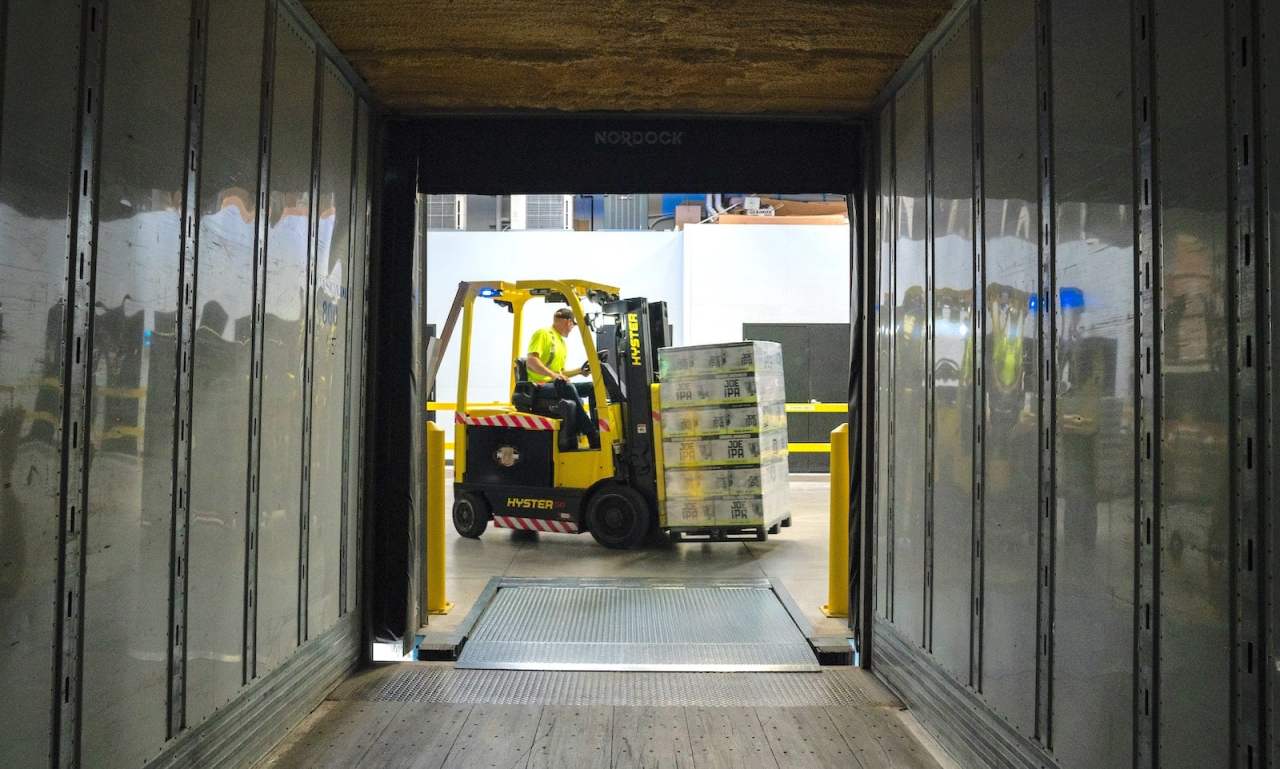
Partial shipment capabilities and FIFO policies are powerful tools for managing inventory challenges while maintaining customer satisfaction.
Partial shipments allow you to fulfil orders even when some items are temporarily out of stock, ensuring that customers receive available products as quickly as possible. This approach keeps revenue flowing and prevents complete order cancellations due to inventory shortages.
FIFO rules, on the other hand, prioritize the shipment of older inventory first, reducing the risk of products becoming obsolete or expiring before they can be sold. This is particularly important for businesses dealing with perishable goods or products with limited shelf lives. Implementing FIFO policies helps maintain inventory freshness and minimises waste, ultimately improving your bottom line.
To effectively implement these strategies, it’s essential to set up systems and processes that support efficient fulfilment. This may involve configuring your WMS to automatically allocate partial shipments or establishing clear guidelines for your warehouse team to follow FIFO principles. By leveraging partial shipments and FIFO rules, you can balance inventory efficiency with customer experience, even in the face of supply chain disruptions or unexpected demand spikes.

🏢 Adopt a multi-warehouse distribution strategy
As your business grows and expands into new markets, a multi-warehouse distribution strategy can help you optimise your inventory management and reduce shipping costs. By strategically distributing your inventory across multiple locations, you can position products closer to your customers, reducing transit times and shipping zones.
Data-driven approaches, such as analising order history and customer demographics, can help you determine the optimal placement of products across your warehouse network. Balancing inventory levels between locations based on regional demand patterns ensures that you have the right products in the right places at the right times.
Implementing a multi-warehouse strategy requires robust inventory transfer protocols and systems to maintain accurate stock levels across all locations. Establishing clear guidelines for when and how to move inventory between warehouses will help you avoid stockouts and overstock situations while minimising transportation costs.

✅ Follow rigorous inventory audit procedures
Regular inventory audits are essential for maintaining accuracy and identifying potential issues before they escalate.
Some best practices to follow include:
- Implementing rigorous audit procedures, such as cycle counting and physical inventory checks, will help you catch discrepancies early and prevent them from compounding over time.
- Establishing consistent audit schedules and procedures ensures that your inventory data remains reliable and up-to-date.
- Documenting every inventory movement, from receiving and putaway to picking and shipping, creates a comprehensive audit trail that supports accountability and problem resolution.
- Having an SOP for investigating and reconciling discrepancies when they arrive is key. This may involve tracing the issue back to its source, updating records, and implementing corrective actions to prevent future occurrences.
Over time, a robust audit process will not only improve your inventory accuracy but also help you identify opportunities for process improvements and optimisation.
Technology can also play a significant role in streamlining the audit process while improving reliability. Barcode scanning, RFID tagging, and other automated data capture methods reduce the risk of manual errors and provide real-time updates to your inventory records.

💯 Leverage advanced analytics for inventory optimisation
Data is a powerful asset for driving inventory optimisation, but only if you have the tools and knowledge to harness it effectively. Leveraging advanced analytics capabilities can help you identify trends, patterns, and improvement opportunities that may not be immediately apparent through manual analysis.
Key performance indicators such as inventory turnover, days on hand, and carrying costs provide valuable insights into the health and efficiency of your inventory management processes. By regularly monitoring these metrics and setting benchmarks for improvement, you can make data-driven decisions that optimise your inventory levels and reduce costs.
Advanced analytics can also help you identify slow-moving or obsolete inventory, allowing you to take proactive measures to clear out excess stock and improve cash flow. Predictive analytics takes this a step further by using historical data and machine learning algorithms to anticipate potential inventory issues before they occur, enabling you to take preventive action and avoid disruptions.
To effectively leverage advanced analytics, it’s important to set up intuitive dashboards and reports that provide real-time visibility into your inventory performance. These tools should be accessible to key stakeholders across your organisation, fostering collaboration and enabling swift decision-making.

How ShipBob solves critical inventory management challenges
At ShipBob, we understand the complex challenges that ecommerce brands face when it comes to inventory management. That’s why we’ve built a comprehensive solution that addresses these challenges head-on, empowering businesses to optimise their operations, reduce costs, and deliver exceptional customer experiences.
Real-time inventory visibility across all channels
One of the core features of ShipBob’s platform is our powerful dashboard, which provides real-time visibility into your inventory status across all channels.
With at-a-glance insights into key metrics such as On Hand, Committed, and Fulfillable stock, you can make informed decisions and proactively manage your inventory levels.
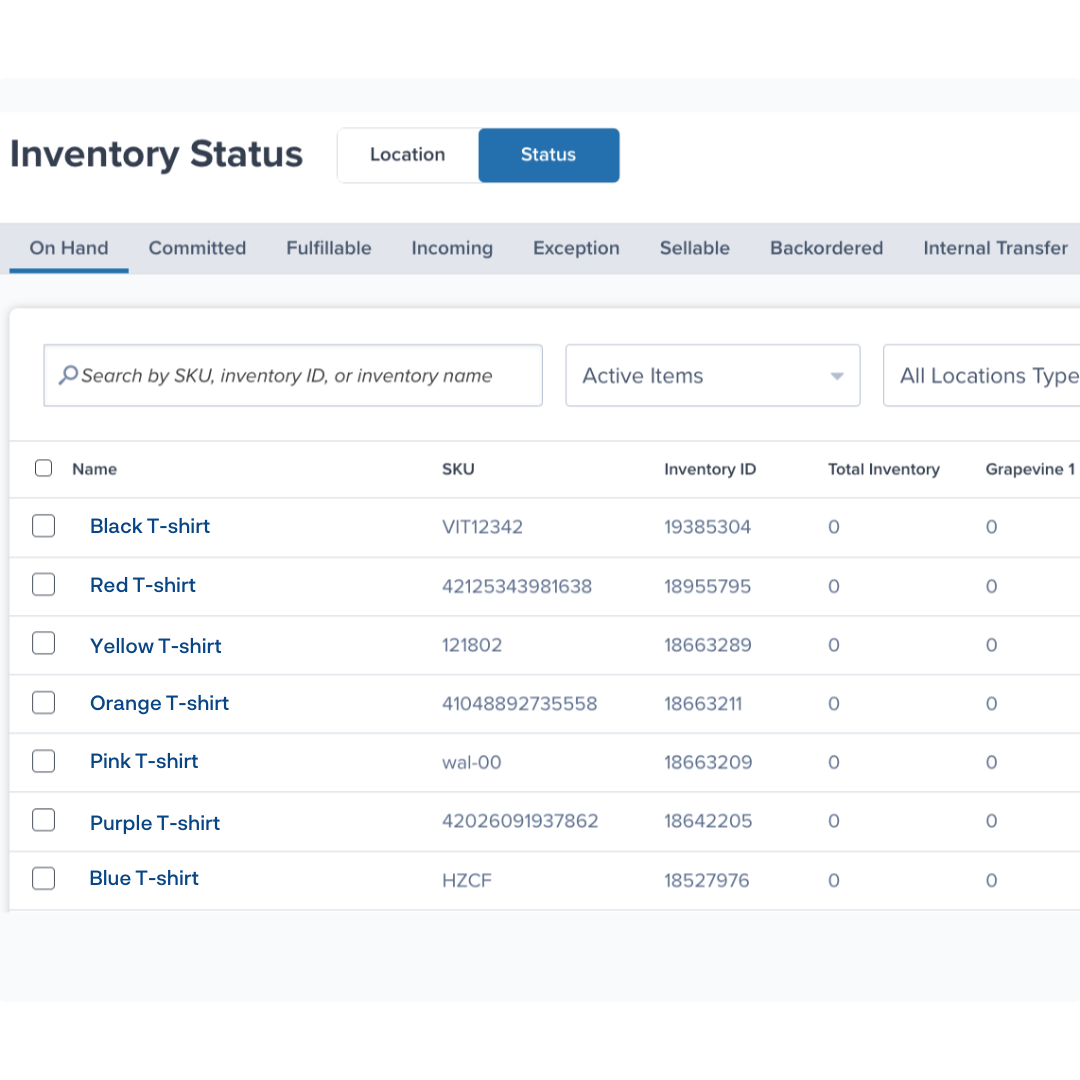
Our system also provides location-specific inventory visibility, giving you a clear picture of stock levels and movements across all of your fulfilment centres. This granular visibility is crucial for preventing stockouts, avoiding overstocking, and ensuring that you have the right products in the right places to meet customer demand.
ShipBob’s platform integrates seamlessly with major ecommerce platforms, ensuring that your inventory data is always synchronized and up-to-date. This integration eliminates the need for manual data entry and reduces the risk of errors or discrepancies. With ShipBob, you can have confidence in your inventory data and make strategic decisions based on accurate, real-time information.
“ShipBob’s WMS has built-in inventory management features, and I’m constantly discovering new ways to take advantage of the technology. We’re actually doing cycle counts now; before ShipBob, we had some cycle counting, but you couldn’t trust any of it. As we’ve spent more time on ShipBob WMS, our trust is going up, and our inventory accuracy is improving with it.”
Tucker Robinson, Warehouse Director at Savannah Bananas
Advanced order allocation and fulfilment rules
Efficient order fulfilment is critical for maintaining customer satisfaction and reducing backlog issues. ShipBob’s advanced order allocation and fulfilment rules ensure that your orders are processed quickly and accurately, even in the face of inventory challenges.
Our FIFO (First In, First Out) order allocation system automatically prioritizes the shipment of older inventory, preventing aging stock from becoming a liability. This approach helps maintain inventory freshness, reduces the risk of obsolescence, and improves your overall inventory turnover.
“The biggest difference for us in using ShipBob Plus (vs. what we used in the past) has been having the ability to actually track, manage, and see the status of our lot products.
With our previous 3PL, we didn’t have any lot number tracking capabilities. We literally did not even know which lot numbers were still in stock, and we had zero visibility into where our items were within the warehouse at any given time. It was a guessing game – so when we had some type of audit or recall that we would have to make, we were completely lost as to where the product was.
Thankfully, ShipBob Plus delivers the lot management capabilities that, as a beauty brand, is absolutely crucial for our business. We can see lot counts and store lot products separately, which has allowed us to better utilise FIFO. Everything is working really well; the reports are there, and the inventory syncs up well with our system.”
Oscar Gutierrez, Operations Fulfilment Manager at goPure
ShipBob also supports partial shipment capabilities, allowing you to fulfil orders even when some items are temporarily out of stock. This feature helps maintain customer satisfaction and keeps revenue flowing, even in the face of supply chain disruptions or unexpected demand spikes.
With customisable rules for order routing and fulfilment prioritization, ShipBob’s platform adapts to your unique business needs. Our system automatically adjusts to changing inventory conditions, ensuring that your orders are always processed in the most efficient and cost-effective manner possible.
“ShipBob’s technology streamlines inventory management across our network, ensuring optimal inventory allocation.
Once the inventory is allocated correctly, passing orders to ShipBob is seamless. ShipBob automatically routes orders to the nearest warehouse to the customer. We receive notifications confirming the warehouse selected for shipping, eliminating inventory discrepancies between the warehouses.
Efficient inventory allocation significantly impacts our outbound shipping costs, and with ShipBob, managing this has been effortless.”
Ali Shahid, COO of Our Place
Strategic inventory placement and distribution
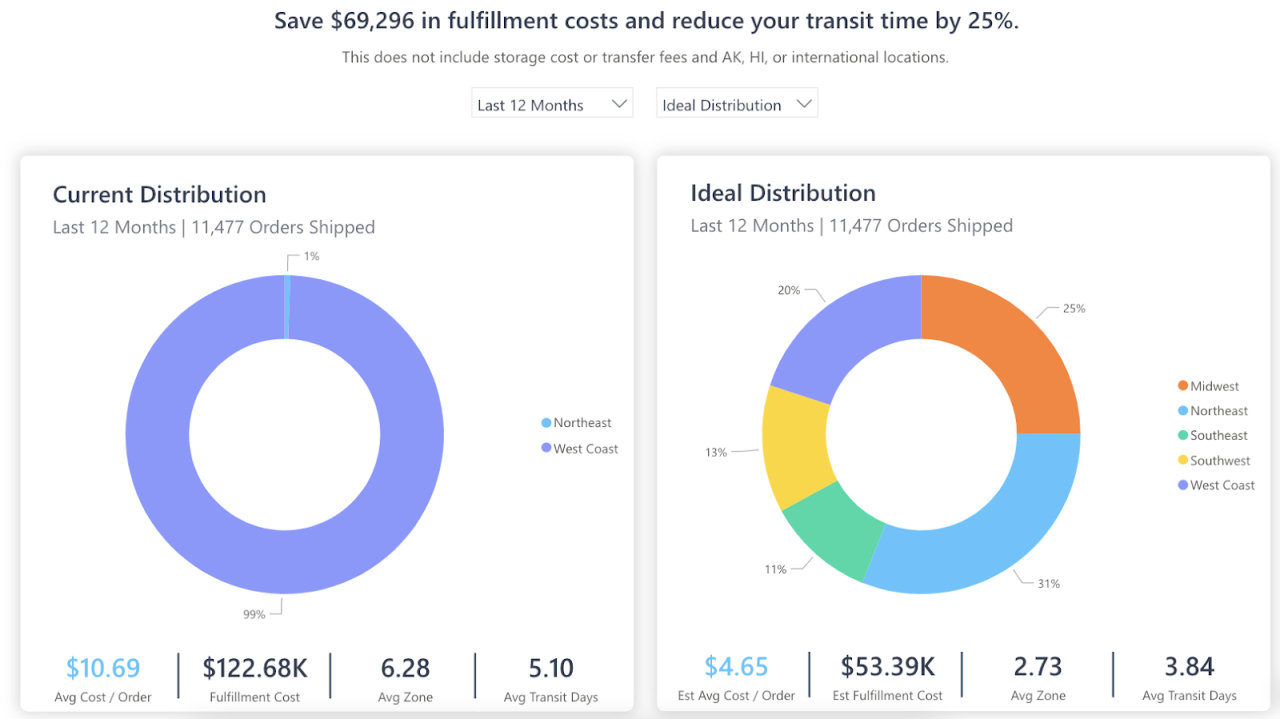
Optimising your inventory distribution across multiple locations is a complex challenge that directly impacts your shipping costs and delivery times. ShipBob’s Inventory Placement Program (IPP) simplifies this process by leveraging our network of fulfilment centres to strategically distribute your inventory.
By placing your products closer to your customers, you can reduce shipping zones, lower costs, and speed up deliveries. Our proprietary inventory placement algorithm leverages your brand’s unique order data to determine the most optimal inventory distribution strategy for your business.
ShipBob’s platform also supports internal transfers, allowing you to easily redirect stock between locations to meet changing demand patterns. This flexibility ensures that you always have the right products in the right places, reducing the risk of stockouts and overstocking.
With ShipBob’s strategic approach to inventory placement and distribution, you can improve your bottom line while enhancing the customer experience. By reducing shipping distances and times, you can meet customer expectations for fast, affordable delivery and build long-term brand loyalty.
“Through the Inventory Placement Program, we went from using one warehouse in Southern California to being in multiple regionally located fulfilment centres, which drastically reduced our out-the-door shipping cost. The ShipBob dashboard even provides detailed reporting on our average shipping zone, shipping costs, and transit time by location, and we can optimise our inventory distribution based on that data.”
Gregory Frye, VP of Operations at Hi-Altitude Brands
Comprehensive inventory tracking and analytics
Effective inventory management relies on robust tracking and analytics capabilities. ShipBob’s platform provides a comprehensive suite of tools to help you maintain complete visibility and control over your inventory.
Our Inventory Status page and History logs create a detailed audit trail of every inventory movement, from receiving and stowing to picking and shipping. This granular tracking ensures that you always have a clear picture of your inventory status and can quickly identify and resolve any discrepancies.
ShipBob’s advanced analytics and forecasting tools provide deep insights into your inventory performance, enabling you to make data-driven decisions for optimisation. Our platform helps you identify trends, anticipate potential issues, and proactively manage your inventory levels to avoid stockouts or overstocking.
Our WRO workflows provide visibility into inbound inventory statuses, so you can proactively manage restocking and avoid potential delays. With ShipBob’s comprehensive tracking and analytics capabilities, you have the power to continuously improve your inventory management processes and drive long-term success.
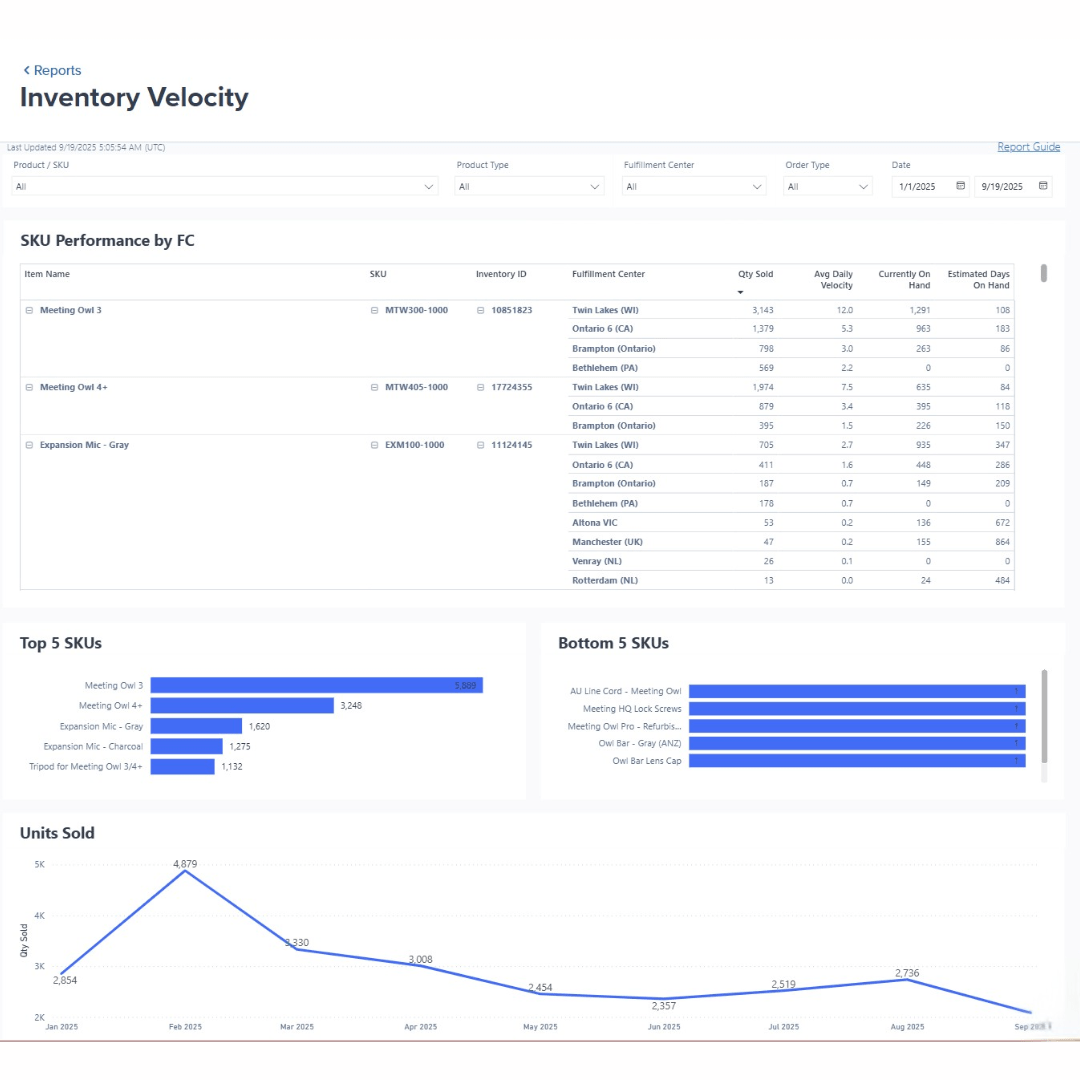
“With ShipBob, we can get a really clear picture of where our stock is moving and the sales velocity of our products by region, which is especially helpful when we’re preparing to reorder stock.
This level of analytics is hugely important to have, giving us so much data to support decision-making. In the past, we would have had to look at external sources and then bring that data back to other platforms, so having it all together from ShipBob gives us an added efficiency that is very informative.”
Danica Quilty, Ecommerce Director of Lyres
Want to know more about how ShipBob can help you tackle inventory management challenges? Click the button below to get in touch.
FAQs about inventory management challenges
Below are answers to some of the most common questions about inventory management challenges.
What are the most common inventory management problems for ecommerce brands?

Some of the most common inventory management problems for ecommerce brands include:
- inaccurate stock counts.
- Bad demand forecasting.
- Over- or under-stocking.
- Manual processes.
- Lack of real-time visibility.
- Coordination across multiple locations and channels.
- Tech integration.
- Managing catalogues and inventory at scale.
How does real-time visibility prevent overstocking or stockouts?
Real-time inventory visibility empowers businesses to make proactive, data-driven decisions that prevent overstocking and stockouts. With immediate access to accurate stock levels across all channels and locations, brands can quickly identify potential issues and take corrective action before they impact customers.
For example:
- Real-time data can alert managers to low stock levels, triggering replenishment orders before items sell out completely.
- This visibility also prevents overselling by synchronizing inventory across channels, ensuring that stock committed to orders on one platform isn’t inadvertently sold again elsewhere.
- By providing a single source of truth for inventory data, real-time visibility supports dynamic forecasting and replenishment strategies that help maintain optimal stock levels in the face of changing demand.
What’s the best way to integrate new inventory software with existing ecommerce platforms?
Integrating new inventory management software with your existing ecommerce stack requires careful planning and execution. Start by clearly defining your integration goals and requirements, then research potential solutions that offer the necessary compatibility and features. Once you’ve selected a system, map out the data flows and processes that will need to be connected between the two platforms.
During the implementation phase, thoroughly test the integration in a sandbox environment before deploying it to your live store. This allows you to identify and resolve any data synchronization or formatting issues without disrupting your active sales channels.
As you prepare to launch the integration, make sure to train your team on the new workflows and provide clear documentation for ongoing maintenance and troubleshooting.
How can businesses accurately forecast inventory needs during uncertain times?
Forecasting inventory demand during periods of uncertainty requires a multi-faceted approach that combines historical data, real-time signals, and scenario planning. Start by analising past sales patterns to identify baseline trends and seasonality, then layer in current market conditions and external factors that may impact future demand.
To account for potential volatility, create multiple forecast scenarios based on different assumptions about key variables like economic conditions, competitor actions, and consumer behaviour changes. Use these scenarios to develop contingency plans and determine appropriate safety stock levels to buffer against unexpected shifts in demand.
As new data becomes available, be prepared to adjust your forecasts and inventory plans accordingly. Monitor short-term signals like sales velocity, search trends, and customer sentiment to identify emerging patterns that may indicate a need for more significant changes.
How does multi-location distribution reduce shipping costs?
When you strategically place inventory closer to your target markets, you can take advantage of shorter shipping routes and lower shipping zones, which translate to lower costs and faster delivery times.
To optimise your distribution strategy, analyse your order data to identify patterns in customer geography and product demand. Use this information to determine the optimal placement of inventory across different regions, balancing factors like storage costs, shipping expenses, and delivery speed.
How does ShipBob handle seasonal inventory fluctuations?
ShipBob offers flexible storage and fulfilment solutions that help ecommerce brands navigate seasonal inventory fluctuations with ease. ShipBob’s global network of strategically located fulfilment centres allows merchants to quickly scale up or down their inventory levels in response to changing demand patterns.
As peak seasons approach, ShipBob’s advanced forecasting tools help businesses predict their inventory needs based on historical sales data, promotional plans, and other key inputs. This enables brands to proactively stock up on high-demand items and avoid potential stockouts during critical selling periods.
During your off-season, ShipBob’s flexible storage pricing allows merchants to reduce their inventory levels without incurring excessive carrying costs. ShipBob also supports seamless inventory transfers between fulfilment centres, enabling brands to rebalance their stock as needed to optimise storage efficiency and shipping performance.


