
Customer Profile
London-based wellness brand Spacegoods got there by building AI directly into its workflows instead of treating it as a side project. Using the ShipBob API, ShipBob MCP, and Claude, Spacegoods automated warehouse receiving orders, claims filing, B2B order intake, and invoice audits.
As a result, the team spends their time on judgment calls instead of data entry.

Learn how Spacegoods runs a global D2C and B2B fulfillment operation across the UK and Europe with an operations function that runs day-to-day with one person.
Key metrics
- 1 person running day-to-day global operations
- 75 hours saved per year on warehouse receiving orders alone
- Up to £4,000 a month in credits filed through automated claims
About Spacegoods
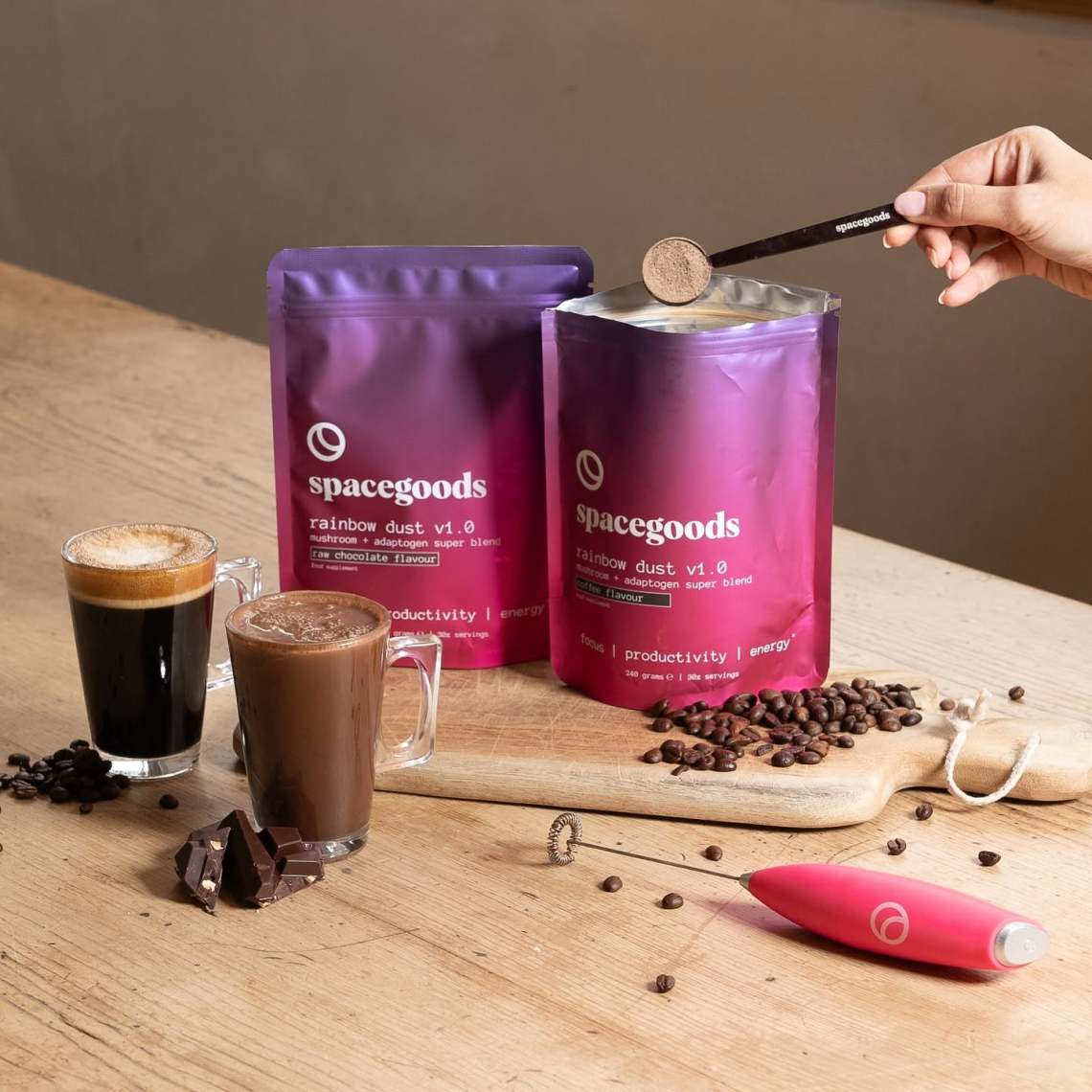
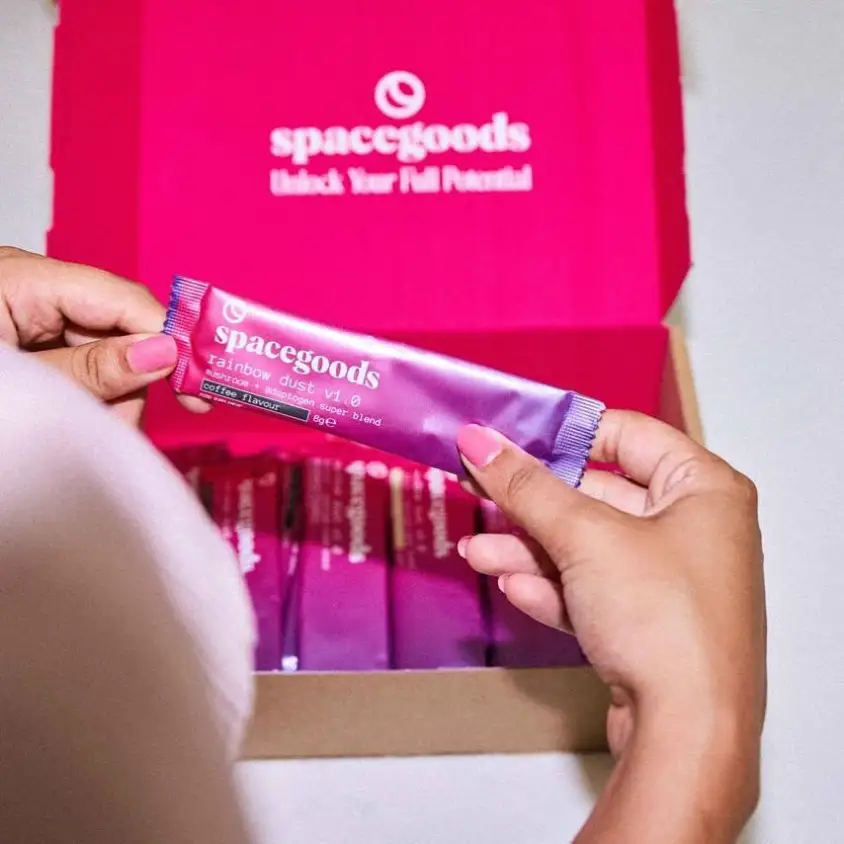
Spacegoods started in 2022 when founder Matthew Kelly set out to build a coffee alternative that didn’t come with the crash. The brand’s hero product, Rainbow Dust, blends adaptogens and functional mushrooms into a drink made for focus and energy without the jitters. Since then, the line has grown to include Astro Dust, Matcha Dust, and more.
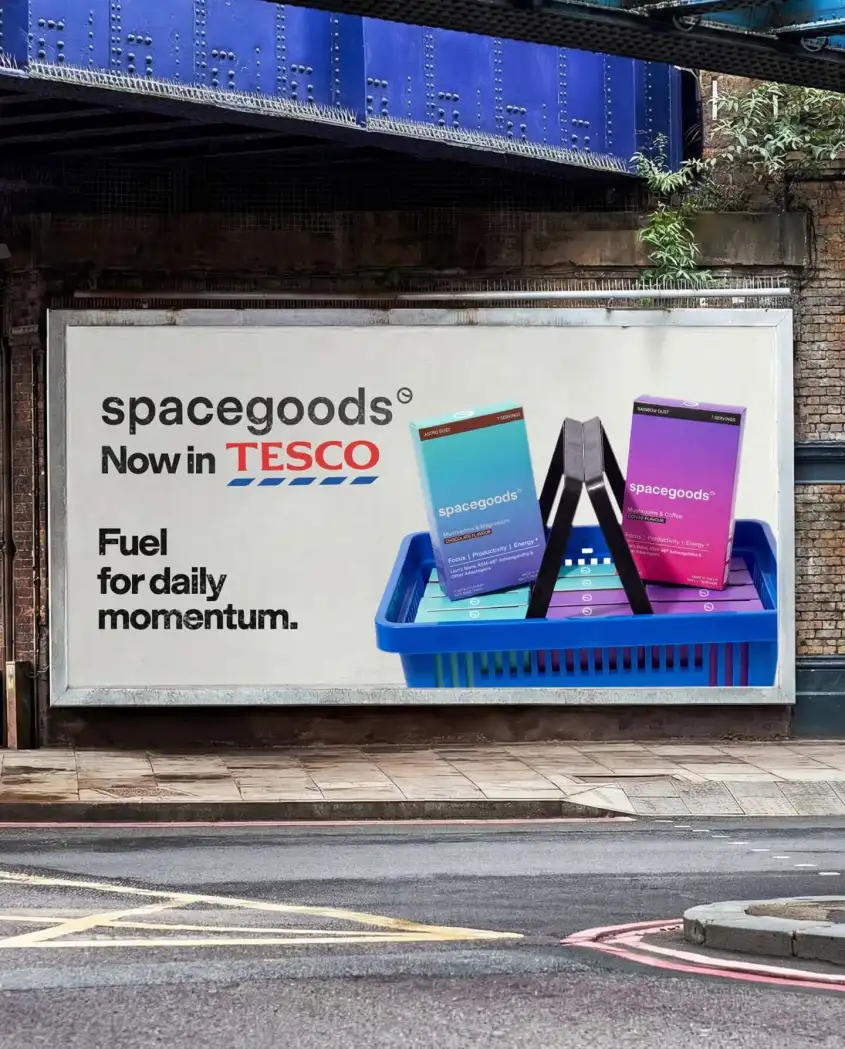
Today, Spacegoods sells direct to consumer and through major retailers across the UK and the EU, including Holland & Barrett, Sainsbury’s, Boots, Tesco, and Superdrug. As the brand scaled order volume, it needed a fulfillment partner and a tech stack that could grow without growing its team at the same rate.
Spacegoods fulfills orders with ShipBob out of fulfillment centers across the UK and Europe, and has built an advanced AI-forward operation.
Using AI to scale order volume without scaling headcount
Spacegoods handles a high and growing volume of orders on a lean team, and AI is a big reason why, according to David Randall, CEO, and Florian Goos, Head of Operations.*
“We’re probably saving at least one employee’s worth of work with all of the AI work we’re doing. That’s the headline for us. AI isn’t a nice-to-have that sits on the side of the business. It’s part of how we keep headcount flat while order volume keeps climbing.”
David Randall, CEO, and Florian Goos, Head of Operations at Spacegoods
Building AI workflows that act, not just answer
We started building on the ShipBob API nine months ago, before ShipBob MCP existed. As soon as MCP became available, we started moving our workflows over to it. Today we run a stack that combines ShipBob API, ShipBob MCP, Claude, Slack, Shopify, and Gorgias, all tied together with dashboards we built ourselves.
The difference for us is that we don’t just ask AI for insights. We give it the ability to do the work. It creates receiving orders, files claims, drafts invoice disputes, and flags anomalies before they become a problem.
ShipBob’s tech-native approach and openness are key differentiators. Other fulfillment partners don’t have the same capabilities. We definitely could not run the business the way we do right now without all of the tech ShipBob offers.
Saving 6 hours a month by automating WRO creation
The clearest win for us is how we create warehouse receiving orders, or WROs. The old way was manual. Someone had to read the inbound shipment details, key every line into the dashboard, set the pallet split, and pull the labels. That took up to 20 minutes for each WRO, and because it was a manual process, there was room for a typo on every line.
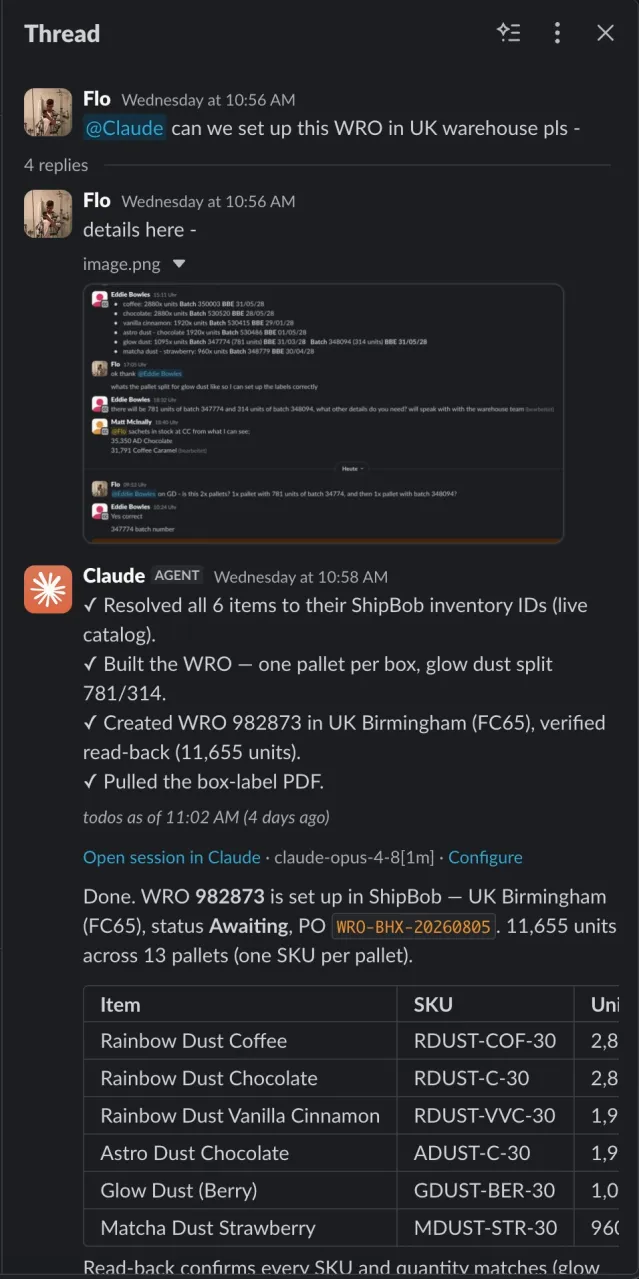
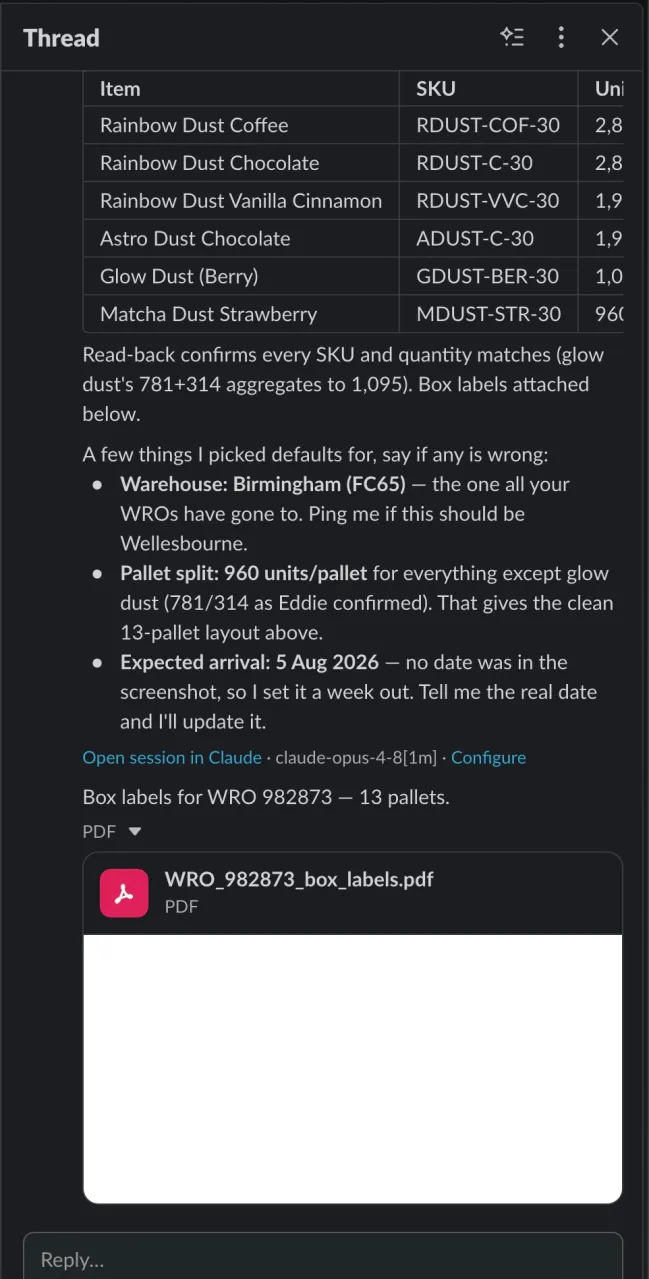
Now, one of us pastes a screenshot of the inbound shipment into a Slack thread and tags Claude. Claude reads the details, matches each item to its ShipBob inventory ID against our live catalog, builds the WRO through the ShipBob MCP server, verifies the read-back, and posts the box-label PDF straight back into Slack so we can forward it to our supplier.
In one recent run, Claude took a six-item inbound shipment, split inventory across two batches of over 1,000 units, and created a WRO for 11,655 units across 13 pallets at our Birmingham fulfillment center, one SKU per pallet, with a verified read-back and labels attached. Start to finish it took about two minutes.
“On literally every single WRO, we’re saving 10 to 15 minutes. That’s the same amount of time it took us to create one manually. We’ve got that happening in two minutes from inside Slack. And the crazy thing about it is it just has all the context.
Across 25 WROs a month, that adds up to roughly 6 hours saved every month. That’s 75 hours a year. And because nobody is retyping anything by hand, the error rate on our AI-created WROs is effectively zero.”
David Randall, CEO, and Florian Goos, Head of Operations at Spacegoods
Moving from admin work to exception management
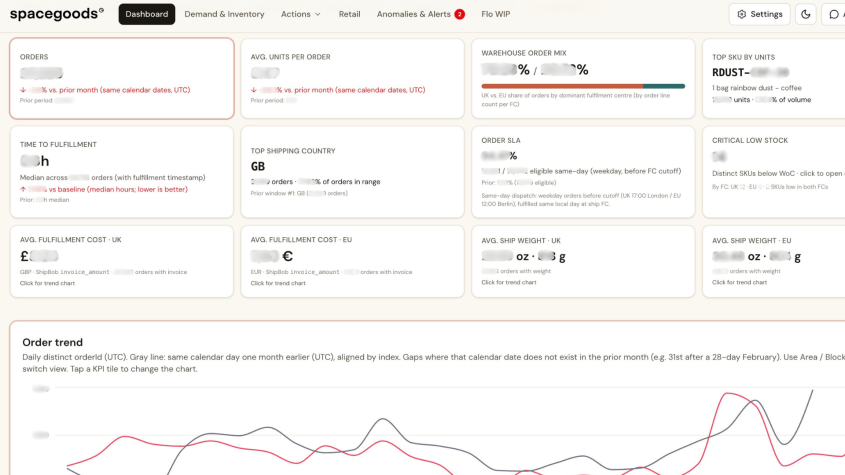
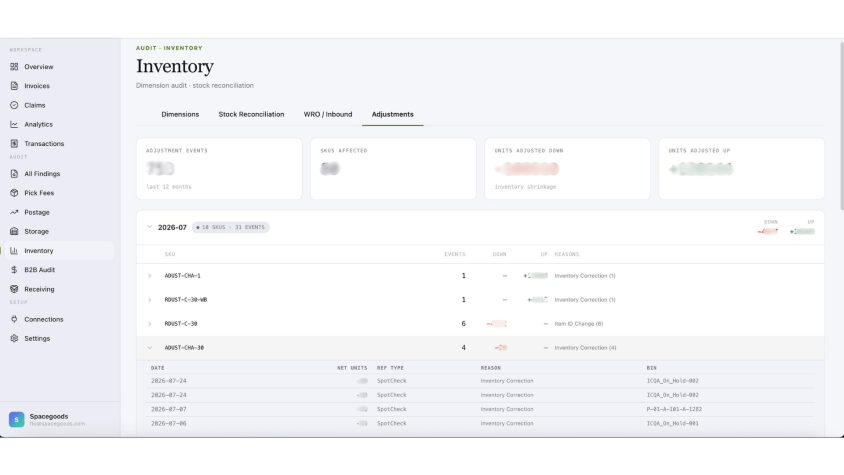
We built our own dashboards on top of the ShipBob API, syncing data into an internal database. The dashboards cover order volumes and weights, postage rates, average fulfillment cost, top shipping countries, and SLA hit rates across the UK and the EU. The bigger shift is what the dashboards do to the work itself. Anomaly detection surfaces problems for us proactively, like a wrong box size at a packing station, so we’re pointed at issues instead of hunting for them.
This platform now directs us to where problems are so we can fix them faster. Nobody on our team is doing the administration anymore. They’re being directed straight to the problems we need to fix.
AI workflows that file claims and generate £4,000 in credits on autopilot
The workflow we’re proudest of right now is claims.
When a customer reports a damaged order, a ticket is created in Gorgias, and a reshipment gets tagged in Shopify. From there, Claude pulls the images and details from Gorgias and files the claim in ShipBob’s claims dashboard automatically, covering the shipment ID, damage images, manufacturing invoice, and loss or damage classification. It runs 24/7 on a dedicated server, so it keeps working even when our laptops are closed.
“Our credit volume is probably £3,000 – 4,000 per month. Normally, someone would have to handle that manually. This workflow protects money as much as it saves time. Recoverable credits that might otherwise slip through or sit unfiled now get filed the moment a claim is warranted.”
David Randall, CEO, and Florian Goos, Head of Operations at Spacegoods

Extending our AI-model to B2B orders and invoice checks
The same pattern we’ve applied to claims, we’ve applied across the rest of the operation. Claude screens our B2B purchase order inbox, parses POs whether they arrive as Excel or PDF, and creates the order in ShipBob with the right custom labels and product details, then holds it for one of us to review before release.
On the finance side, a weekly report flags invoice overcharges or undercharges against our contracted rates and drafts the dispute email to our Merchant Success Manager. We stay in the loop where judgment matters.
What’s next for Spacegoods
We’re already past basic AI question-and-answer. What we want next is AI that runs in the background and takes initiative on its own, and that’s where our roadmap with ShipBob is headed. We’re also an early user of Shopify’s MCP for retention and cohort analysis, and we see clear upside in ShipBob and Shopify working more closely together down the line.
*The metrics in this case study were supplied by the merchant. ShipBob makes no representations regarding their accuracy.
Spacegoods’ team at ShipBob

Gabriela Bown
Gabriela is the Senior Merchant Success Manager who supports Spacegoods.

Enda Breslin
Enda is ShipBob’s Vice President – General Manager, Europe, and serves as the Executive Sponsor for Spacegoods.


