

Single-courier reliance is a liability. Volatile courier networks, rising customer expectations, and an expanding mix of sales channels have made that clear.
The brands growing through this complexity treat courier selection as part of their fulfilment strategy, not a separate ops project. This guide breaks down what a diversified courier mix looks like and how the right fulfilment partner makes it easier to manage.
You’ll also see how inventory positioning and distributed fulfilment multiply the results. Together, these strategies reduce operational headaches and get orders to customers faster.
What courier diversification means for ecommerce brands in 2026
Courier diversification means building resilience into your shipping strategy by using multiple couriers and service levels rather than depending on a single provider. This allows you to embed flexibility and reliability into your shipping network so you can pivot quickly when disruptions hit. A diversified approach blends using national couriers with regional or last-mile options.
The real risks of relying on a single courier
Depending on a single courier leaves ecommerce brands exposed to disruptions that can erode customer experience and profitability.
- Capacity constraints: Couriers may cap daily pickups or volume during peak periods, leaving orders stranded.
- Service failures: Missed pickups, delayed deliveries, or lost shipments can spike without warning.
- Labor actions: Strikes or slowdowns can halt operations for days or weeks.
- Weather events: Storms, floods, or wildfires can cripple regional networks with little notice.
- Policy changes: Sudden shifts in courier surcharges, service areas, or contract terms can upend your cost models overnight.
- Network outages: Technical failures or cyberattacks can knock courier systems offline, freezing tracking and delivery.
Without real-time visibility, shifting volume between couriers before problems spiral becomes nearly impossible. Brands often learn about issues only after customers complain, making recovery slower and costlier.
ShipBob’s dashboard gives you a clear view of shipments by courier, service, and delivery performance trends to help you spot potential issues early and adjust as needed.

How to build a diversified courier mix
Building a diversified courier mix takes careful planning and ongoing attention. For brands that want to handle this themselves, the process involves selecting the right couriers, setting up integrations, and monitoring performance across multiple lanes. This approach can quickly grow complex and resource-intensive.
For brands looking to simplify, they can rely on a fulfilment partner like ShipBob. ShipBob handles this complexity and delivers a courier-agnostic solution as part of its fulfilment network.
If you’re committed to managing courier diversification in-house, the following steps outline a practical path forward.
Build your courier mix from the ground up
Every brand’s courier mix is unique, shaped by order profiles, product types, and customer locations. The foundation typically includes:
- National couriers for broad coverage
- Regional or last-mile couriers for specific countries or high-density areas
- Multiple ground service levels to balance speed and cost
Order characteristics are a factor. Heavy or bulky items, like home goods or books, may require specialized couriers. Single-SKU shipments often fit standard ground services well.
Focus on the lanes and order types that drive most of your volume to keep the mix manageable. A well-constructed courier mix should align with your core business needs, not pile on complexity.
Define what “good coverage” actually means for your brand
Good coverage means reliably reaching your key customer countries, serving both urban and rural addresses, and staying ready for peak season surges.
Also keep shipping zones in mind. Regional couriers often excel when you can fulfil orders closer to the end customer, making distributed inventory a powerful lever. Defining coverage goals this way upfront keeps your courier mix focused on what matters most and prevents unnecessary complexity.
Avoid the most common diversification mistakes
Managing courier diversification in-house does often come with pitfalls. Common missteps include:
- Adding couriers without routing logic, which increases complexity but not resilience
- Spreading volume too thin, leading to weaker performance and less negotiating power
- Failing to set clear guardrails for when to use each courier
To sidestep these traps, implement clear rules for courier selection and monitor performance closely. Review your mix regularly to ensure it’s delivering the intended benefits. This type of disciplined approach prevents operational chaos and keeps your shipping strategy aligned with business goals.
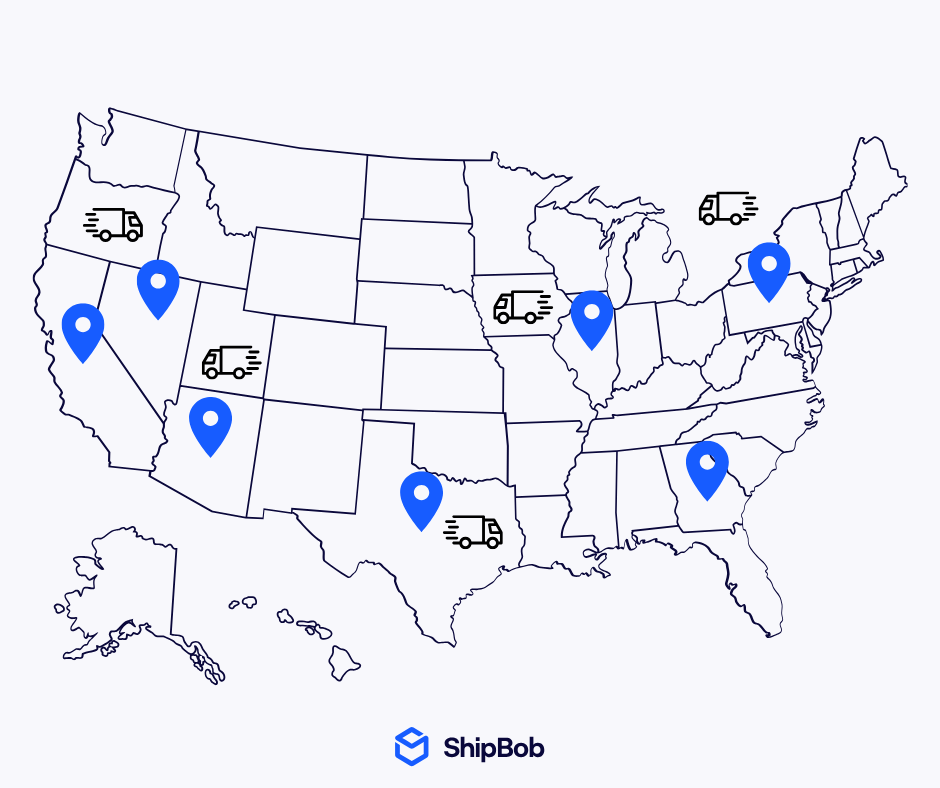
Maximise courier diversification through distributed fulfilment and inventory placement
Many brands fixate on courier selection but overlook a bigger driver of shipping cost and speed: how far each order travels. Long shipping distances inflate costs and increase delivery variability, no matter which courier you use.
Courier diversification becomes easier and more powerful when you also shrink shipping distances. That’s where distributed fulfilment and smart inventory placement come in: they let you tap into more regional couriers while improving ground shipping consistency.
Here’s how it works. When you store inventory in multiple fulfilment centres, you unlock access to regional and last-mile couriers that may not serve your main hub. This approach:
- Reduces transit time variability by fulfilling orders closer to customers
- Makes it practical to use couriers with strong local networks
- Improves the consistency of ground shipping outcomes
By positioning inventory closer to customers, brands can slash shipping expenses and deliver orders faster, especially for weight-sensitive products. Distributed fulfilment isn’t just about speed; it’s a strategic lever for cost control and courier flexibility.

How ShipBob approaches diversification as part of fulfilment
Optimising the right courier mix across order profiles and shipping zones can be challenging. Without the right tools, it often adds operational burden without clear payoff. ShipBob solves this by offering courier diversification as part of our fulfilment solution.
As a courier-agnostic partner, ShipBob maintains a vetted network of national and regional couriers. The platform dynamically routes shipments to optimise for cost and speed, so merchants don’t have to negotiate, integrate, or monitor couriers themselves.
ShipBob’s Inventory Placement Program (IPP) also uses real order data to distribute inventory across its US fulfilment network. Orders ship from more cost-effective zones, reducing the need for manual courier management while improving delivery outcomes.
Our Place, a fast-growing home goods brand, leveraged IPP to reduce shipping costs and speed up delivery. By letting ShipBob handle courier routing and inventory distribution, the brand saved $1.5 million in freight expenses while boosting customer satisfaction.
ShipBob’s approach lets brands focus on growth, not courier management. Request a quote to see how a courier-agnostic fulfilment network can help your business.
Courier diversification FAQs
How many couriers should a mid-market brand use?

Most mid-market brands benefit from two to three couriers, balancing national coverage with regional strengths. The right number depends on your order volume, product mix, and customer locations.
What does a diversified courier mix look like?
A diversified courier mix blends national and regional couriers with multiple service levels and the ability to route shipments from different fulfilment centres. This setup provides flexibility to adapt to disruptions while optimising for cost and speed.
What metrics should I track to manage courier performance?
Track on-time delivery rates, average transit times, cost per shipment, and exception rates (such as lost or delayed shipments). Monitoring these metrics helps you catch issues early and adjust your strategy as needed.
How does inventory placement affect courier diversification?
Strategic inventory placement lets you fulfil orders from locations closer to your customers. This makes regional couriers more viable and reduces shipping costs while improving delivery speed and consistency across your network.
How does ShipBob help maintain delivery consistency when a courier has disruptions or service issues?
ShipBob works with a diversified, courier-agnostic network and closely monitors courier performance. When conditions shift, shipments can be routed to another courier or service.
Merchants can also track shipment status and delivery performance trends in ShipBob’s dashboard, helping them spot issues early and adjust strategy with data.
How transparent is ShipBob about shipping and fulfilment costs across multiple couriers and services?
ShipBob provides detailed, exportable billing and reporting in the dashboard. Merchants can see exactly what they’re being charged for, with line-item visibility by fee category.
ShipBob also publishes its fee structure online and provides custom quotes. The all-in fulfilment cost is designed to keep pricing predictable.


