
Key Takeaways
1
Cross-border shipping involves transporting goods between countries, requiring navigation of customs, international regulations, and management of duties and taxes.
2
The 2025 de minimis suspension fundamentally changed how ecommerce brands handle cross-border shipments, making duty management and inventory placement strategy more important than ever.
3
Challenges include managing customs documentation, handling duties and taxes, and addressing long transit times and high shipping costs.
4
ShipBob simplifies cross-border shipping with a global fulfilment network, De Minimis Defense Program, Foreign Trade Zone warehouses, and flexible duty management options that reduce costs and improve efficiency.
According to ShipBob’s 2026 State of Ecommerce Fulfilment report, 80% of brands say 2025 tariff changes increased their business costs, and 44% plan to ship to new countries this year.
Cross-border shipping has never been more important for ecommerce growth, but it’s also never been more complex.
This guide covers what cross-border shipping is, the biggest challenges brands face today, and best practices to help you streamline international shipping and keep things running smoothly.
What is cross-border shipping?
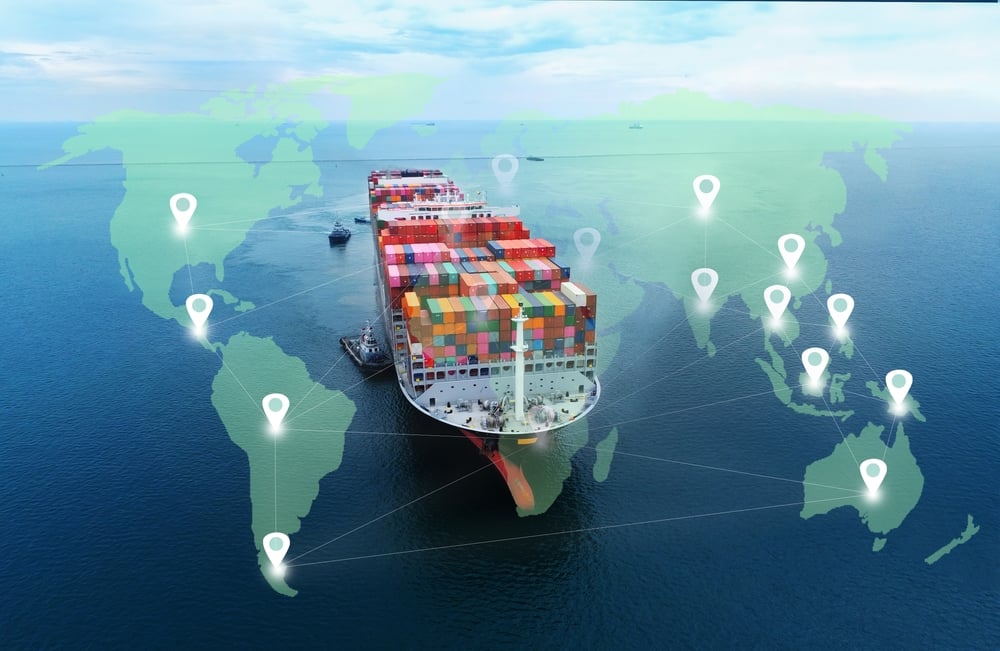
Cross-border shipping is the process of transporting goods from one country to another to fulfil customer orders.
Unlike domestic shipping, it requires clearing customs, complying with each destination country’s import regulations, and managing the duties and taxes that apply to imported goods.
The process follows a predictable lifecycle:
- An order is placed.
- The brand prepares the shipment with customs documentation.
- A courier transports goods across borders.
- Customs authorities clear the shipment.
- A local courier handles final delivery.
Today, 67% of brands already ship outside the US. For midmarket brands looking to scale, understanding cross-border shipping is essential to unlocking new revenue.
Benefits of successful cross-border shipping for ecommerce brands
Expanding internationally opens significant opportunities for ecommerce brands. Here are the key benefits:
- Revenue diversification: Selling in multiple countries reduces dependence on a single market, which is especially valuable when tariffs or economic shifts affect your domestic business.
- Access to new customer bases: Cross-border shipping lets you reach customers in countries where demand already exists, without waiting to build local operations.
- Competitive differentiation: Many brands still avoid international shipping due to perceived complexity. Offering reliable cross-border delivery sets you apart.
- Seasonal demand balancing: Different regions have different peak seasons, allowing you to maintain steady sales throughout the year.
- Higher customer retention: Customers who receive reliable international shipping are more likely to reorder from a brand they trust.
In the current tariff environment, brands with cross-border capabilities are better positioned to adapt when trade policies shift.
Challenges and complexities of cross-border shipping
The 2025 tariff changes and de minimis suspension have made cross-border shipping significantly more complex. What was once a straightforward process now requires careful planning around duties, compliance, and cost management.
📚 Navigating customs regulations and documentation
Every country has its own import regulations, and getting documentation wrong can lead to delays, fines, or seized shipments.
At the core of customs compliance is the Harmonized System (HS) code, a standardized numerical code used globally to classify traded products. HS code classification determines the duty rate on your goods.
Misclassifying a product can result in overpaying duties, facing penalties, or having your shipment held at the border. You can find the correct code through your country’s customs authority website or by working with a licensed customs broker.
Brands should also be aware that certain product categories face additional import restrictions depending on the destination country. Shipping a restricted product without proper documentation can result in the shipment being returned or destroyed.
Essential shipping documents for cross-border shipping include:
- Commercial invoice with product descriptions, values, and HS codes
- Customs declaration form
- Bill of lading or air waybill
- Certificate of origin
- Packing list with weights and dimensions
Keep in mind that navigating import restrictions is ultimately the responsibility of the brand. A customs broker or trade compliance specialist can help you stay current on regulations.
💸 Managing duties, taxes, and fees
The total cost of getting your product to an international customer is known as the “landed cost.” It includes everything beyond the product price itself, including:
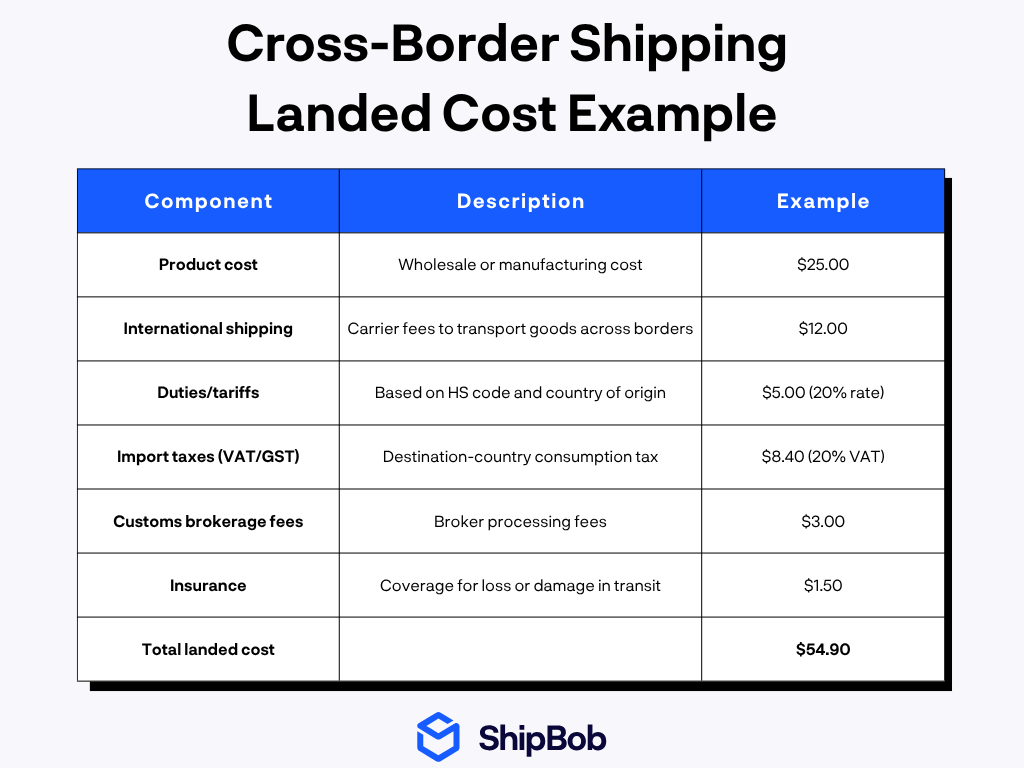
The 2025 de minimis suspension made landed cost management even more critical. Previously, US-bound shipments under $800 entered duty-free. With that exemption suspended, brands that relied on de minimis shipping now face duties on every shipment.
Brands generally choose between two models for who pays these costs:
- DDP (Delivered Duty Paid): The seller pays all duties and taxes upfront. The customer sees one price at checkout with no surprise charges.
- DDU/DAP (Delivered Duty Unpaid): The customer pays duties upon delivery, which can lead to refused shipments and negative reviews.
For most ecommerce brands, DDP shipping is the better option. We offer DDP capabilities for hundreds of destinations, so you can present accurate landed costs at checkout.
✈️ Long transit times and high shipping costs
For inventory replenishment, ocean freight is significantly cheaper than air but takes weeks instead of days. Most brands use ocean freight for planned transfers and reserve air for urgent restocks.
For direct-to-customer delivery, express shipping (2-5 days) costs more but provides a better experience. Economy options (7-21 days) are cheaper but can increase cart abandonment.
The most effective way to reduce both transit times and costs is to store inventory in the same country as your buyers. Orders then ship domestically, eliminating customs delays and reducing expenses.
What ecommerce brands need to know about the de minimis suspension
The de minimis exemption previously allowed low-value shipments (under $800 in the US) to enter duty-free without formal customs processing. In 2025, the US suspended this exemption, meaning duties now apply to shipments that were previously exempt.
To help brands adapt, we launched the De Minimis Defense Program, which includes bi-coastal Foreign Trade Zone (FTZ) warehouses in California and Pennsylvania.
💡
FTZ warehouses allow brands to defer duties until products actually ship to customers, rather than paying when inventory arrives.
Brands can also eliminate duties on goods that are re-exported or disposed of.
True Classic, for example, launched in our FTZ in just three weeks and freed up over $12 million in working capital through duty deferral during peak season.
Best practices for cross-border shipping success
These best practices help brands reduce costs, speed up delivery, and avoid issues when shipping globally.
Optimise inventory placement across fulfilment centres
The biggest decision in cross-border shipping is whether to keep shipping across borders per order or place inventory in the destination country.
A helpful framework is the “$2M Rule”: if you’re generating $2 million or more in annual revenue from a specific country, placing inventory there typically makes financial sense.
For US-based brands, our Inventory Placement Program (IPP) automates inventory distribution across the US network using historical order data and demand forecasting. Our Place expanded from two to four warehouses through IPP, saving $1.5 million in freight costs and cutting delivery times in half.
“Expanding our warehouse network from 2 to 4 warehouses has translated into substantial cost savings, amounting to $1.5 million in freight expenses for Our Place.
Currently, only 2% of our parcels are reaching Zone 7 or Zone 8 collectively, indicating that 98% of our parcels are reaching Zones 1 through 6. By shipping locally to lower zones, we’re achieving the most significant reductions in outbound costs.”
Ali Shahid, COO of Our Place
For international expansion, 30% of brands plan to fulfil from new countries in 2026. Placing inventory in our fulfilment centres in Canada, the UK, Europe, or Australia means orders ship domestically, eliminating cross-border customs clearance entirely.

Choose the right shipping options for your customers
Brands should carefully select shipping models based on their target market and customer preferences. Here are the key decisions:
- Express vs. economy: Offer both where possible. Some customers will pay more for faster delivery, while others prioritize lower costs. Testing default options by country can help you find the right balance.
- Courier diversification: Different couriers have strengths in different countries. Using multiple couriers ensures better coverage, competitive pricing, and backup options when service disruptions occur.
- DDP vs. DDU by market: In countries where customers expect all-inclusive pricing (most of Europe), DDP is essential. In other markets DDU may be acceptable, though DDP is still recommended for the best customer experience.
Understanding your target market’s preferences and price sensitivity will help determine the optimal approach for each country you serve.
Prepare accurate customs documentation
Precise, comprehensive customs documentation is essential for smooth international deliveries. A single error on a commercial invoice can delay your shipment by weeks. Establish standardized procedures for completing:
- Commercial invoices with accurate product descriptions, values, and HS codes.
- Accurate product valuation that meets destination-country customs requirements.
- Proper country of origin declarations.
- Complete shipper and recipient information.
Building documentation checklists by country helps your team maintain consistency and avoid repeated mistakes.

Use technology for better visibility
Modern warehouse management systems and logistics platforms provide visibility into cross-border shipments that would be difficult to manage manually.
Technology solutions that offer real-time tracking, status updates, and performance analytics help you:
- Proactively identify and address potential disruptions
- Provide customers with accurate delivery estimates
- Manage inventory levels across multiple international locations
The right platform unifies these capabilities across all your sales channels and fulfilment locations, giving you one source of truth for global operations.
How ShipBob simplifies cross-border shipping
Cross-border shipping got harder in 2025, and today’s brands need more than a traditional 3PL. They need an ecommerce fulfilment expert with the global network, technology, and data to turn cross-border complexity into a growth lever.
ShipBob’s global fulfilment network spans dozens of fulfilment centres across the US, Canada, UK, Europe, and Australia. When you store inventory in-country, orders ship domestically with no customs clearance and significantly faster delivery.
“The tariff exemptions closing in July of 2025 threw a bit of a wrench in things for shipping to the US, but that only makes us more thankful to have a global fulfilment partner like ShipBob that can help us fulfil orders locally in the US and bypass a lot of the complexities. It gives me options that I wouldn’t have if I had kept managing fulfilment myself. Having ShipBob in my corner is invaluable, and I’m so glad they’re a part of our business.”
Luke Rolls, Founder of The Protein Pancake
Through our De Minimis Defense Program, brands importing into the US can defer duties via FTZ warehouses in California and Pennsylvania until orders actually ship.
Our platform provides a single dashboard for inventory, orders, and shipments across DTC, marketplace, and retail/B2B channels.
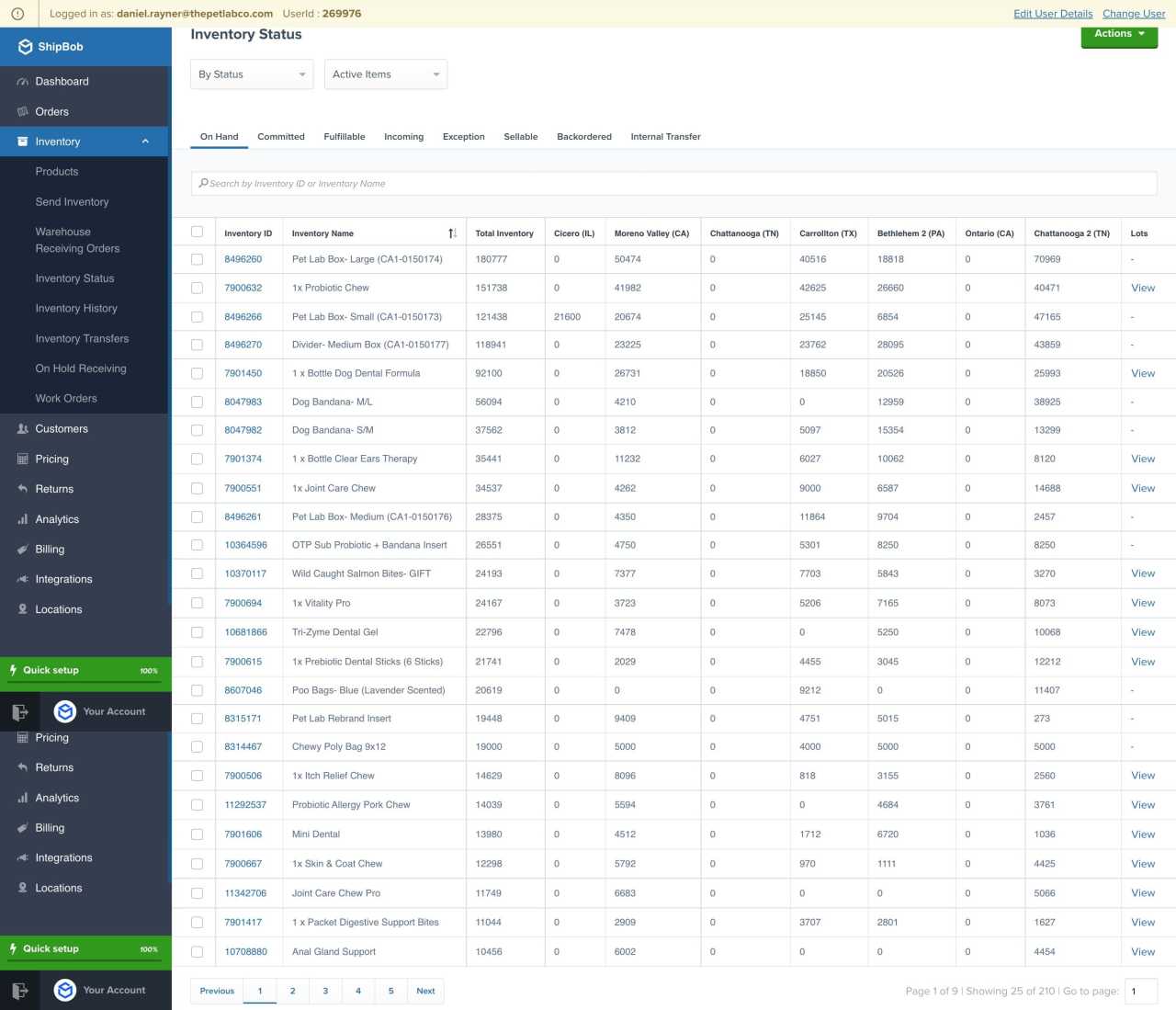
For US-based B2B operations, EDI-automated workflows handle retail distribution and dropshipping.
“We use ShipBob’s EDI connection to automate B2B retail distribution, and it’s been really straightforward. Everything flows through the system so easily now; we get a purchase order from a retailer, it ships out, and we don’t have to think about it.
Our goal was always for B2B to essentially work the same way as our DTC business: something we could have on autopilot, that requires very little oversight from us. With ShipBob’s B2B solution, we’ve got that, and now our B2B is automated.”
Matt Crane, Co-Founder and Chief Science Officer at Semaine Health
For more information on how ShipBob can help you ship across borders smoothly, compliantly, and affordably, click the button below to get into touch.
Cross-border shipping FAQs
Here are answers to some of the most common questions about cross-border shipping.
What is the de minimis exemption, and how does its suspension affect ecommerce brands?

The de minimis exemption allowed low-value shipments (under $800 in the US) to enter duty-free. In 2025, the US suspended this exemption, so duties now apply to previously exempt shipments.
ShipBob’s De Minimis Defense Program, with FTZ warehouses on both coasts, helps brands defer or eliminate duties on imported goods.
What is landed cost, and how do I calculate it?
Landed cost is the total price of getting a product to your customer’s door: product cost + shipping + duties + taxes + brokerage fees + insurance. See the breakdown table earlier in this article for a detailed example.
When should I switch from cross-border shipping to in-country fulfilment?
A useful benchmark is the “$2M Rule.” If you’re generating $2 million or more in annual revenue from a specific country, placing inventory there typically makes financial sense. ShipBob’s Inventory Placement Program helps optimise US distribution, while international fulfilment centres enable local fulfilment globally.
How does cross-border shipping work across DTC, marketplace, and retail channels?
Each channel has different delivery and documentation requirements. DTC orders may need DDP checkout integration, marketplace orders must meet platform-specific policies, and US-based B2B/retail orders often require EDI documentation. ShipBob manages all channels from a single dashboard.
What documents are needed for cross-border shipping?
Cross-border shipping typically requires commercial invoices, customs declaration forms, bills of lading or air waybills, certificates of origin, and product-specific certifications. Requirements vary by destination country.
How does ShipBob support cross-border shipping?
As an ecommerce fulfilment expert and supply chain enablement platform, ShipBob provides cross-border solutions through its global fulfilment network across the US, Canada, UK, EU, and Australia, DDP shipping for 250+ destinations, FTZ warehouses for duty deferral, and a unified platform for DTC, marketplace, and B2B fulfilment.


