Business Continuity Through COVID-19
With the realities of the COVID-19 (coronavirus) pandemic, many ecommerce brands are wondering how to keep their business on track. One important aspect of longevity is a healthy supply chain.
While other 3PLs are closing and Amazon is shutting down its services for thousands of companies, all eight of our fulfilment centres in the United States and Canada are fully operational.
Anticipating volume swings due to fluctuations in consumer spending, dealing with manufacturing delays and government action, staying on top of rulings across various countries states, and cities, paying attention to updates from couriers, and meeting customer expectations can bring many challenges in an uncertain time.
As the leading fulfilment provider, ShipBob offers the services, technology, and support you need to move your business forward and grow — even through new and unique circumstances.
Having a good fulfilment partner is more important now than ever, and partnering with ShipBob brings business continuity to your supply chain.
Business Continuity Plan FAQs
Here are answers to the most frequently asked questions about business continuity plans, including how ShipBob handles its BCP.
How can ShipBob help mid‑market brands minimise fulfilment delays during unexpected events?

ShipBob helps brands, including those with recurring order volumes or fast-selling product drops, minimise fulfilment delays during unexpected events through several capabilities.
- Scalable fulfilment: ShipBob’s system is built to handle surges in demand, such as seasonal spikes or viral product drops, ensuring orders are fulfilled quickly and accurately. ShipBob aims to be a scalable partner as brands grow.
- Data-driven forecasting: ShipBob provides real-time insights into inventory, order status, and transit times, using data-driven forecasting to prepare inventory across their network and maintain smooth operations. This includes replenishment recommendations to reduce stockouts.
- Proactive notification: Brands should notify ShipBob at least 3 business days in advance of anticipated significant increases in B2C order volume (e.g., sales promotions, new product launches, holiday sales) to allow for proper capacity planning and maintenance of Service Level Agreements (SLAs). Note that, for B2B orders, 10 business days’ notice is required for volume increases and large order requests.
What systems and redundancies does ShipBob use to maintain fulfilment centre operations?
ShipBob utilises a comprehensive full-stack fulfilment platform and network to maintain its operations.
- Proprietary software: Their operations are powered by proprietary software that includes a Warehouse Management System (WMS), Inventory Management System (IMS), Order Management System (OMS), and Transportation Management System (TMS). The MiniBob App, a mobile version of their WMS, enhances efficiency and reduces errors in warehouse tasks like receiving, picking, and sorting.
- Distributed network and logistics: ShipBob operates a global network of dozens of fulfilment centres across the US, Canada, Europe, and Australia, allowing for strategic inventory distribution to reduce shipping costs and transit times. In the US, they employ a hub-and-spoke network and a middle-mile network, enabling efficient inventory routing and zone skipping to speed up deliveries and consolidate packages.
- Automated decision-making: ShipBob’s proprietary Decision Engine automates complex fulfilment decisions by continuously evaluating hundreds of data points, leading to smarter inventory distribution, optimal courier selection, and faster picking and packing. They also use a box selection algorithm to choose appropriate packaging, helping protect items.
How does a BCP differ from disaster recovery (DR) and incident response (IR)?
A business continuity plan is a strategic framework that ensures essential operations (like order fulfilment, inventory visibility, and communication) continue during and after a disruption. It focuses on maintaining service levels and minimising downtime across the business.
In contrast:
- Disaster recovery is more narrowly focused on restoring systems and data after a catastrophic event (e.g., server outage, cyberattack). It’s IT-centric and reactive.
- Incident response refers to the immediate actions taken to detect, contain, and mitigate a specific event, such as a security breach or natural disaster.
In short:
- IR = Deal with the disruption in real time (tactical, immediate)
- BCP = Keep things running (business-wide, proactive)
- DR = Get systems back online (technical, reactive)
Why do ecommerce brands need a business continuity plan?
Ecommerce brands depend on uninterrupted logistics and customer trust. A Business Continuity Plan ensures your operations remain resilient in the face of:
- Courier outages
- Warehouse closures
- Supply chain delays
- Natural disasters
- Cyberattacks or platform failures
Without a solid BCP, brands risk:
- Delayed shipments and lost revenue
- Damaged customer relationships
- Stockouts due to inventory misalignment
- Costly operational scrambling during crises
Partnering with a fulfilment provider that has a proven BCP (like ShipBob) helps brands avoid guesswork and maintain reliability when it matters most.
Which disruption scenarios should an ecommerce BCP cover?
A robust ecommerce BCP should account for a range of disruption types across physical, digital, and operational domains.
| Category | Example scenarios |
| Natural Disasters | Hurricanes, wildfires, floods, snowstorms affecting fulfilment hubs |
| Infrastructure Failures | Power outages, internet blackouts, server failures |
| Logistics Disruptions | Courier strikes, port congestion, customs delays |
| Public Health Events | Pandemics (e.g., COVID-19), affecting workforce or regional access |
| Cybersecurity Incidents | Data breaches, ransomware, platform downtime |
| Vendor/Supplier Issues | Raw material shortages, partner bankruptcies |
What standards or certifications apply to business continuity?
The most relevant standards for business continuity in ecommerce and logistics include.
- ISO 22301: The global standard for business continuity management. It outlines how to identify risks, implement controls, and maintain operations during disruptions. ISO 22301 certification signals mature, tested continuity planning.
- SOC 2 Type II: While focused on data security, it also assesses a provider’s ability to maintain system availability (an indirect but important indicator of operational resilience).
- NIST SP 800‑34: A U.S. government framework for IT disaster recovery and incident response planning, often used to structure technical elements of a BCP.
When evaluating fulfilment partners, look for alignment with these standards (or certification where applicable) to ensure they’re prepared for real-world disruptions, not just theoretical risks.
READY, SET, SHIP
Streamlined fulfilment from your online store to your customer’s door
1
Connect your store and send us your products
2
We store your inventory securely in our fulfilment centres
3
Your customer places an order on your store
4
We pick, pack, and ship the order to your customer fast

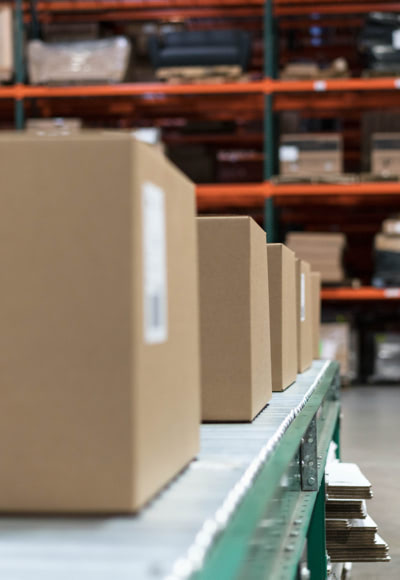
How ShipBob Partners With You
With ShipBob, you can outsource your fulfilment to proven experts with a distributed network to get orders to customers safely and on time.
- Split inventory across warehouses to spread risk and have backup inventory in other locations.
- Access real-time inventory management across locations and identify slow-moving products.
- Gain insights into where you should ship from to get orders to customers quickly.
- View how many days of inventory you have on hand and set reorder points to order more on time.
- Get started within a week, and have confidence in a long-term scalable fulfilment partner.
- Receive best-in-class support from the same people who are familiar with your unique needs.

Easy and Helpful Onboarding
We’ve onboarded thousands of ecommerce merchants and helped some of the fastest-growing brands scale effortlessly. Our implementation team sets you up for success with everything from configuring your ship options, to syncing your online store.
ShipBob’s turnkey integrations with all major ecommerce platforms and marketplaces – including Shopify, Squarespace, Wix, Square Online, BigCommerce, Amazon, and Walmart – let you import orders and send data back and forth for a two-way flow of information.
Customer Spotlight
We’re Here For Our Merchants
– Dana Varrone, Director of Operations at Organic Olivia on ShipBob’s response to COVID-19
Hear how Dana Varrone and other seven- and eight-figure ecommerce brands are not just surviving, but thriving, during COVID-19.
ShipBob’s ‘Inside Logistics’ Video Series
Learn what goes on at our fulfilment centres in real time. Hear directly from our Chief Logistics Officer and VP of Operations on the latest news in logistics and how ShipBob is continuously adapting and innovating for you.
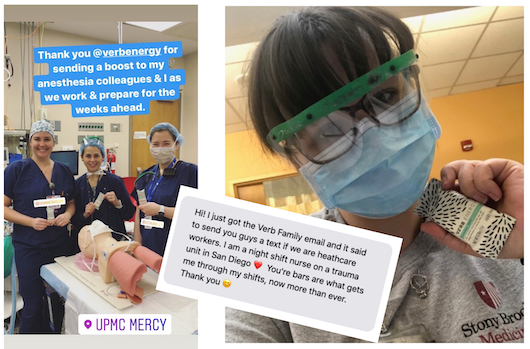
Resources From Brands That Are Helping Those in Need
We’ve aggregated offers for those in need from several brands, plus resources to help fight the damage from COVID-19 — from free products for healthcare workers to where to list your online store to get in front of consumers who want to support small ecommerce brands instead of a giant corporation.

FEATURED CLIENT
ShipBob set up coronavirus safety measures at its seven fulfilment centres in early March.
Jennifer Smith,
Logistics Reporter at The Wall Street Journal
Customer Stories
Don’t just take our word for it — see why ShipBob is trusted by thousands of merchants

We’re going from $0 to $20M in just a few years and ShipBob is supporting us without a hitch.
ShipBob can handle our order volume because they’re experts at what they do. The last company I worked at had their own warehouse, and I witnessed firsthand how messy and complicated fulfilment can be, especially at scale when it’s not what your company specializes in.
Co-Founder of Taste Salud

We sought a fulfilment partner primarily for their exceptional operational capabilities. Our priority was finding a partner capable of efficiently handling large-scale fulfilment while also streamlining our workflows. ShipBob emerged as the perfect fit, meeting our needs beyond expectation. ShipBob has transformed our operations into a key competitive edge.
COO of Our Place

Our business is almost all subscriptions, and ShipBob helps us offer reliable, affordable shipping that shows up at the same time each month. ShipBob’s analytics tool helps us a lot with planning inventory reorders, seeing when SKUs are going to run out, and we can even set up email notifications so that we’re alerted when a SKU has less than a certain quantity left.
